
Story
Analysts Raise 2026 Oil Price Forecasts as Gulf Supply Disruptions Persist

Summary
Economists have increased their 2026 oil price projections, citing prolonged supply disruptions in the Persian Gulf that are expected to outweigh concerns over slowing global demand.
Analysts have raised their 2026 oil price forecasts, anticipating that prolonged disruptions to exports from the Persian Gulf will keep the market tight and offset concerns about slowing demand growth. A recent Reuters survey indicates a consensus that supply-side risks will remain the dominant price driver in the near term.
Revised Price Projections
A September poll of 30 economists and analysts projects that benchmark Brent crude will average $89.05 a barrel in 2026, while U.S. West Texas Intermediate (WTI) crude is forecast to average $83.90 a barrel. The forecasts for Brent ranged from a low of $77.27 to a high of $97.60.
This upward revision reflects a growing conviction among market watchers that a full restoration of shipping through the critical Strait of Hormuz is unlikely in the coming months. "We are not betting on a resolution to the conflict within the next three to six months," said Suvro Sarkar, head of energy research at DBS Bank, noting that significant upside risks remain.
Key Market Factors
The primary concern is the constrained flow of oil through the Strait of Hormuz. HSBC's base-case scenario assumes a "structurally impaired" strait, with oil flows recovering only slowly from current levels and remaining well below the pre-conflict average of roughly 19-20 million barrels per day (bpd).
 Ad
AdAnother critical variable is China's crude inventory. The world's largest importer has been drawing down large stockpiles, which has muted its need to compete for cargoes on the global market. However, analysts note this trend is reversing, with Chinese imports rising for the past two months. "Chinese inventories are currently the main unknown in the equation... they are finite and cannot cover the whole winter," said Davide Tabarelli, president of Nomisma Energia.
Supply vs. Demand Outlook
Despite worries about a global economic slowdown, most analysts see supply risks as the primary driver for oil prices through 2026. Analysts at the EIU stated that weaker manufacturing activity is restraining demand growth, which should prevent prices from returning to the highs seen immediately after the conflict began.
Consuming nations are expected to continue drawing down emergency and commercial stockpiles to offset lower Gulf exports, leading to a substantial decline in inventories in 2026. Looking further ahead, most analysts foresee the market moving back into a surplus in 2027 as shipping conditions improve, Gulf production recovers, and non-OPEC supply continues to expand.
Read next
More on Commodities
Oil Prices Remain Elevated on Risk Premium Despite Mideast Export Recovery, Goldman Sachs Says
Crude oil prices are being supported by a significant geopolitical risk premium even as Persian Gulf exports have returned to 2025 average levels, according to an analysis by Goldman Sachs. The bank points to low global inventories and fears of supply escalation as key factors.

Havana Grapples with Public Health Crisis Amid Severe Water and Power Failures
A severe degradation of Cuba's water and energy infrastructure, worsened by a U.S. fuel blockade, is causing widespread viral outbreaks in Havana, according to health officials and a recent U.S. health alert.
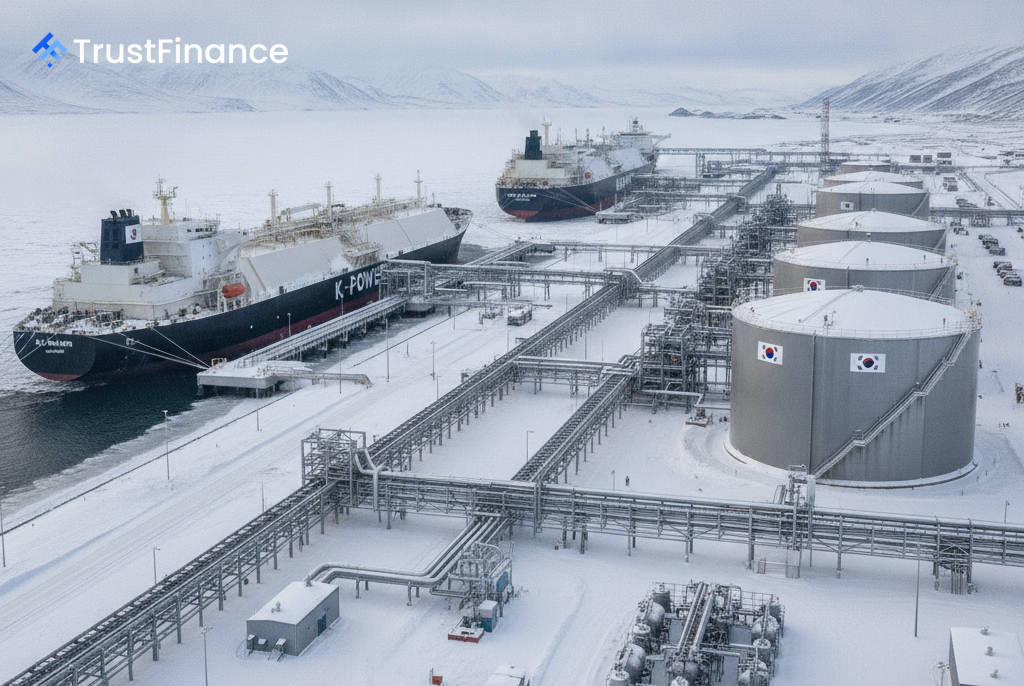
Trump to Announce $54 Billion South Korean Investment in Alaska LNG Project, Sources Say
President Trump is expected to direct $54 billion from a South Korean strategic fund toward the long-stalled Alaska LNG export facility and other U.S. projects, according to people familiar with the plans. The investment could provide a critical financial boost to the project, which has faced years of commercial uncertainty.

Wheat Futures Rise as Traders Await Key USDA Supply Reports
Chicago wheat futures rebounded from a six-week low on Wednesday, with prices climbing as the market anticipates the U.S. Department of Agriculture's latest data on grain stocks and production.