
Story
Yen Slides Toward 160, Erasing Half of Gains From US-Japan Intervention
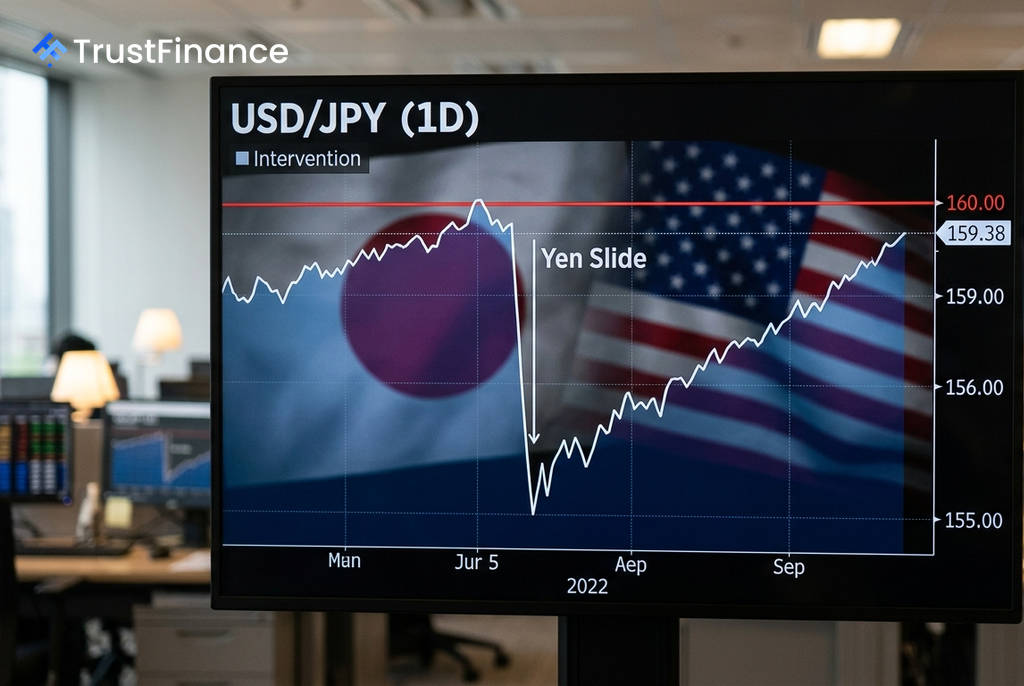
A historic, coordinated currency intervention by Japan and the United States has provided only a temporary reprieve for the yen, which has given back about half of its gains in less than two weeks. The currency is once again approaching the closely watched 160 per dollar level, underscoring the persistent strength of macroeconomic fundamentals that have driven its decline.
Intervention's Fading Impact
Japan's Ministry of Finance confirmed it intervened in coordination with the U.S. on July 31 to support the yen, an action preceded by a solo effort on July 30. Market estimates cited in the report suggest the combined firepower was substantial:
- Japan: Deployed an estimated $54 billion on July 30 and another $34 billion on July 31, for a total of approximately $88 billion.
- United States: The U.S. Treasury, acting through the Federal Reserve Bank of New York, planned to purchase $5 billion to $10 billion worth of yen, marking its first such intervention since the 1998 Asian financial crisis.
The move initially pushed the yen from a low beyond 163 to a high of around 155 per dollar. However, the relief was short-lived, with the exchange rate now trading above 159.
Unyielding Fundamentals
 Ad
The core issue pressuring the yen is the significant gap in interest rates between Japan and other major economies, particularly the U.S. This differential fuels the "carry trade," where investors borrow in low-cost yen to purchase higher-yielding assets abroad, creating persistent selling pressure on the Japanese currency.
"The intervention scared the market, but it didn't stop the laws of finance from working—money flows where the returns are highest," said Jesper Koll, an expert director at Monex Group, according to the report. The benchmark 10-year U.S. Treasury yield stands at 4.686%, creating a powerful incentive for investors compared to Japan's much lower borrowing costs.
Focus Shifts to Bank of Japan
While the intervention may have curbed excessive speculation, analysts believe a sustainable turnaround for the yen depends on policy changes from the Bank of Japan (BOJ). Masahiko Loo, a strategist at State Street Global Advisors, noted that the intervention successfully demonstrated policy coordination but has not yet altered the underlying fundamentals. He described the 160 level as a "political red line" that could trigger further action.
Market attention is now fixed on the BOJ's next policy meeting on September 17-18, with current pricing suggesting a 50%-60% probability of a 25-basis-point interest rate hike. John Wood, CIO for Asia at Lombard Odier, suggested the central bank may need at least two more rate increases to meaningfully arrest the yen's weakness. Ultimately, as Koll concluded, "intervention can buy time, but what will ultimately stabilize the yen is Japan's own economic structural transformation and a credible policy path."
Read next
More on Forex
Polish Zloty Hits 11-Month Low Against Euro on Energy Price Pressure
The Polish zloty weakened to 4.410 against the euro, its lowest point since November 2023, as rising energy prices and caution ahead of a U.S. Federal Reserve decision weighed on the currency.

Sterling Slips as Dollar Strengthens Ahead of Fed Decision and UK Budget
The British pound lost ground against a resurgent U.S. dollar on Wednesday as market attention shifted from tech sector volatility to upcoming central bank decisions and the UK budget announcement.

Eurozone Bond Yields Climb as French Fiscal Concerns Return Ahead of Fed, ECB Decisions
Yields on French and German government bonds rose as relief from a ratings affirmation for France proved temporary, with investors refocusing on fiscal challenges and awaiting key policy verdicts from the U.S. Federal Reserve and the European Central Bank.

Canadian Dollar Slips as Markets Await Bank of Canada, Fed Decisions
The Canadian dollar edged lower against its U.S. counterpart, snapping a seven-day winning streak as investors adopted a cautious stance ahead of Wednesday's key interest rate announcements from both the Bank of Canada and the U.S. Federal Reserve.