
Story
Global Bond Markets Stabilize as Traders Weigh US Sanctions Threat Against Iran
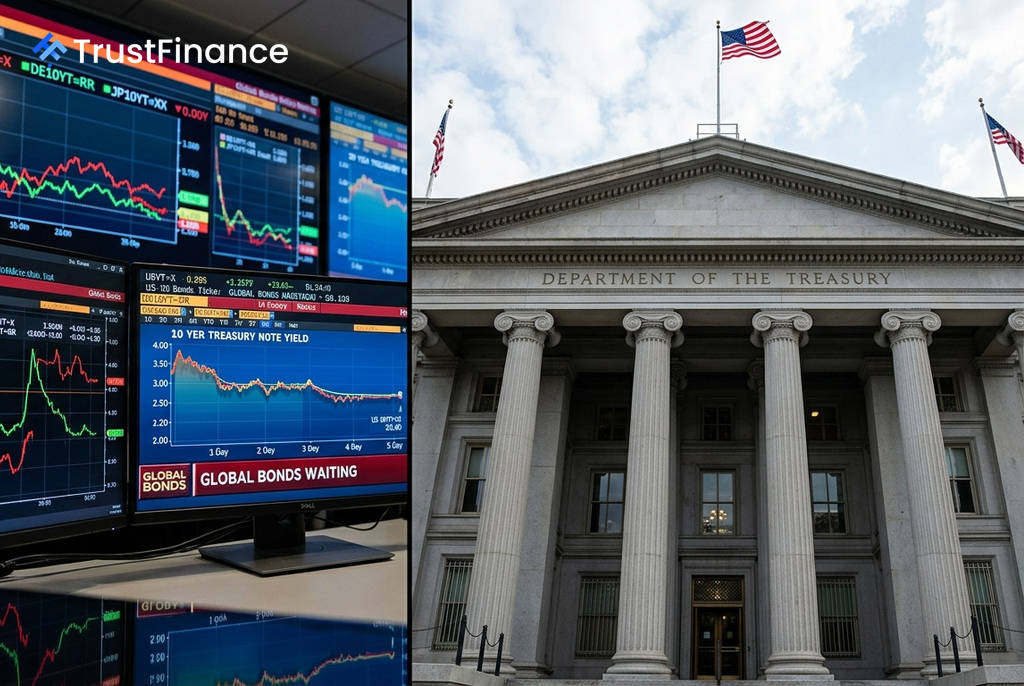
Global bond markets entered a holding pattern on Monday, with yields stabilizing after weeks of losses as traders braced for what the U.S. has termed the "largest financial offensive in history" against Iran and awaited key policy guidance from central bankers.
Geopolitical Tensions Take Center Stage
Bond trading desks remained on high alert following statements from Washington over the weekend threatening a major escalation in economic pressure on Iran. The U.S. announced plans for a new round of economic sanctions targeting foreign nations and trading partners that do business with Tehran. In response, Iran warned it would cut off all energy exports from the Persian Gulf if the U.S. continues its campaign.
Markets are closely watching for a press conference scheduled for 1:00 PM ET by U.S. Treasury Secretary Scott Bessent, who is expected to provide details on the punitive measures. While Brent crude futures fell approximately 1.5% to around $91.80 per barrel on Monday, bond investors remain cautious, demanding a higher structural term premium to hedge against potential cost-push inflation risks as commercial oil tanker passage through the Strait of Hormuz remains severely restricted.
Yields Pause After Sustained Sell-Off
Monday's stability in fixed-income markets follows two consecutive weeks of losses. Key sovereign yields were little changed as the new week began:
 Ad
- Germany's interest-rate sensitive 2-year Schatz yield was flat at 2.838%.
- The benchmark 10-year German Bund yield held steady at 3.256%.
- France's 10-year OAT yield was stable at 4.128%, while Italy's 10-year BTP yield was near 4.092%.
- Japan's 10-year government bond (JGB) yield hovered around 2.881%, steadying after a volatile week driven by expectations of a Bank of Japan rate hike.
Focus Shifts to Central Banks and US Debt Load
With geopolitical risks priced in for now, the market's focus is shifting to central bank guidance. The main event is a keynote speech by Federal Reserve Chair Kevin Warsh at the Jackson Hole Economic Policy Symposium this Friday. Traders will scrutinize his remarks for clues on whether the Fed will hold rates steady in September, following a divided 9-3 FOMC vote, or if persistent energy-driven inflation could force another hike this year.
Meanwhile, skepticism lingers over the U.S. Treasury's ability to support its own market. A recent attempt by Secretary Bessent to talk down yields and a plan for Treasury buybacks of up to $4 billion per operation have failed to spark a rally. Investors note the buybacks are funded by new short-term debt, merely altering the maturity profile rather than reducing the total bond supply. With the national debt now exceeding $40 trillion, investors are reluctant to accept lower long-term borrowing costs without signs of meaningful fiscal consolidation.
Read next
More on Forex
Polish Zloty Hits 11-Month Low Against Euro on Energy Price Pressure
The Polish zloty weakened to 4.410 against the euro, its lowest point since November 2023, as rising energy prices and caution ahead of a U.S. Federal Reserve decision weighed on the currency.

Sterling Slips as Dollar Strengthens Ahead of Fed Decision and UK Budget
The British pound lost ground against a resurgent U.S. dollar on Wednesday as market attention shifted from tech sector volatility to upcoming central bank decisions and the UK budget announcement.

Eurozone Bond Yields Climb as French Fiscal Concerns Return Ahead of Fed, ECB Decisions
Yields on French and German government bonds rose as relief from a ratings affirmation for France proved temporary, with investors refocusing on fiscal challenges and awaiting key policy verdicts from the U.S. Federal Reserve and the European Central Bank.

Canadian Dollar Slips as Markets Await Bank of Canada, Fed Decisions
The Canadian dollar edged lower against its U.S. counterpart, snapping a seven-day winning streak as investors adopted a cautious stance ahead of Wednesday's key interest rate announcements from both the Bank of Canada and the U.S. Federal Reserve.