
Story
Bessent's Call to Expand Fed's Foreign Lending Facility Carries Market Risks, Analysts Say
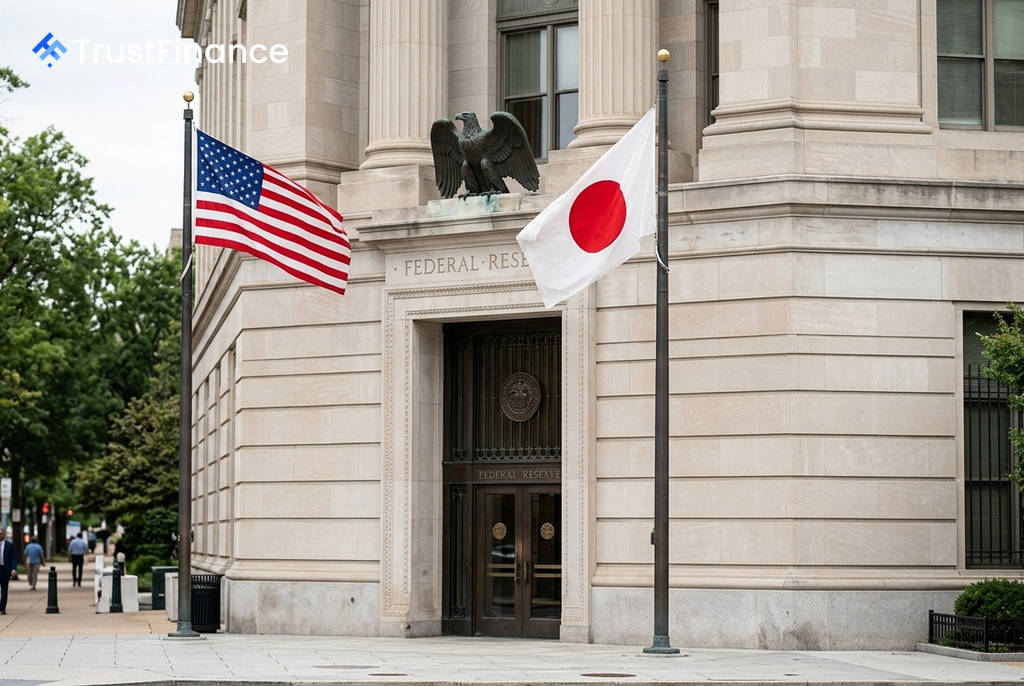
U.S. Treasury Secretary Scott Bessent has called on the Federal Reserve to expand its lending facility for foreign official accounts, a proposal that follows a rare joint intervention with Japan to support the yen. While the move could provide more firepower to defend the Japanese currency, analysts caution it could also introduce new risks, including tempting markets to challenge the resolve of U.S. and Japanese authorities.
The Proposal to Upsize FIMA
In a social media post on Sunday, Secretary Bessent encouraged the Fed to upsize its Foreign and International Monetary Authorities (FIMA) repo facility. He reiterated the call in a CNBC interview, arguing that the facility's current $60 billion cap per counterparty is outdated, as "the size of the bond market was much smaller" when it was launched six years ago.
The request came after the Treasury confirmed it had joined Japan's Ministry of Finance on Friday to buy yen, which had recently fallen to 40-year lows against the dollar. Expanding the FIMA facility would allow Japan to secure U.S. dollars for intervention without selling off its vast $1.14 trillion holdings of U.S. Treasuries, a move that could otherwise put upward pressure on already elevated U.S. borrowing costs.
Potential Benefits and Market Impact
Avoiding a large-scale sale of U.S. debt by Japan, the largest foreign holder, is a key benefit of utilizing the FIMA facility. This would help stabilize the Treasury market at a time of concern over rising yields, inflation, and growing government debt issuance.
 Ad
Daleep Singh, chief global economist at PGIM and a former Treasury official, noted that an expansion "would be a positive signal" for the Treasury market. However, he cautioned in a client note that any changes would be "a shock absorber, not a cure for currency trends driven by fundamentals."
Analyst Warnings and Unintended Risks
Despite the potential benefits, the proposal faces hurdles and criticism. The Federal Reserve, which declined to comment, would need a majority vote from its Federal Open Market Committee to alter the facility. The FIMA program, established in 2020 and made permanent in 2021, has seen very limited use to date.
Some analysts see the public call as a strategic signal. Derek Tang of Monetary Policy Analytics suggested the move is "more about the posturing," with Bessent signaling that "the U.S. basically has infinite firepower to back this trade up. Don’t test us."
However, others warn this strategy could backfire. Analysts at Evercore ISI wrote that focusing on a capped facility "could invite markets to test the commitment of the U.S. and Japan to strengthen the yen." Furthermore, significant use of the facility would temporarily expand the Fed's balance sheet, potentially complicating its stated goal of reducing its market footprint.
Read next
More on Forex
Polish Zloty Hits 11-Month Low Against Euro on Energy Price Pressure
The Polish zloty weakened to 4.410 against the euro, its lowest point since November 2023, as rising energy prices and caution ahead of a U.S. Federal Reserve decision weighed on the currency.

Sterling Slips as Dollar Strengthens Ahead of Fed Decision and UK Budget
The British pound lost ground against a resurgent U.S. dollar on Wednesday as market attention shifted from tech sector volatility to upcoming central bank decisions and the UK budget announcement.
Eurozone Bond Yields Climb as French Fiscal Concerns Return Ahead of Fed, ECB Decisions
Yields on French and German government bonds rose as relief from a ratings affirmation for France proved temporary, with investors refocusing on fiscal challenges and awaiting key policy verdicts from the U.S. Federal Reserve and the European Central Bank.

Canadian Dollar Slips as Markets Await Bank of Canada, Fed Decisions
The Canadian dollar edged lower against its U.S. counterpart, snapping a seven-day winning streak as investors adopted a cautious stance ahead of Wednesday's key interest rate announcements from both the Bank of Canada and the U.S. Federal Reserve.