
Story
Anthropic IPO Filing Reveals Surging Revenue and Billions in AI Spending
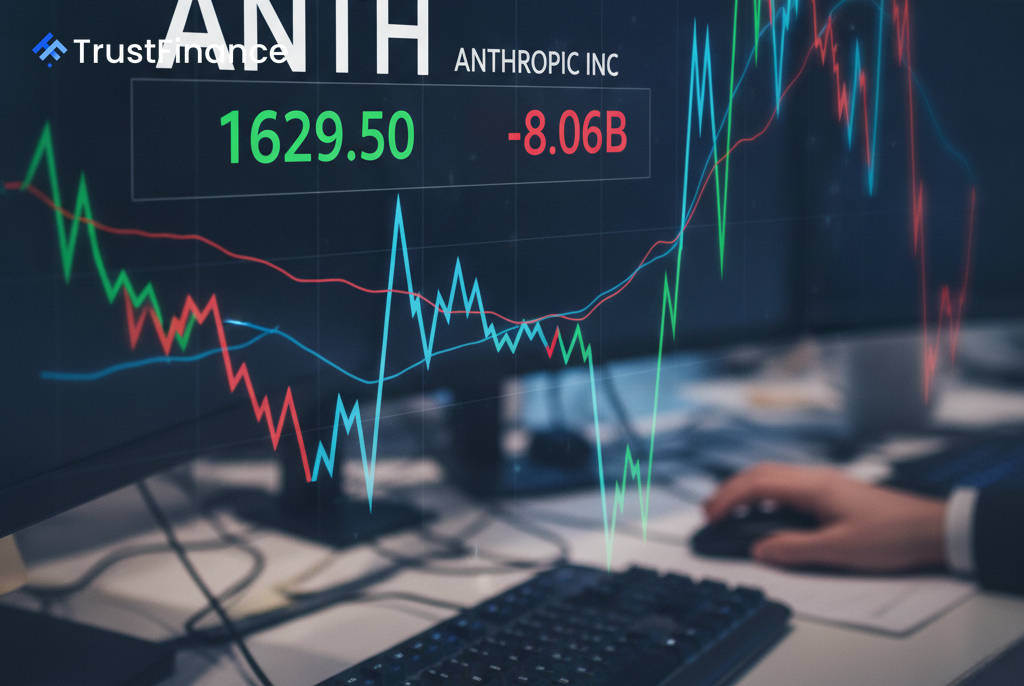
AI safety and research company Anthropic has officially unveiled its paperwork for a U.S. initial public offering, providing the first public look into the AI frontrunner's financials. The filing reveals a picture of explosive revenue growth counterbalanced by staggering operating losses and massive long-term spending commitments required to compete in the generative AI arms race.
Rapid Revenue Growth Paired With Steep Losses
The company, known for its Claude family of AI models, disclosed a dramatic increase in revenue, growing from $41 million in 2023 to $4.59 billion in 2025. According to the filing, revenue for the first six months of 2026 alone reached $16.29 billion.
This growth is primarily driven by a "consumption-based" model, where enterprise customers pay for the amount of information, or "tokens," processed by its AI. Anthropic also generates revenue from paid subscription tiers such as "Pro" and "Max."
However, this rapid expansion has come at a significant cost. The filing shows Anthropic's operating loss widened to $8.06 billion in 2025 from $2.98 billion the prior year. For the first half of 2026, the company reported an operating loss of $693 million.
The High Cost of Computing Power
Anthropic's largest expense is computing power, a critical resource for training and running its advanced AI models. The company has made over $500 billion in spending commitments with six partners over the next decade, one of the largest such buildouts on record.
These agreements, many of which are non-cancelable, include substantial long-term contracts with major cloud providers. Key commitments include:
 Ad
- At least $110 billion with Amazon Web Services
- Approximately $114.5 billion with Google Cloud
- $44.9 billion with Microsoft
The filing also highlights the circular financing structure common in the AI industry. Amazon and Google, two of Anthropic's largest cloud vendors, are also among its top shareholders. Amazon has invested at least $13 billion with an agreement for up to $20 billion more, while Google has committed up to $40 billion.
Unique Governance and Competitive Position
Founded in 2021 by former OpenAI researchers, Anthropic operates as a Public Benefit Corporation (PBC), a legal structure that requires it to balance shareholder profits with its mission of developing AI for the benefit of humanity. The company will maintain this structure post-listing.
The filing also details a governance structure designed to keep control in the hands of its founders. A single share of Class F stock, controlled by a majority vote of its seven co-founders, will hold 50.1% of the total voting power, limiting the influence of public shareholders on key corporate matters.
In the competitive landscape, Anthropic's primary rival is OpenAI. However, it also faces intense competition from Alphabet's Google and Elon Musk's SpaceX. Data from Ramp, which tracks business spending, indicated Anthropic accounted for 60.1% of AI token spending in the week ended October 11, suggesting it has gained significant traction with enterprise customers.
Read next
More on Stocks
Cadence Launches Nvidia-Backed AI Suite for In-House Chip Design
Cadence Design Systems has introduced Maestro, a new portfolio of AI models developed with Nvidia, offering chipmakers the ability to run the tools on-premises in a strategic split from rival Synopsys's cloud-based OpenAI partnership.

T-Mobile Unveils 'T-Mix' Wireless Plans with Customizable Perks
The wireless carrier is launching a new series of plans that allow customers to choose and swap bundled subscription services like Netflix and DoorDash, marking a strategic shift from its traditional fixed-tier model.

Howard Hughes Stock Gains on S&P SmallCap 600 Index Inclusion
Shares of the real estate developer rose after S&P Dow Jones Indices announced it would add the company to the benchmark small-cap index, triggering expected demand from passive funds.

Verizon Stock Slides Despite Raised Guidance Amid Competition Concerns
Shares of Verizon Communications fell even after the company boosted its full-year forecast, as a quarterly revenue miss and fears of increased industry competition weighed on investor sentiment.