
Story
Voepass Crash Caused by Icing, Pilot Actions, and Airline Safety Lapses, Brazil Report Finds
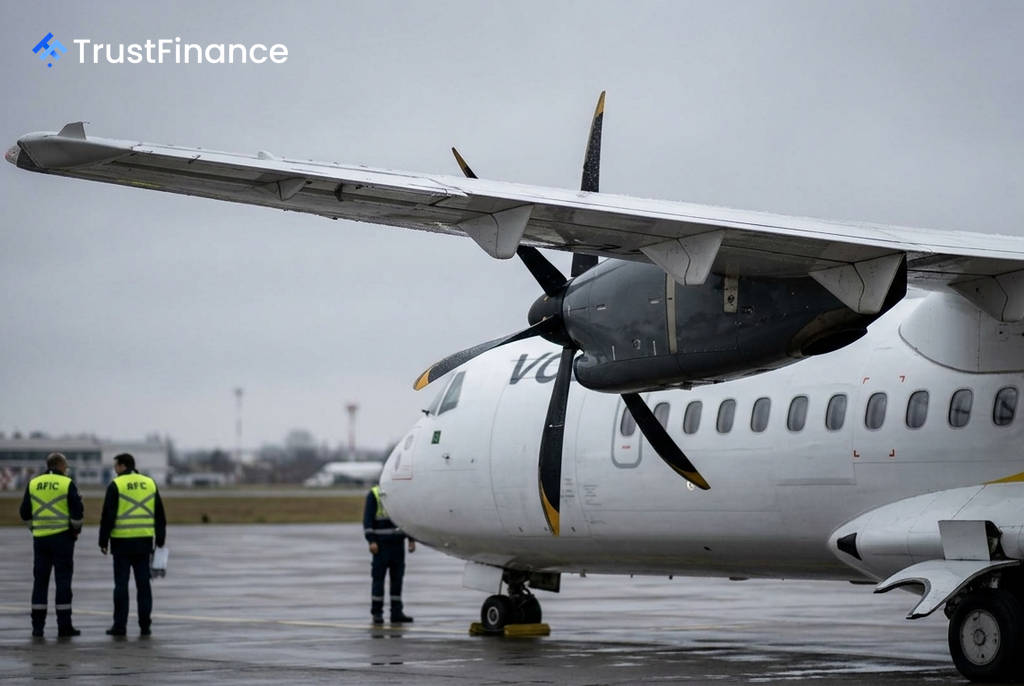
Brazilian air accident investigators have concluded that a combination of severe icing, crew actions, and systemic safety failures at Voepass led to the fatal 2024 crash of an ATR turboprop that killed all 62 people on board. The final report provides a detailed analysis of the events that caused Voepass Flight 2283 to enter a stall and crash in a "flat spin" on August 9, 2024.
Investigation Cites 19 Factors
Brazil’s Center for Investigation and Prevention of Aeronautical Accidents (Cenipa) identified a total of 19 contributing factors in its final report. The aircraft, an ATR 72-500, encountered severe icing conditions for which its de-icing system experienced multiple failures. Investigators found that the pilots switched the system on and off several times amid warnings.
The report details critical crew-related issues, noting the pilots failed to follow required procedures after multiple "cruise speed low" and "degraded performance" alerts. Cockpit recordings indicated the captain acknowledged the de-icing system was malfunctioning, while the first officer stated he had forgotten to activate it. Cenipa suggested the crew may have experienced "inattentional blindness," a phenomenon where a high workload causes operators to miss critical information.
Systemic Failures at Voepass
Beyond the specific flight, the investigation uncovered significant shortcomings in the airline's safety culture, which Cenipa described as a "normalization of deviations." The report cited a "culture of informality" where pilots and mechanics would not properly record aircraft issues in maintenance logs to ensure the plane remained in service.
 Ad
This practice meant that previous failures with the aircraft's de-icing system were not officially documented. Voepass, which filed for bankruptcy protection in April 2025, had its operations suspended by Brazil's aviation regulator ANAC a month earlier due to safety concerns.
Industry-Wide Recommendations
Following its findings, Cenipa issued a safety recommendation to the European Union Aviation Safety Agency (EASA). The agency urged EASA to work with aircraft manufacturer ATR, a joint venture between Airbus and Leonardo, to review procedures related to "degraded performance" to prevent similar incidents.
Historically, ATR 72 aircraft have been involved in other accidents globally where ice buildup led to a loss of control. Brazil's regulator, ANAC, stated it will begin a detailed technical analysis of the report's findings, a process expected to take up to 120 days.
Read next
More on Stocks
FTC Orders Walmart, Uber, Delta to Disclose Data on Personalized Pricing
The U.S. Federal Trade Commission is demanding nine major companies, including leading retail, travel, and gig economy firms, to provide information on how they use consumer data for setting individual prices and wages.

Google Launches Gemini 4 Carbon AI Model to Bolster Cybersecurity Capabilities
Alphabet's Google has unveiled Gemini 4 Carbon, its latest AI model specifically designed for advanced cybersecurity tasks like vulnerability detection and secure code generation. The launch escalates competition with rivals OpenAI and Anthropic in the enterprise AI market.

Oracle Shares Surge After Unveiling $225 Billion Revenue Target for 2030
Oracle stock rose sharply after the company presented a long-term financial outlook targeting at least $225 billion in annual revenue by fiscal 2030, driven by its expanding AI infrastructure business.

DOJ Scrutinizes Nvidia's $12.9B Hugging Face Deal Amid Broader Antitrust Probe, Sources Say
The U.S. Department of Justice is reportedly examining Nvidia's planned $12.93 billion acquisition of AI platform Hugging Face as part of a wider, ongoing antitrust investigation into the chipmaker's market conduct.