
Story
UBS Downgrades Essity to 'Sell' on Growth, Inflation, and Divestment Concerns
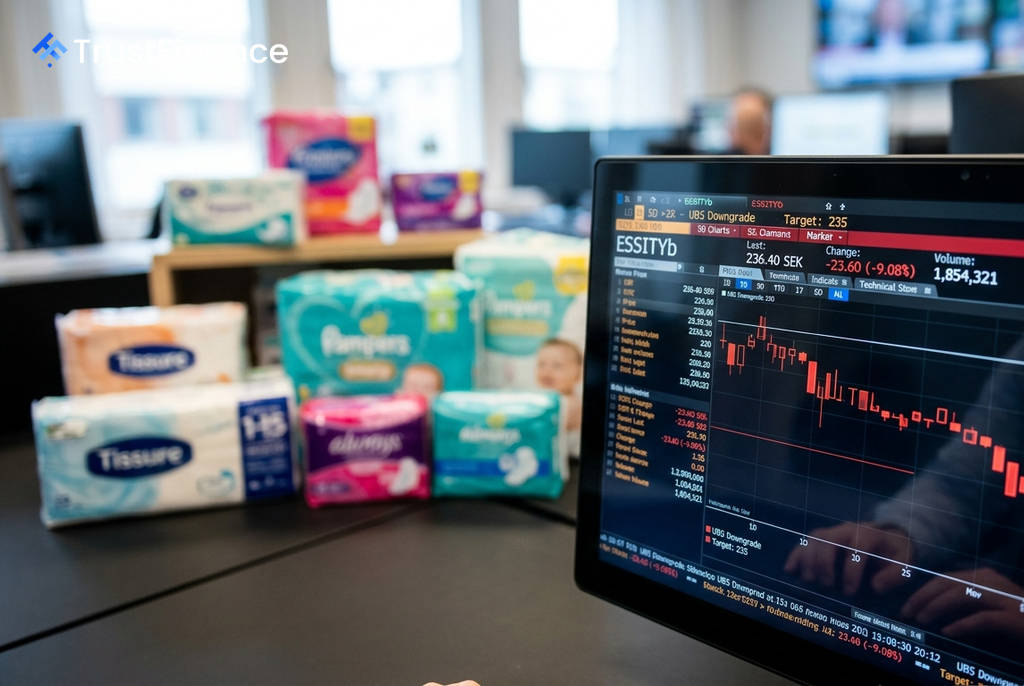
UBS has downgraded hygiene and health products company Essity to 'Sell' from 'Buy', citing a challenging outlook marked by slowing growth, renewed raw material inflation, and significant risks tied to a potential business divestment. The investment bank also cut its price target for the company's stock to 235 Swedish crowns from 280 crowns.
Key Concerns for Essity
In a research note published Thursday, UBS outlined several factors behind its more pessimistic stance on the company. The bank's analysts highlighted a combination of headwinds that are expected to weigh on Essity's financial performance.
Key drivers for the downgrade include:
- Weaker Growth: UBS forecasts organic sales growth of 2.6% in 2027, below the market consensus of 3.2% and Essity's own medium-term target of over 3%.
- Margin Pressure: The company is reportedly entering a new raw materials inflation cycle in the third quarter of 2026, which is expected to compress profitability.
- Divestment Uncertainty: A potential sale of the Consumer Tissue division is viewed as operationally complex and could result in significant stranded costs and dissynergies.
Financial Forecasts Lowered
 Ad
UBS warned that rising input costs are likely to outpace pricing, with its proprietary tracker implying an 11 percentage point drag on EBITA growth in the second half of the year. The bank forecasts Essity's second-half EBITA margins will decline by 230 basis points, a steeper drop than the consensus estimate of a 160 basis point contraction.
As a result, UBS has lowered its earnings per share (EPS) estimates for fiscal years 2026-2028 by approximately 6%. For 2027, the bank's EBITA and EPS forecasts are now 5% below consensus estimates.
Consumer Tissue Divestment Risks
The potential sale of the Consumer Tissue unit, while favored by management, presents considerable challenges, according to the note. Due to operational overlap with Essity's Personal Care and Professional Hygiene segments, a divestment could be complex and costly.
UBS estimates a full divestment could generate between 3.5 billion and 6.5 billion crowns in stranded costs. The bank also noted that the full financial benefits of such a move might not materialize until around 2030. The note concluded that the stock's current valuation does not adequately reflect these combined risks and the below-target growth profile.
Read next
More on Stocks
FTC Orders Walmart, Uber, Delta to Disclose Data on Personalized Pricing
The U.S. Federal Trade Commission is demanding nine major companies, including leading retail, travel, and gig economy firms, to provide information on how they use consumer data for setting individual prices and wages.

Google Launches Gemini 4 Carbon AI Model to Bolster Cybersecurity Capabilities
Alphabet's Google has unveiled Gemini 4 Carbon, its latest AI model specifically designed for advanced cybersecurity tasks like vulnerability detection and secure code generation. The launch escalates competition with rivals OpenAI and Anthropic in the enterprise AI market.

Oracle Shares Surge After Unveiling $225 Billion Revenue Target for 2030
Oracle stock rose sharply after the company presented a long-term financial outlook targeting at least $225 billion in annual revenue by fiscal 2030, driven by its expanding AI infrastructure business.

DOJ Scrutinizes Nvidia's $12.9B Hugging Face Deal Amid Broader Antitrust Probe, Sources Say
The U.S. Department of Justice is reportedly examining Nvidia's planned $12.93 billion acquisition of AI platform Hugging Face as part of a wider, ongoing antitrust investigation into the chipmaker's market conduct.