
Story
Transport Firms' Fuel Surcharges Boost Profits Amid Geopolitical Tensions
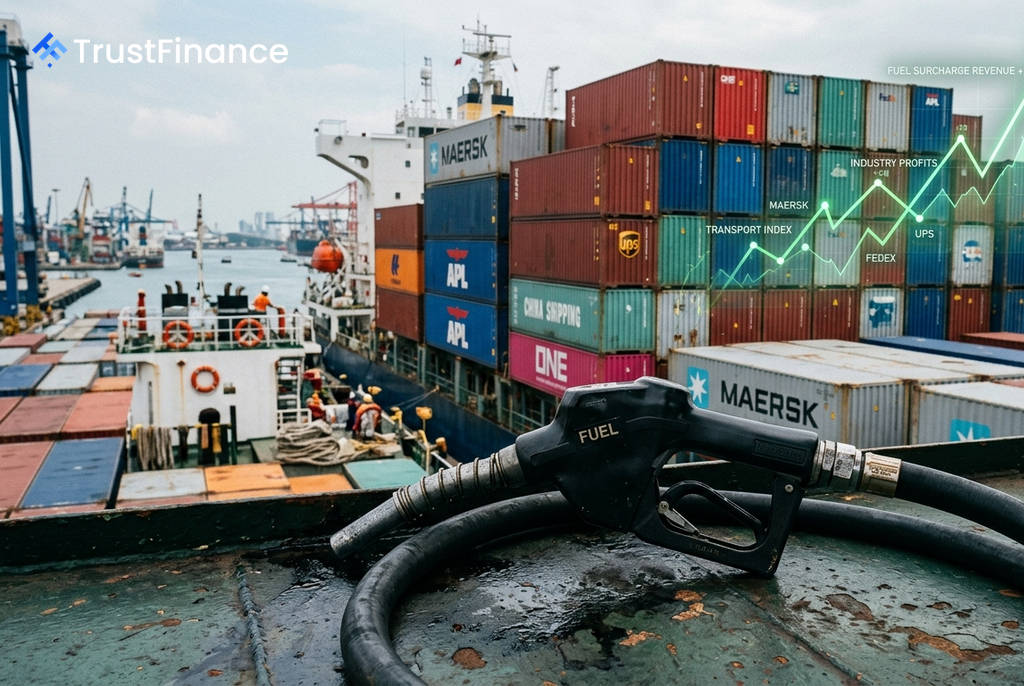
U.S. transportation and logistics companies are levying hefty fuel surcharges on customers, citing higher energy costs linked to geopolitical conflict. However, regulatory filings and financial results show these fees are becoming a significant profit center, passing extra costs through the supply chain that may ultimately be borne by consumers.
Surcharges Outpace Fuel Costs
The practice is most transparent in the U.S. railroad sector, where companies are required to report fuel costs and surcharge revenue to federal regulators. In a notable example, Union Pacific reported collecting $91.1 million more in fuel surcharge revenue than it spent on fuel during the second quarter. This resulted in an $83.2 million boost to its profits, or 14 cents per share.
Parcel delivery giants have also seen surcharges climb dramatically. According to an analysis by AFS Logistics, UPS's fuel surcharge has risen to 24.25% of the base shipping rate, while FedEx's is at 23.75%. This is a steep increase from August 2021, when the UPS surcharge was approximately 9% with diesel at $3.35 a gallon. Both companies described the net impact on operating profit as modest or not material.
Global Shipping Sees Similar Trend
The trend extends to global container shipping, where war-related disruptions have supported higher rates. Danish shipping line A.P. Moller-Maersk reported a second-quarter profit of $3 billion, excluding items, which was nearly $1 billion more than analysts had anticipated. While the company attributed its performance to faster rate adjustments, an analysis from VesselBot highlighted a significant decoupling of surcharges from actual fuel prices.
 Ad
According to VesselBot, while marine fuel costs increased by about 30% this year, container shipping fuel surcharges surged by as much as 75%. Analysts note that carriers' bargaining power is the strongest it has been since the pandemic, allowing them to recover more than just their increased fuel expenses when market conditions are favorable.
Customer Concerns Rise
The gap between fuel cost increases and surcharge hikes is creating tension with shippers, who have long been concerned that transport providers use periods of disruption to bolster profits. James Hookham, director of the Global Shippers Forum, told Reuters that Maersk's results reinforce a "'crisis-means-cash' syndrome."
These additional costs are levied on retailers, manufacturers, and other businesses that rely on shipping services. Ultimately, these higher operational expenses can contribute to broader inflationary pressures on consumer goods.
Read next
More on Stocks
FTC Orders Walmart, Uber, Delta to Disclose Data on Personalized Pricing
The U.S. Federal Trade Commission is demanding nine major companies, including leading retail, travel, and gig economy firms, to provide information on how they use consumer data for setting individual prices and wages.

Google Launches Gemini 4 Carbon AI Model to Bolster Cybersecurity Capabilities
Alphabet's Google has unveiled Gemini 4 Carbon, its latest AI model specifically designed for advanced cybersecurity tasks like vulnerability detection and secure code generation. The launch escalates competition with rivals OpenAI and Anthropic in the enterprise AI market.

Oracle Shares Surge After Unveiling $225 Billion Revenue Target for 2030
Oracle stock rose sharply after the company presented a long-term financial outlook targeting at least $225 billion in annual revenue by fiscal 2030, driven by its expanding AI infrastructure business.

DOJ Scrutinizes Nvidia's $12.9B Hugging Face Deal Amid Broader Antitrust Probe, Sources Say
The U.S. Department of Justice is reportedly examining Nvidia's planned $12.93 billion acquisition of AI platform Hugging Face as part of a wider, ongoing antitrust investigation into the chipmaker's market conduct.