
Story
Sovereign Bond Yields Hit Multi-Year Peaks on Inflation Fears and Supply Glut

A widespread sell-off in global sovereign debt markets intensified for a sixth consecutive session, pushing government borrowing costs in Europe, North America, and Asia to their highest levels in years, and in some cases, decades. The rout is being driven by a confluence of resurgent inflation fears amid Middle East tensions and a massive wave of corporate debt issuance competing for investor capital.
Global Yields Reach New Highs
In Europe, benchmark yields reached levels not seen in over a decade. The sell-off was particularly pronounced in core government bonds:
- Germany’s 10-year Bund yield, a key benchmark for the eurozone, climbed to 3.370%, its highest since 2011.
- Germany's policy-sensitive two-year yield rose to 2.983%, a peak not reached since 2024.
- France’s 10-year OAT yield escalated to 4.244%, a level last seen during the 2008 global financial crisis, as concerns over fiscal deficits amplified market pressure.
The rout extended into the Asia-Pacific region. Australia’s 10-year government bond yield jumped to 5.205%, also its highest since 2011, following strong domestic GDP figures and a higher-than-expected inflation reading. In Japan, the 10-year government bond (JGB) yield held above 3.000%, its highest point since 1996, marking a historic shift for a market long defined by the Bank of Japan's ultra-loose monetary policy.
Inflation Fears and Geopolitical Risk Fuel Sell-Off
 Ad
The sell-off reflects a fundamental shift in market dynamics, as government bonds fail to act as a traditional safe-haven asset. Investors are instead dumping sovereign debt amid fears of a prolonged, energy-driven inflation shock stemming from escalating military conflict in the Middle East.
Direct military exchanges between the U.S. and Iran have pushed global energy benchmarks past $90 a barrel. Tensions over the Strait of Hormuz, a critical oil transit artery, threaten to drive up transportation and fuel costs, which would reignite inflationary pressures and complicate the ability of central banks like the Federal Reserve to hold or cut interest rates.
Corporate Debt Supply Adds to Pressure
Compounding the macroeconomic headwinds, government debt is facing stiff competition for capital from a surge in corporate bond issuance. Technology and multinational firms are tapping debt markets at a record pace to fund capital expenditures for artificial intelligence infrastructure and data centers.
This wave of high-grade corporate debt is entering the market at the same time major central banks are shrinking their balance sheets through quantitative tightening. With both sovereign and corporate issuers flooding the market simultaneously, investors are demanding significantly higher yields, or term premia, to absorb the glut of supply.
Read next
More on Forex
Polish Zloty Hits 11-Month Low Against Euro on Energy Price Pressure
The Polish zloty weakened to 4.410 against the euro, its lowest point since November 2023, as rising energy prices and caution ahead of a U.S. Federal Reserve decision weighed on the currency.

Sterling Slips as Dollar Strengthens Ahead of Fed Decision and UK Budget
The British pound lost ground against a resurgent U.S. dollar on Wednesday as market attention shifted from tech sector volatility to upcoming central bank decisions and the UK budget announcement.
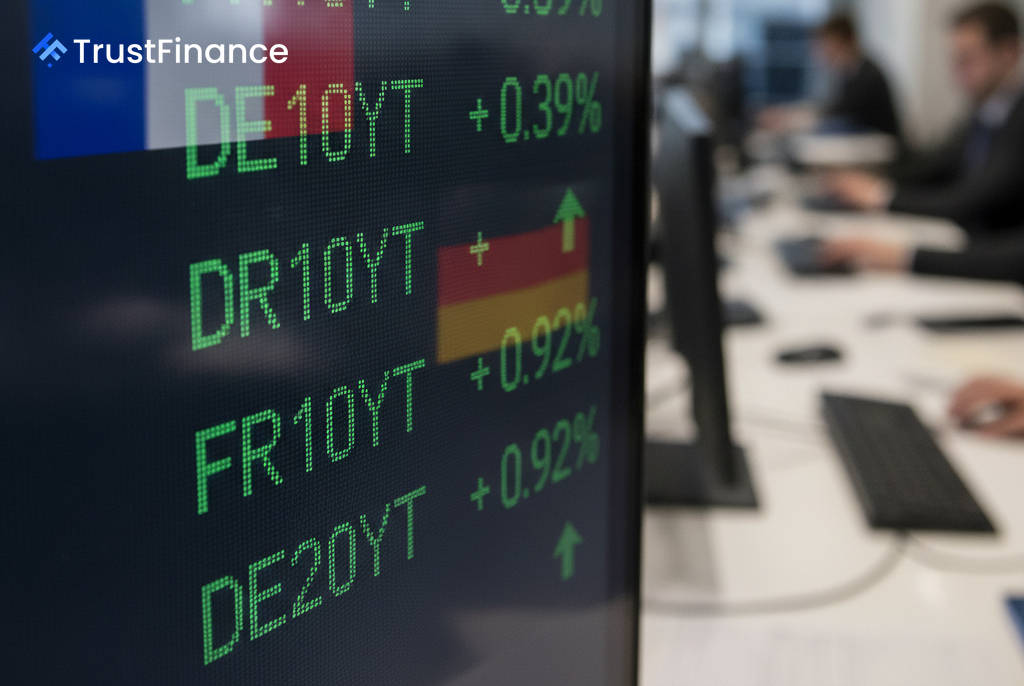
Eurozone Bond Yields Climb as French Fiscal Concerns Return Ahead of Fed, ECB Decisions
Yields on French and German government bonds rose as relief from a ratings affirmation for France proved temporary, with investors refocusing on fiscal challenges and awaiting key policy verdicts from the U.S. Federal Reserve and the European Central Bank.

Canadian Dollar Slips as Markets Await Bank of Canada, Fed Decisions
The Canadian dollar edged lower against its U.S. counterpart, snapping a seven-day winning streak as investors adopted a cautious stance ahead of Wednesday's key interest rate announcements from both the Bank of Canada and the U.S. Federal Reserve.