
Story
Mizuho: China's CXMT Poses Limited Threat to Global DRAM Pricing
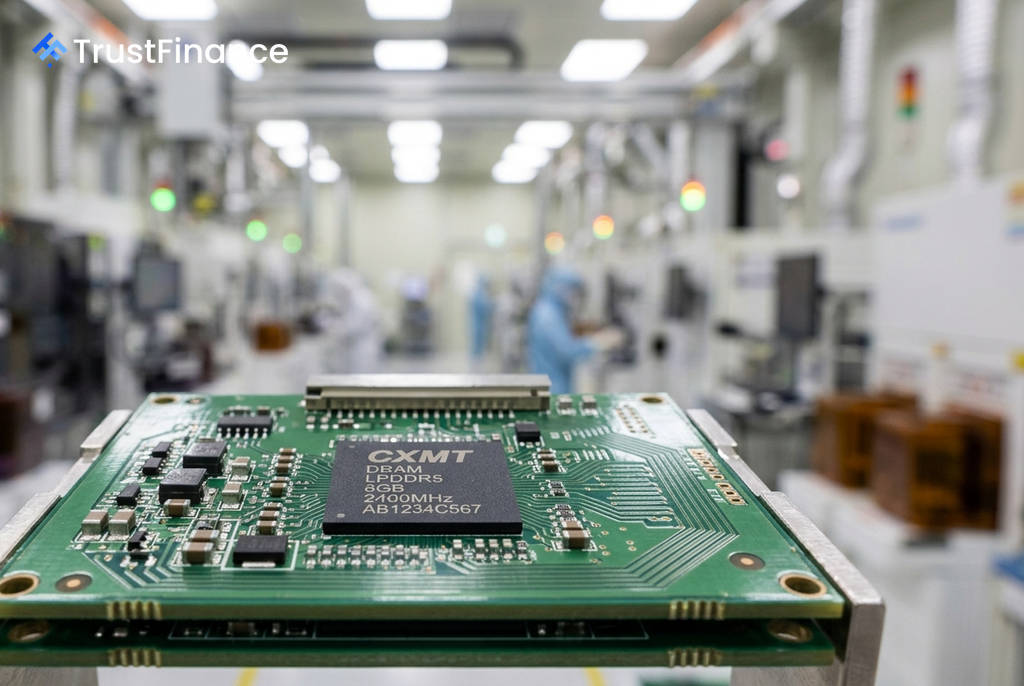
Concerns that Chinese memory manufacturer ChangXin Memory Technologies (CXMT) will disrupt the global DRAM market with a flood of new supply are "overblown," according to a new analysis from Mizuho. The firm argues that operational constraints and a slower-than-expected growth trajectory will limit the company's impact on pricing.
Growth Projections Below Industry Average
In a note to clients, Mizuho projects CXMT's DRAM bit supply will grow by only 13% year-over-year in 2027. This rate is significantly below the broader industry's expected growth of 21% for the same period, which would leave CXMT with a global market share of roughly 8%.
The firm's analysis points to a compound annual growth rate (CAGR) of 24% for CXMT between 2026 and 2028, a figure in line with the overall DRAM industry. According to the note, this data suggests "no reckless supply expansion to try and take share with aggressive pricing."
Significant Operational Constraints
Mizuho's TMT sector specialist, Jordan Klein, highlighted several key challenges that will temper CXMT's expansion plans. The firm's analysis cited a number of significant operational and technological hurdles facing the Chinese chipmaker:
 Ad
- Equipment Support: U.S. firms Applied Materials and Lam Research reportedly suspended servicing for CXMT's existing tools in March 2026.
- Aging Infrastructure: Much of the company's equipment is aging, with many tools already 10 years old and due for an upgrade cycle.
- Technological Gaps: A lack of access to critical EUV (extreme ultraviolet) lithography tools was flagged as a "major constraint," alongside expected yield pressures from upcoming node transitions.
Shifting Focus and Limited Market Access
The report also suggests that CXMT's strategic focus may further limit its impact on the conventional DRAM market. Mizuho noted that the Chinese government wants the company to allocate more capacity toward high-bandwidth memory (HBM), a segment where CXMT currently "lags big time," according to Klein.
This strategic pivot would divert resources away from the mainstream DRAM market. Furthermore, CXMT is reportedly not selling to major non-Chinese hyperscalers, which restricts its ability to influence global pricing dynamics and compete directly with established market leaders.
Read next
More on Stocks
FTC Orders Walmart, Uber, Delta to Disclose Data on Personalized Pricing
The U.S. Federal Trade Commission is demanding nine major companies, including leading retail, travel, and gig economy firms, to provide information on how they use consumer data for setting individual prices and wages.

Google Launches Gemini 4 Carbon AI Model to Bolster Cybersecurity Capabilities
Alphabet's Google has unveiled Gemini 4 Carbon, its latest AI model specifically designed for advanced cybersecurity tasks like vulnerability detection and secure code generation. The launch escalates competition with rivals OpenAI and Anthropic in the enterprise AI market.

Oracle Shares Surge After Unveiling $225 Billion Revenue Target for 2030
Oracle stock rose sharply after the company presented a long-term financial outlook targeting at least $225 billion in annual revenue by fiscal 2030, driven by its expanding AI infrastructure business.

DOJ Scrutinizes Nvidia's $12.9B Hugging Face Deal Amid Broader Antitrust Probe, Sources Say
The U.S. Department of Justice is reportedly examining Nvidia's planned $12.93 billion acquisition of AI platform Hugging Face as part of a wider, ongoing antitrust investigation into the chipmaker's market conduct.