
Story
Jefferies: Fed's 2027 Rate Policy Will Dictate Chemical Sector Winners
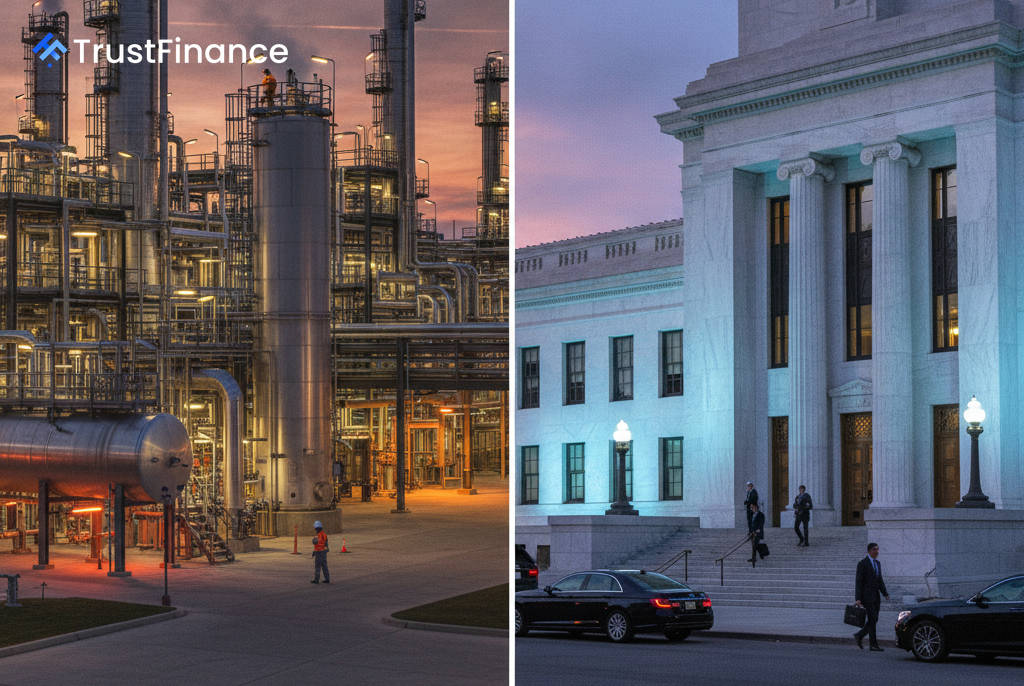
The future performance of the U.S. chemical sector is closely tied to the Federal Reserve's interest rate policy in 2027, with divergent outcomes expected depending on the central bank's priorities, according to a new analysis by Jefferies. The investment firm notes that the sector has largely priced in a "higher-for-longer" rate environment, which could postpone a recovery in durable goods.
A Divergent Path Based on Fed Policy
Jefferies outlined two primary scenarios that could shape returns for chemical companies. The first, which the firm says is largely anticipated by the market, involves a continuation of the current higher-for-longer interest rate policy as the Fed focuses on managing aggregate demand.
In this environment, the firm recommended investors focus on companies including Linde (LIN), Corteva (CTVA), International Flavors & Fragrances (IFF), and Quaker Chemical (KWR).
Conversely, if the Fed shifts its focus to stimulating interest-rate sensitive demand and boosting the "home equity wealth effect," a different set of companies would likely benefit. For this scenario, Jefferies highlighted buy-rated names including Celanese (CE), Huntsman (HUN), Eastman Chemical (EMN), and Cabot (CBT), among others.
The Weight of Higher Borrowing Costs
The report underscores the persistent financial pressure from elevated corporate borrowing costs that have prevailed since 2022. As companies restructure their balance sheets, the cost of capital remains a significant factor for profitability and valuation.
 Ad
Jefferies provided several key estimates on the impact of higher rates:
- For about half the stocks the firm covers, refinancing existing debt at current levels would create an earnings headwind of more than 1% of EBITDA.
- Each 100 basis point (1%) increase in borrowing costs would likely reduce earnings per share (EPS) by 1% to 3% for most chemical companies.
- The same rate hike would cut discounted cash flow (DCF) based valuation multiples by about 5%, or by as much as 8% for companies with higher leverage (net debt to EBITDA over 3x).
Sector Valuation Appears Stretched
According to Jefferies' models, the chemical sector's current valuation appears elevated relative to historical norms. The sector currently trades at a next-twelve-month price-to-earnings (P/E) multiple of 18.4x.
A regression model calibrated to data from the 1980s to the 2000s suggests a warranted P/E multiple in the range of 14x to 15x, indicating potential overvaluation at current levels. The firm's analysis also showed that valuation benchmarks vary widely by sub-sector, from around 19.0x for stable industry leaders to as low as 4x-5x for commodity chemical producers if a near-term recession seems probable.