
Story
Dollar Falls for Second Month Amid Conflicting Fed and Treasury Signals
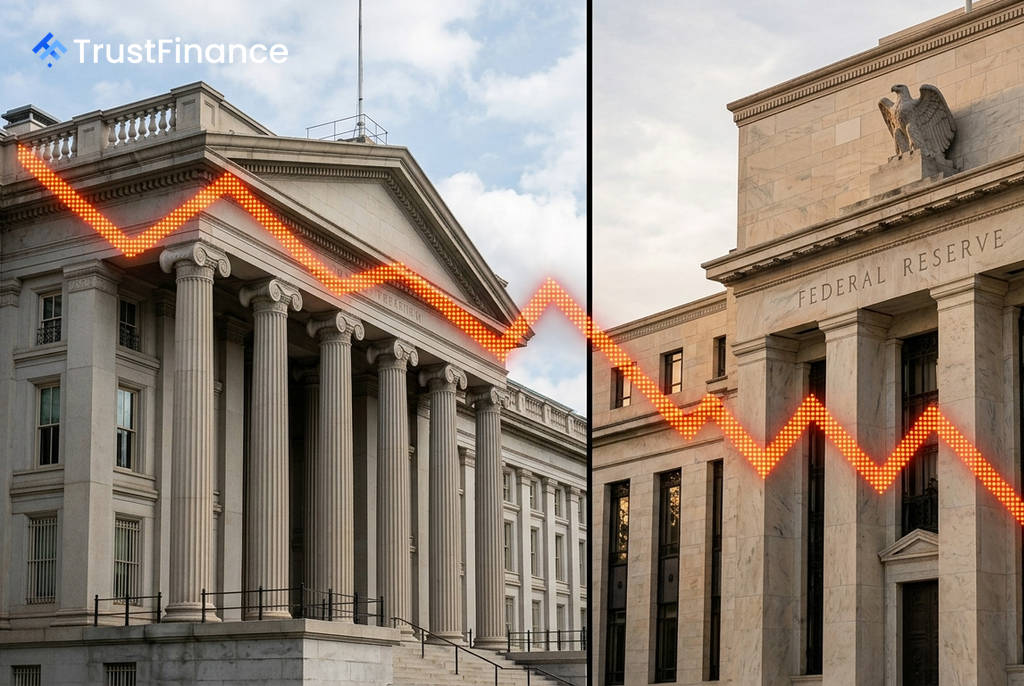
The U.S. dollar posted its second consecutive monthly decline in August, pressured by conflicting signals from U.S. monetary and fiscal authorities that have created new uncertainty for foreign exchange markets. The weakness comes as the Treasury Department ramps up its government bond buyback program, sparking concerns over a potential policy preference for a weaker currency.
Policy Tug-of-War
The Bloomberg Dollar Spot Index fell 0.9% in August, following a 1.3% decline in July, marking its longest monthly losing streak since February, according to market data. The dollar has now fallen in five of the first eight months of the year.
A key driver of the recent pressure is an expanded debt management strategy from the U.S. Treasury. Treasury Secretary Besant announced earlier in the month that the department would increase the size of its government bond repurchases, with individual operations potentially exceeding $4 billion. The move unsettled some overseas investors and revived speculation that the administration may favor a weaker dollar to ease its financing costs.
In response, speculative investors, including hedge funds and asset managers, have reportedly reduced their long dollar bets. Adding to the complexity, Secretary Besant stated on Monday that he and Federal Reserve Chair Wash were "aligned" on bond-related issues, drawing further investor focus to the interplay between Treasury and Fed policies.
Markets Question Fed's Resolve
 Ad
On the monetary policy front, Fed Chair Wash delivered hawkish remarks last week, reaffirming the central bank's commitment to returning inflation to its 2% target. U.S. inflation has remained above that goal for more than five years, according to the source report. The comments initially boosted the dollar and led traders to price in a greater than 50% probability of a rate hike in September.
However, some Wall Street analysts believe the market's rate-hike expectations may be too aggressive. "The dollar could weaken further in September because the Fed is unlikely to deliver on the full extent of tightening currently priced in by the market," said Erik Nelson, a strategist at Wells Fargo. If that view proves correct, both Treasury yields and the dollar could face downward pressure as traders unwind their bets.
Economic Data in Focus
The divergence between a hawkish Fed and an activist Treasury has left the dollar highly sensitive to incoming economic data, especially as Chair Wash has not relied on strong forward guidance to signal future policy moves. Market participants are now closely watching this Friday's U.S. employment report for fresh clues on the health of the economy.
"August's economic data will be crucial," said Alex Cohen, a foreign exchange strategist at Bank of America. "If employment and inflation data come in weak, the Fed could remain on hold. But another strong set of numbers could make a further rate hike a more urgent option." Reflecting the heightened uncertainty, the one-month implied volatility for the dollar index has ticked higher in recent sessions, signaling that traders are positioning for larger price swings in the weeks ahead.
Read next
More on Forex
Polish Zloty Hits 11-Month Low Against Euro on Energy Price Pressure
The Polish zloty weakened to 4.410 against the euro, its lowest point since November 2023, as rising energy prices and caution ahead of a U.S. Federal Reserve decision weighed on the currency.

Sterling Slips as Dollar Strengthens Ahead of Fed Decision and UK Budget
The British pound lost ground against a resurgent U.S. dollar on Wednesday as market attention shifted from tech sector volatility to upcoming central bank decisions and the UK budget announcement.

Eurozone Bond Yields Climb as French Fiscal Concerns Return Ahead of Fed, ECB Decisions
Yields on French and German government bonds rose as relief from a ratings affirmation for France proved temporary, with investors refocusing on fiscal challenges and awaiting key policy verdicts from the U.S. Federal Reserve and the European Central Bank.

Canadian Dollar Slips as Markets Await Bank of Canada, Fed Decisions
The Canadian dollar edged lower against its U.S. counterpart, snapping a seven-day winning streak as investors adopted a cautious stance ahead of Wednesday's key interest rate announcements from both the Bank of Canada and the U.S. Federal Reserve.