
Story
Citi Analysis Reveals How Stocks Typically Trade on Fed Rate Hike Days

Summary
According to a Citi analysis of high-frequency data, the first day of a Fed rate hike cycle is not consistently negative for stocks, and a common intraday pattern of an initial rally followed by a reversal often emerges.
An analysis by Citi using high-frequency data reveals that the first day of a Federal Reserve tightening cycle has not historically been a guaranteed negative for U.S. stocks, and a familiar intraday trading pattern often emerges during policy announcements.
The 'First Hike' Is Not Always Bearish
Contrary to some investor expectations, the initial rate hike of a tightening cycle has not been "uniformly bearish on the day," according to the research from Citi. The bank's analysts suggest this is because markets typically digest and price in much of the tightening risk before the policy action is officially announced.
Key findings from the bank's sample include:
- Across the seven previous "first hikes" examined, U.S. equities rose on four occasions.
- There was no consistent directional reaction across bonds, gold, or currencies on those specific days.
A Familiar Intraday Pattern
Citi's work points to a recurring sequence of events for equities on Federal Open Market Committee (FOMC) decision days. The initial market reaction to the policy statement is often reversed during the subsequent press conference.
 Ad
AdThe typical pattern observed is:
- Initial Reaction: Equities frequently experience a positive move immediately following the 2:00 PM ET statement release.
- Press Conference Reversal: These gains are often unwound once the Fed Chair begins speaking, with the market typically ending the day slightly lower by an average of around 10 basis points.
- Directional Momentum: Citi wrote that initial gains post-statement are "typically unwound," while initial declines "tend to extend into the close."
Treasury Reactions and Recent Trends
The pattern for U.S. Treasuries is distinct, according to the analysis. The immediate "knee-jerk" move in yields upon the statement's release often marks the session's extreme, with yields then tending to mean-revert into the close. However, Citi notes these reactions can sometimes have a multi-day follow-through.
Looking at the past 12 FOMC meetings, the bank observed that equity returns have been mixed, with a more negative reaction around several recent decisions. This highlights that intraday moves often reflect the broader news flow and the nuanced tone of the press conference, rather than the rate decision alone.
Read next
More on Stocks
Orion180 Prices IPO at $12 Per Share, Targeting $240 Million Raise
Florida-based insurer Orion180 Insurance Group Inc. has priced its initial public offering of 20 million shares at $12.00 each, aiming to raise $240 million ahead of its debut on the Nasdaq.

Nucor Stock Slides After Q3 Earnings Guidance Misses Analyst Forecasts
Nucor Corporation (NUE) shares fell after the company projected third-quarter earnings of $5.55 to $5.65 per share, below the Wall Street consensus of $5.99, citing the absence of significant one-time gains from the prior quarter.
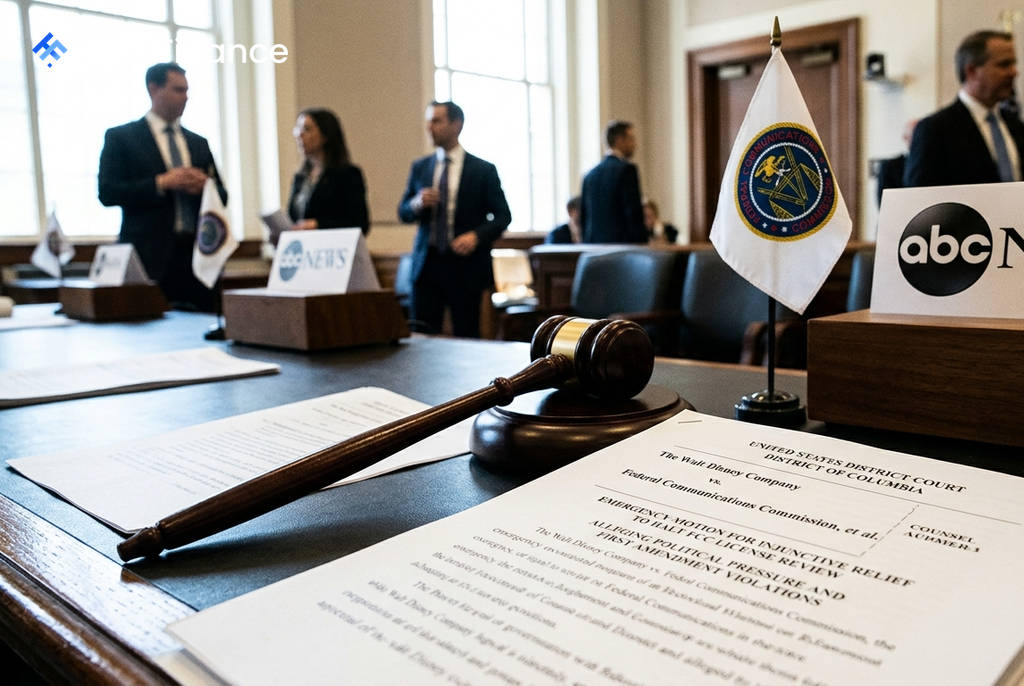
Disney Asks Court to Halt FCC License Review, Alleges Political Pressure From Trump
The Walt Disney Company has filed a legal challenge to stop the Federal Communications Commission from conducting an early review of its ABC station licenses, claiming the regulator is acting on President Trump's directives.
Starbucks Settles Florida Lawsuit Over Diversity Policies for $1 Million
The coffee giant has agreed to settle a lawsuit with Florida's attorney general, pledging to avoid race- or sex-based quotas in its employment practices and pay $1 million to cover the state's litigation costs.