
Story
China's Top Three Airlines Post $1.22 Billion H1 Loss as Fuel Costs Surge
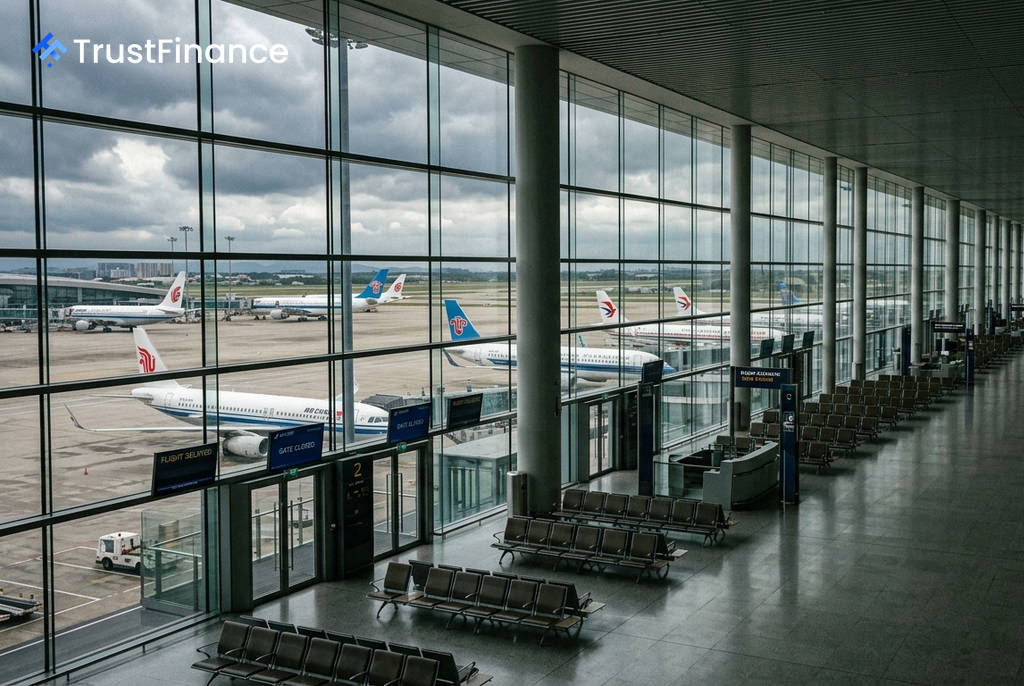
China’s three largest state-owned airlines reported significant losses for the first half of the year, reversing a profitable first quarter as surging jet fuel prices and a challenging domestic market weighed on their performance. Air China, China Eastern Airlines, and China Southern Airlines posted a combined net loss of approximately 8.2 billion yuan ($1.22 billion), according to their financial filings.
A Sharp Reversal
The first-half results mark a stark turnaround from the carriers' combined first-quarter profit of 4.82 billion yuan, which was driven by strong demand during the Lunar New Year holiday. The losses underscore the financial fragility of China's aviation sector as it navigates its post-pandemic recovery.
Individual airline performance for the first half included:
- China Southern Airlines: Reported the largest loss at 3.7 billion yuan.
- Air China: Posted a net loss of 2.3 billion yuan.
- China Eastern Airlines: Recorded a loss of 2.2 billion yuan.
In response to the results, shares for all three carriers fell in mainland China and Hong Kong trading, and none of the airlines declared an interim dividend.
Fuel Costs and Demand Headwinds
 Ad
The primary driver of the losses was a dramatic increase in operational expenses, with fuel costs rising between 35% and 38% for each carrier in the first half. Unlike many global competitors, Chinese airlines do not extensively hedge their fuel purchases, leaving them highly exposed to oil price volatility. In its filing, China Southern stated there was currently "no effective means available" to manage this exposure.
While revenues saw healthy growth, driven by recovering international demand—particularly on European routes—it was not enough to offset the higher costs. The airlines' ability to raise domestic fares has been constrained by weaker economic conditions and strong competition from high-speed rail, preventing them from passing on costs to consumers as seen in markets like the United States.
Weak Outlook for Second Half
The outlook for the remainder of the year appears challenging. The third quarter, typically the most profitable due to summer travel, has been hampered by an unusually severe typhoon season, causing widespread disruptions to domestic routes. Aviation data firm Flight Master projected that passenger traffic for Chinese airlines would fall 3.6% year-over-year in July and August, the first peak-season contraction since 2022.
Reflecting these headwinds, HSBC analysts now forecast that China's top three carriers will post a combined full-year loss of about 16.8 billion yuan in 2026, a significant downgrade from previous market expectations of a small profit. Amid the financial strain, the airlines reported continued expansion of their fleets of domestically produced COMAC C919 jets.
Read next
More on Stocks
FTC Orders Walmart, Uber, Delta to Disclose Data on Personalized Pricing
The U.S. Federal Trade Commission is demanding nine major companies, including leading retail, travel, and gig economy firms, to provide information on how they use consumer data for setting individual prices and wages.

Google Launches Gemini 4 Carbon AI Model to Bolster Cybersecurity Capabilities
Alphabet's Google has unveiled Gemini 4 Carbon, its latest AI model specifically designed for advanced cybersecurity tasks like vulnerability detection and secure code generation. The launch escalates competition with rivals OpenAI and Anthropic in the enterprise AI market.

Oracle Shares Surge After Unveiling $225 Billion Revenue Target for 2030
Oracle stock rose sharply after the company presented a long-term financial outlook targeting at least $225 billion in annual revenue by fiscal 2030, driven by its expanding AI infrastructure business.

DOJ Scrutinizes Nvidia's $12.9B Hugging Face Deal Amid Broader Antitrust Probe, Sources Say
The U.S. Department of Justice is reportedly examining Nvidia's planned $12.93 billion acquisition of AI platform Hugging Face as part of a wider, ongoing antitrust investigation into the chipmaker's market conduct.