
Story
China's E-Commerce Giants Pivot to 'Instant Retail' After Costly Subsidy War
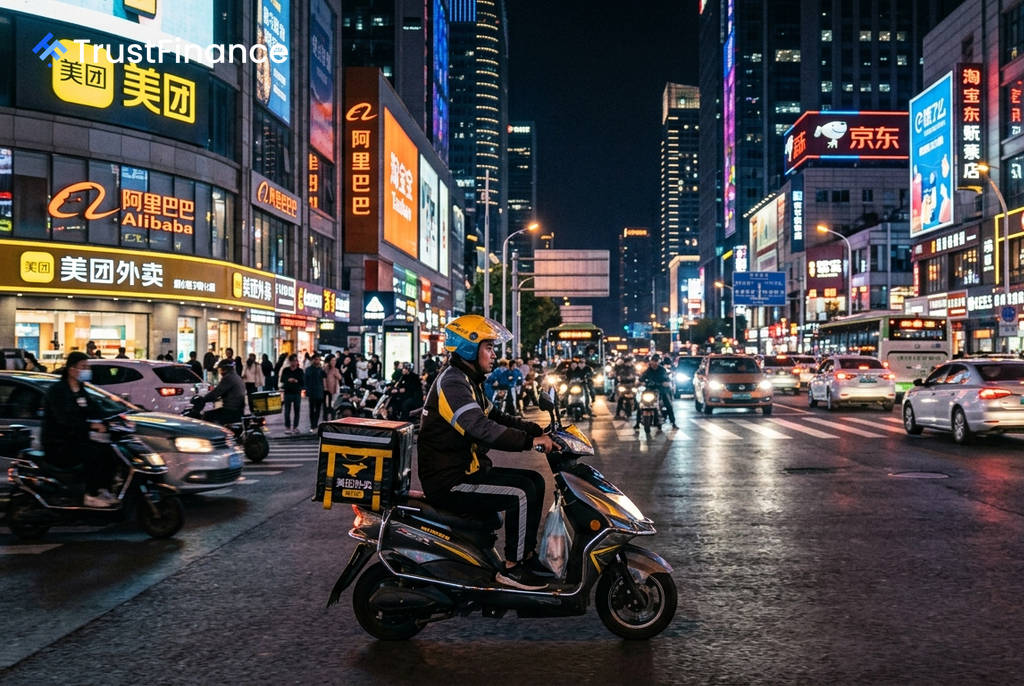
An intense and costly subsidy war among China's e-commerce giants has subsided, but its legacy is a fundamental shift in consumer expectations, pushing companies like Alibaba, Meituan, and JD.com into a new competitive arena: 'instant retail.' The battle for on-demand delivery of everything from meals to electronics now hinges on logistics infrastructure rather than deep discounts.
The New Competitive Landscape
The previous battle over meal-delivery discounts has given way to a broader focus on quick commerce, where consumers expect a wide range of goods to arrive within an hour. This emerging market is substantial; research from China's Ministry of Commerce indicates the instant-retail market is projected to reach 1.2 trillion yuan ($178 billion) by the end of the year and grow at an average annual rate of 12.6% through 2030.
This shift reflects a permanent change in shopping habits, particularly in major cities. "Quick commerce has fundamentally reshaped consumer expectations around convenience and reliability. It is an irreversible lifestyle shift," Meituan Chief Financial Officer Shaohui Chen stated on a recent earnings call. This has created a new imperative for platforms to capture a market that analysts believe will cannibalize traditional retail channels.
A Costly Battle and Regulatory Scrutiny
The price war, which involved billions of dollars in coupons and incentives, took a significant financial toll. Last year, Meituan swung to a loss, Alibaba's profitability declined, and JD.com's profit was nearly eliminated. The aggressive tactics also drew the attention of regulators, who summoned the companies multiple times and imposed 3.6 billion yuan in penalties for meal delivery safety violations in April, according to the source.
 Ad
The end of heavy subsidies has had ripple effects. Luckin Coffee, a major beneficiary of the discounts, reported that its same-store sales at self-operated stores fell 5.3% in the second quarter, citing a high comparison base from the prior year's subsidy-fueled activity.
Shifting Strategies: From Subsidies to Logistics
Second-quarter earnings reports indicate a clear strategic pivot from user acquisition to profitability and retention. The fight is now over supply chains and operational efficiency.
- Alibaba: Instant-retail revenue jumped 45% year-on-year to 53.3 billion yuan.
- Meituan: The company, which has a vast merchant and rider network, returned to an overall profit as subsidy spending eased.
- JD.com: The firm reported that losses in its instant-retail segment narrowed significantly.
Market share in the broader instant-retail category is now tightly contested. According to Q2 data from Analysys, Alibaba’s Taobao Instant Commerce held 45.7% of the market, narrowly ahead of Meituan's 45.3%, with JD.com at 7.7%. To compete, firms are investing heavily in infrastructure, including so-called dark stores for online-only orders and "lightning warehouses" in dense urban areas to ensure one-hour fulfillment.
Read next
More on Stocks
FTC Orders Walmart, Uber, Delta to Disclose Data on Personalized Pricing
The U.S. Federal Trade Commission is demanding nine major companies, including leading retail, travel, and gig economy firms, to provide information on how they use consumer data for setting individual prices and wages.

Google Launches Gemini 4 Carbon AI Model to Bolster Cybersecurity Capabilities
Alphabet's Google has unveiled Gemini 4 Carbon, its latest AI model specifically designed for advanced cybersecurity tasks like vulnerability detection and secure code generation. The launch escalates competition with rivals OpenAI and Anthropic in the enterprise AI market.

Oracle Shares Surge After Unveiling $225 Billion Revenue Target for 2030
Oracle stock rose sharply after the company presented a long-term financial outlook targeting at least $225 billion in annual revenue by fiscal 2030, driven by its expanding AI infrastructure business.

DOJ Scrutinizes Nvidia's $12.9B Hugging Face Deal Amid Broader Antitrust Probe, Sources Say
The U.S. Department of Justice is reportedly examining Nvidia's planned $12.93 billion acquisition of AI platform Hugging Face as part of a wider, ongoing antitrust investigation into the chipmaker's market conduct.