
Story
Capital One Cites Anti-Money Laundering Review in Trump Organization Account Closures
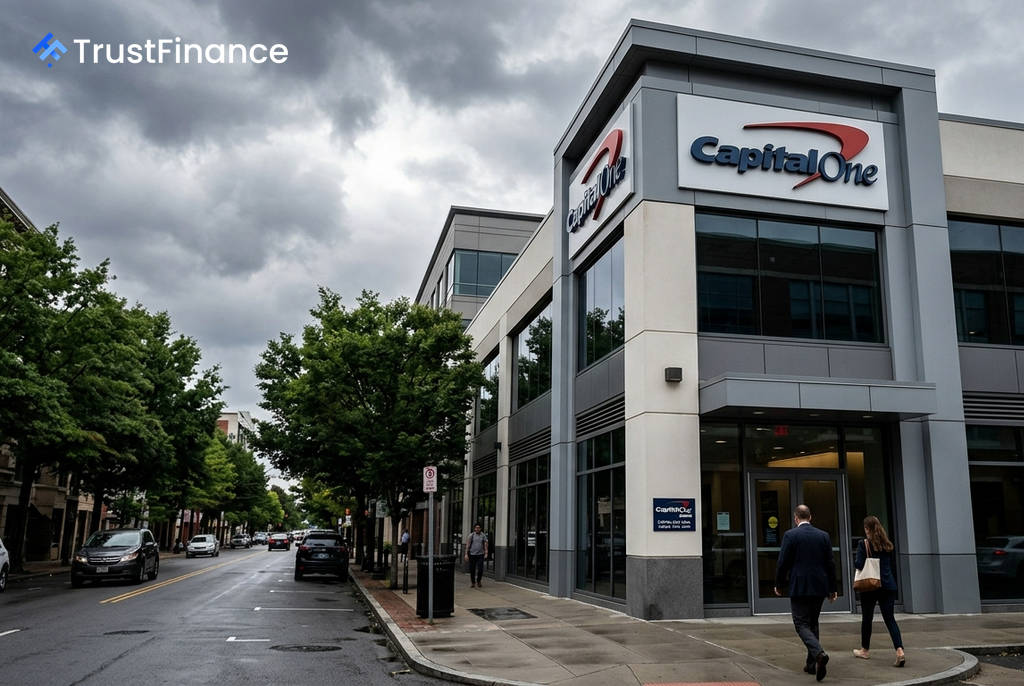
Capital One Financial has stated it closed bank accounts belonging to the Trump Organization following a review by its anti-money laundering experts. The disclosure, made in a court filing on Friday, is the first time a bank has formally attributed the closure of the former president's family business accounts to money laundering concerns.
Filing Cites AML Protocols
In a motion to dismiss a lawsuit filed by the Trump Organization, Capital One argued its decision was based on established financial compliance procedures. The bank asserts that the account closures in 2021 were not politically motivated but were instead a direct result of a comprehensive internal review.
According to the filing, "documents and Plaintiffs’ own allegations make clear that Capital One closed Plaintiffs’ accounts for anti-money laundering ('AML') reasons." The bank stated the action followed months of analysis and a "careful review by Capital One’s AML team in accordance with bank policies and regulatory guidance."
Capital One has not accused the Trump Organization of illegal activity. However, its filing noted that "the transaction patterns identified by Capital One are among the types of activity flagged by federal banking guidance."
Lawsuit Alleges Political 'Debanking'
 Ad
The Trump Organization and Eric Trump initiated a lawsuit in a Florida federal court in March 2025, alleging the closure of more than 300 affiliated accounts was a form of illegal "debanking." The suit claims Capital One acted on its "woke" beliefs and sought to benefit from the political atmosphere following the January 6, 2021, riot at the U.S. Capitol.
A federal court has dismissed two prior versions of the complaint, though it has allowed the plaintiffs to submit amended filings. Capital One's latest motion argues that the current complaint "suffers from the same fundamental flaws" as the previous ones and that the allegations of political pretext are "misguided."
Context for Financial Institutions
The legal dispute highlights the increasingly complex political environment for major U.S. banks. The Trump administration has echoed conservative concerns that financial institutions are unfairly denying services to individuals and businesses for political reasons.
This issue has been a point of emphasis during Trump's second term, which included a suit against JPMorgan Chase on similar grounds and an August 2025 executive order barring discriminatory debanking. Previously, in 2019, Trump sued both Capital One and Deutsche Bank to prevent them from sharing financial records with Congress.
Read next
More on Stocks
FTC Orders Walmart, Uber, Delta to Disclose Data on Personalized Pricing
The U.S. Federal Trade Commission is demanding nine major companies, including leading retail, travel, and gig economy firms, to provide information on how they use consumer data for setting individual prices and wages.

Google Launches Gemini 4 Carbon AI Model to Bolster Cybersecurity Capabilities
Alphabet's Google has unveiled Gemini 4 Carbon, its latest AI model specifically designed for advanced cybersecurity tasks like vulnerability detection and secure code generation. The launch escalates competition with rivals OpenAI and Anthropic in the enterprise AI market.

Oracle Shares Surge After Unveiling $225 Billion Revenue Target for 2030
Oracle stock rose sharply after the company presented a long-term financial outlook targeting at least $225 billion in annual revenue by fiscal 2030, driven by its expanding AI infrastructure business.

DOJ Scrutinizes Nvidia's $12.9B Hugging Face Deal Amid Broader Antitrust Probe, Sources Say
The U.S. Department of Justice is reportedly examining Nvidia's planned $12.93 billion acquisition of AI platform Hugging Face as part of a wider, ongoing antitrust investigation into the chipmaker's market conduct.