
Story
Boeing's $21 Billion B-52 Upgrade Program Faces Cost Overruns and Delays, GAO Reports
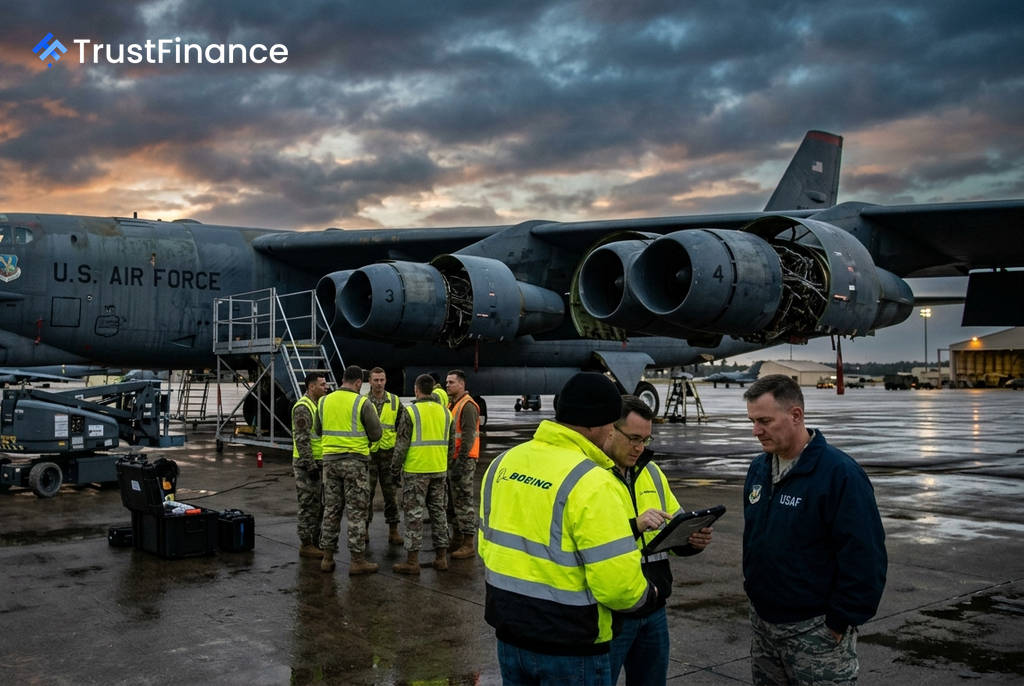
A U.S. Air Force program to modernize its venerable B-52 bomber fleet, managed by Boeing Co., is facing significant cost overruns and schedule delays, according to a new report from the Government Accountability Office (GAO). The findings highlight substantial challenges within the $21 billion effort to keep the long-range bomber operational for decades to come.
GAO Details Widespread Issues
The government watchdog agency found that 10 of the 13 major upgrade projects for the B-52 are experiencing difficulties with cost, schedule, or performance. The report, released Friday, specifically identified two critical components as facing all three types of problems:
- A new Rolls-Royce Holdings Plc engine upgrade.
- A modern radar system project.
These issues in the program's early development phase raise concerns about its long-term viability and affordability.
Engine Upgrade Costs and Delays Mount
 Ad
The engine replacement represents the most expensive element of the modernization, and its costs have swelled considerably. The Air Force's estimate for the engine development phase has climbed to approximately $15 billion, up from $11 billion in 2018, the GAO stated. In response to the increase, the Air Force initiated an affordability study that was ongoing as of March.
Concurrently, the project's timeline has slipped. The initial operational capability for the re-engined bombers is now forecast for 2033, a five-year delay from the original target and an additional 15-month delay since 2023.
Program Risks and Strategic Context
The GAO warned that the Air Force's strategy of overlapping development testing with the start of production, a practice known as concurrency, poses significant risks. This approach could lead to further cost growth and schedule extensions if design flaws are discovered after production has begun.
According to the report, Air Force officials acknowledge these risks but are willing to accept them to avoid more schedule delays. The goal of the modernization is to keep the 76-aircraft B-52 fleet, which first entered service in 1955, flying alongside B-2 and B-21 stealth bombers through the 2050s.
Read next
More on Stocks
FTC Orders Walmart, Uber, Delta to Disclose Data on Personalized Pricing
The U.S. Federal Trade Commission is demanding nine major companies, including leading retail, travel, and gig economy firms, to provide information on how they use consumer data for setting individual prices and wages.

Google Launches Gemini 4 Carbon AI Model to Bolster Cybersecurity Capabilities
Alphabet's Google has unveiled Gemini 4 Carbon, its latest AI model specifically designed for advanced cybersecurity tasks like vulnerability detection and secure code generation. The launch escalates competition with rivals OpenAI and Anthropic in the enterprise AI market.

Oracle Shares Surge After Unveiling $225 Billion Revenue Target for 2030
Oracle stock rose sharply after the company presented a long-term financial outlook targeting at least $225 billion in annual revenue by fiscal 2030, driven by its expanding AI infrastructure business.

DOJ Scrutinizes Nvidia's $12.9B Hugging Face Deal Amid Broader Antitrust Probe, Sources Say
The U.S. Department of Justice is reportedly examining Nvidia's planned $12.93 billion acquisition of AI platform Hugging Face as part of a wider, ongoing antitrust investigation into the chipmaker's market conduct.