
Story
AstraZeneca, Bristol Myers Squibb Shares Diverge on Report of Merger Discussions
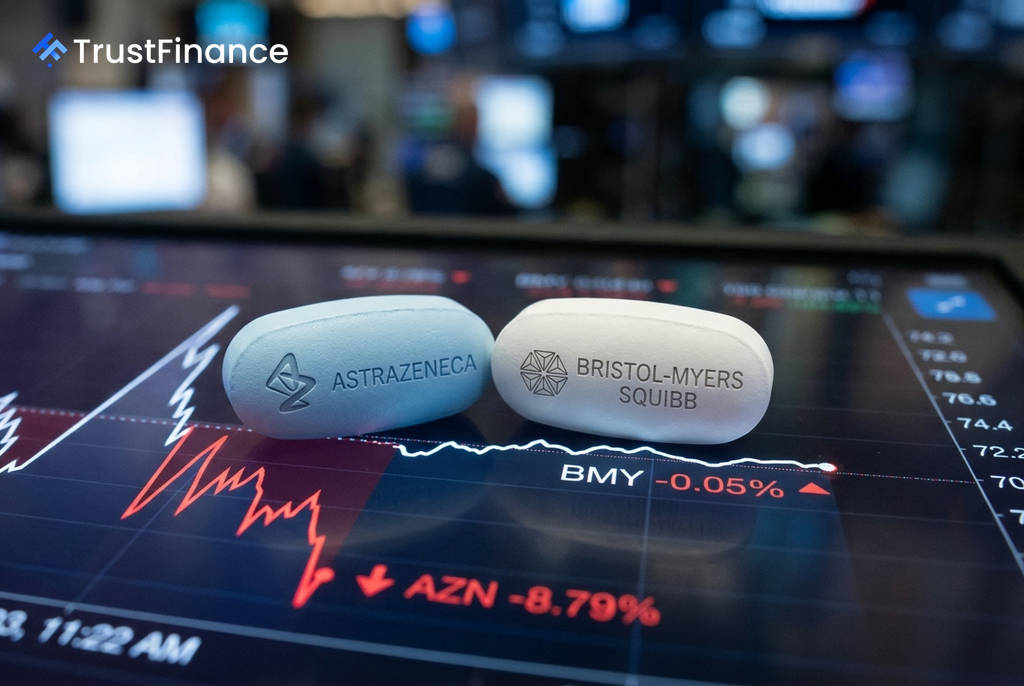
Shares of AstraZeneca PLC fell sharply Monday following reports that the British drugmaker has held preliminary merger discussions with U.S.-based Bristol Myers Squibb Co. The talks, first reported by the Financial Times, could lead to a combination creating a pharmaceutical company valued at nearly $400 billion.
Market Reaction and Strategic Rationale
Investor reaction to the news was starkly divergent. AstraZeneca's stock was trading down approximately 9% on Monday, while Bristol Myers Squibb (BMY) shares, after an initial premarket surge of 6%, traded near flat. The market response suggests shareholders of AstraZeneca (AZN) view a potential deal as value-destructive, while BMY investors initially saw the possibility of a premium buyout.
A potential merger offers distinct strategic logic for each company. For AstraZeneca, acquiring BMY would significantly expand its U.S. commercial footprint, a market that accounted for 42% of its first-half 2026 revenue compared to 69% for BMY, according to Jefferies analysis. For Bristol Myers, a deal would provide an exit for shareholders ahead of a looming loss of exclusivity for its blockbuster drugs Eliquis and Opdivo, which together represent about half of its total sales.
However, some analysts and investors have expressed skepticism. Jefferies analysts wrote they were "a bit perplexed" by the move, noting AstraZeneca's strong independent growth profile. Markus Manns, a portfolio manager at AstraZeneca shareholder Union Investment, told Reuters that a combination "does not make strategic or financial sense," citing the history of value-destroying mega-mergers.
Significant Antitrust Hurdles
 Ad
The most formidable obstacle to any potential merger is regulatory scrutiny. Analysts point to a significant and direct business overlap between the two companies, particularly in the lucrative market for non-small cell lung cancer treatments.
- BMY's Opdivo generated $10.05 billion in 2025 sales.
- AstraZeneca's Imfinzi generated $6.06 billion in the same period.
This head-to-head competition has led BMO Capital Markets to conclude that "a deal is less likely to materialize." Antitrust experts cited by Reuters anticipate that regulators would require "meaningful divestitures" to approve any combination. Furthermore, the political optics of a UK-based firm acquiring a major U.S. pharmaceutical company could attract additional congressional scrutiny.
Neither AstraZeneca nor Bristol Myers Squibb has officially confirmed or denied the discussions. Sources cited in the initial report noted that a deal "may never materialize," and no definitive structure or timeline has been proposed.
Read next
More on Stocks
FTC Orders Walmart, Uber, Delta to Disclose Data on Personalized Pricing
The U.S. Federal Trade Commission is demanding nine major companies, including leading retail, travel, and gig economy firms, to provide information on how they use consumer data for setting individual prices and wages.

Google Launches Gemini 4 Carbon AI Model to Bolster Cybersecurity Capabilities
Alphabet's Google has unveiled Gemini 4 Carbon, its latest AI model specifically designed for advanced cybersecurity tasks like vulnerability detection and secure code generation. The launch escalates competition with rivals OpenAI and Anthropic in the enterprise AI market.

Oracle Shares Surge After Unveiling $225 Billion Revenue Target for 2030
Oracle stock rose sharply after the company presented a long-term financial outlook targeting at least $225 billion in annual revenue by fiscal 2030, driven by its expanding AI infrastructure business.

DOJ Scrutinizes Nvidia's $12.9B Hugging Face Deal Amid Broader Antitrust Probe, Sources Say
The U.S. Department of Justice is reportedly examining Nvidia's planned $12.93 billion acquisition of AI platform Hugging Face as part of a wider, ongoing antitrust investigation into the chipmaker's market conduct.