
Story
Alnylam Shares Fall After Rival's Heart Drug Trial Shows Negative Combination Data
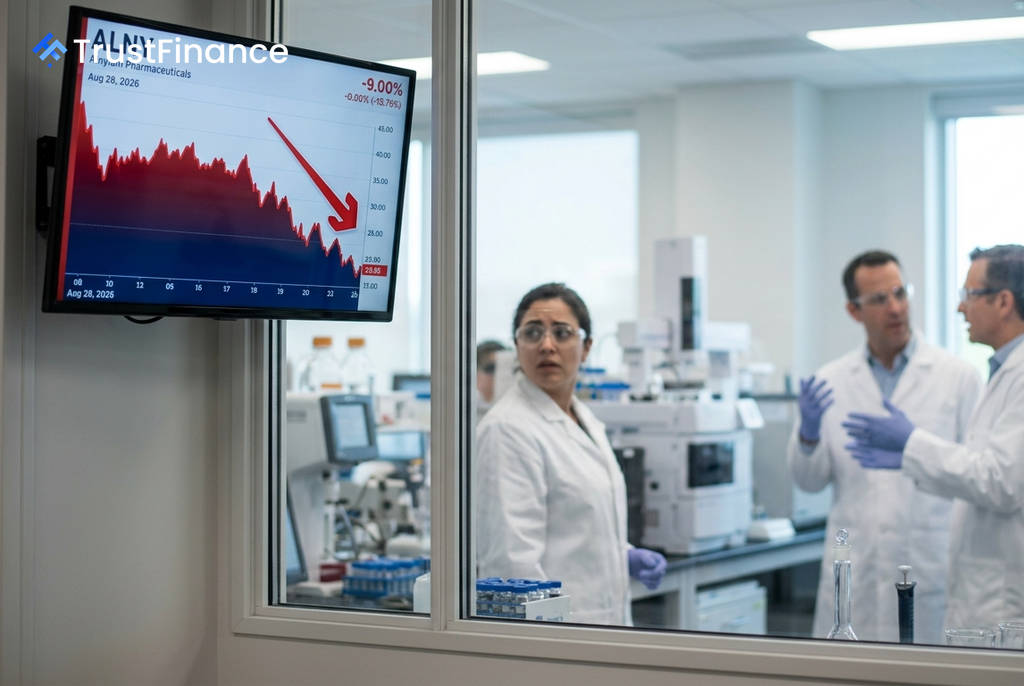
Shares of Alnylam Pharmaceuticals (NASDAQ: ALNY) fell nearly 4.9% in pre-market trading Friday after detailed results from a rival's clinical trial raised concerns about a key drug development strategy in heart disease. The data, from AstraZeneca and Ionis Pharmaceuticals, showed their drug Wainua performed poorly when combined with the current standard of care, creating a negative read-through for Alnylam's similar therapies.
A Surprising Trial Outcome
The full data from the Phase 3 CARDIO-TTRansform trial for Wainua in transthyretin amyloid cardiomyopathy (ATTR-CM) was presented at the European Society of Cardiology Congress. The results confirmed an earlier top-line failure and revealed an unexpectedly poor outcome for combination therapy.
Key findings included:
- When used as a standalone therapy, Wainua demonstrated a benefit with a primary-endpoint relative risk of 0.71.
- However, when paired with TTR stabilizers like Pfizer's Vyndaqel—the current standard of care—Wainua was associated with worse outcomes, showing a relative risk of 1.14.
Because Alnylam’s approved drug Amvuttra and its pipeline candidate nucresiran use a similar genetic mechanism to silence transthyretin production, the negative combination data prompted investor concern about Alnylam's own clinical strategy.
Analysts Weigh Pipeline Risk
 Ad
Wall Street analysts immediately began to assess the potential fallout for Alnylam, with a focus on its Phase 3 TRITON-CM study for nucresiran. Stifel analyst Paul Matteis called the combination outcome "clearly worse than expected" and argued that the data leaves Alnylam with little choice but to alter its trial design, potentially by focusing more on monotherapy.
Jefferies analyst Faisal Khurshid wrote that the results challenge the clinical role for RNA silencers in a market where oral stabilizers are already dominant. He noted the readout adds pressure and "reinforce[s] TRITON-CM risk" for Alnylam’s pipeline.
However, Oppenheimer analyst Kostas Biliouris offered a more constructive view, highlighting key differences between Wainua (an antisense oligonucleotide) and Alnylam's platform (siRNA). Biliouris noted that the negative signal seen with the Wainua combination has not been observed with Alnylam's drugs and that its platform has achieved greater TTR protein reduction in trials.
Core Commercial Business Seen as Secure
Despite the clinical trial concerns, analysts largely agreed that Alnylam’s current commercial business is well-insulated. The company's approved drug, Amvuttra, is predominantly prescribed as a monotherapy to newly diagnosed patients, meaning the negative combination data from a rival is unlikely to impact its sales.
Stifel reiterated its confidence in Amvuttra's long-term potential, citing accelerated diagnosis rates for ATTR-CM and a peak sales target of $10 billion. Investor focus now shifts to Alnylam's management for clarity on how it will adapt its clinical strategy for future therapies in light of the new data.
Read next
More on Stocks
FTC Orders Walmart, Uber, Delta to Disclose Data on Personalized Pricing
The U.S. Federal Trade Commission is demanding nine major companies, including leading retail, travel, and gig economy firms, to provide information on how they use consumer data for setting individual prices and wages.

Google Launches Gemini 4 Carbon AI Model to Bolster Cybersecurity Capabilities
Alphabet's Google has unveiled Gemini 4 Carbon, its latest AI model specifically designed for advanced cybersecurity tasks like vulnerability detection and secure code generation. The launch escalates competition with rivals OpenAI and Anthropic in the enterprise AI market.

Oracle Shares Surge After Unveiling $225 Billion Revenue Target for 2030
Oracle stock rose sharply after the company presented a long-term financial outlook targeting at least $225 billion in annual revenue by fiscal 2030, driven by its expanding AI infrastructure business.

DOJ Scrutinizes Nvidia's $12.9B Hugging Face Deal Amid Broader Antitrust Probe, Sources Say
The U.S. Department of Justice is reportedly examining Nvidia's planned $12.93 billion acquisition of AI platform Hugging Face as part of a wider, ongoing antitrust investigation into the chipmaker's market conduct.