
Story
AI-Fueled Volatility Challenges Traditional 'Bear Market' Definition
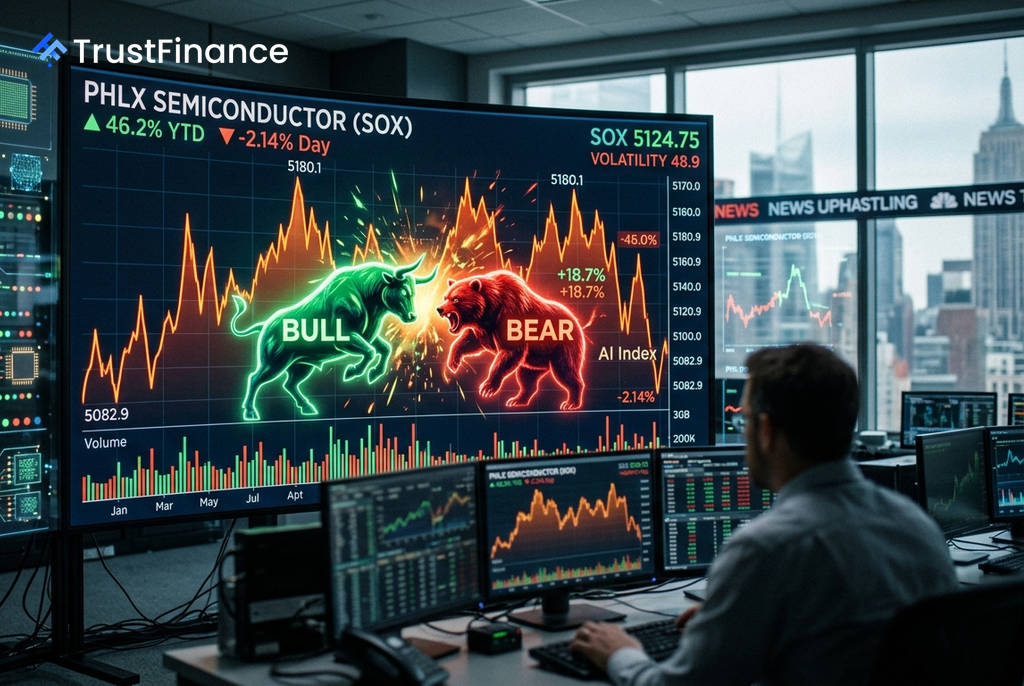
The rapid ascent and sharp gyrations of technology stocks, supercharged by the artificial intelligence boom, are forcing some market analysts to question the utility of a Wall Street staple: the definition of a bear market. While a 20% drop from a peak has long been the standard benchmark, its application to volatile, high-growth indexes is proving to be a poor fit.
The 20% Rule Under Scrutiny
Recent market action highlights the growing disconnect. In July, both the Philadelphia SE Semiconductor Index (SOX) and South Korea’s tech-heavy KOSPI index technically entered bear markets after falling more than 20% from their highs, according to a Reuters report. However, even at their troughs, the indexes remained up 46% and 25% for the year, respectively, following massive earlier gains.
This paradox has led some strategists to call for a more nuanced approach. "It’s kind of lazy nomenclature to be using on things that are that volatile," Art Hogan, chief market strategist at B. Riley Wealth, told Reuters. Steve Sosnick, chief strategist at Interactive Brokers, added that while such labels may work for broad markets, they are less applicable to indexes that have seen "crazy parabolic runs."
Implications for Investors
While the debate may seem semantic, the labels can have real-world consequences by shaping investor sentiment and triggering sell signals. Relying on the traditional bear market definition in the current environment could cause investors to exit positions prematurely and miss out on significant rebounds, especially given the strong fundamental outlook for sectors like AI.
 Ad
Both the SOX and KOSPI have bounced back since their brief dip into bear territory, meaning investors who sold would have missed the recovery. Underscoring the sector's growth potential, earnings for the S&P 500 semiconductors and equipment industry group are projected to grow by 114.7% this year, according to LSEG-compiled data.
Searching for a Better Measure
There is no consensus on a replacement for the 20% rule, but analysts interviewed by Reuters suggested several factors that a new measure should incorporate:
- The duration of the decline, requiring it to be sustained over weeks or months.
- The broader economic context, such as high interest rates or a peaking economy.
- The index's underlying historical volatility.
Sosnick of Interactive Brokers proposed that a decline should at least exceed an index's one-year annualized historical volatility. By that standard, the SOX would need to fall more than 44% to qualify for a bear market. Lacking a new, tidy definition, some veterans argue that experience and feel are becoming more important. "For us guys that have been around a long time, it’s more of a ’feel’ type situation," said Joe Saluzzi, co-head of equity trading at Themis Trading.
Read next
More on Stocks
FTC Orders Walmart, Uber, Delta to Disclose Data on Personalized Pricing
The U.S. Federal Trade Commission is demanding nine major companies, including leading retail, travel, and gig economy firms, to provide information on how they use consumer data for setting individual prices and wages.

Google Launches Gemini 4 Carbon AI Model to Bolster Cybersecurity Capabilities
Alphabet's Google has unveiled Gemini 4 Carbon, its latest AI model specifically designed for advanced cybersecurity tasks like vulnerability detection and secure code generation. The launch escalates competition with rivals OpenAI and Anthropic in the enterprise AI market.

Oracle Shares Surge After Unveiling $225 Billion Revenue Target for 2030
Oracle stock rose sharply after the company presented a long-term financial outlook targeting at least $225 billion in annual revenue by fiscal 2030, driven by its expanding AI infrastructure business.

DOJ Scrutinizes Nvidia's $12.9B Hugging Face Deal Amid Broader Antitrust Probe, Sources Say
The U.S. Department of Justice is reportedly examining Nvidia's planned $12.93 billion acquisition of AI platform Hugging Face as part of a wider, ongoing antitrust investigation into the chipmaker's market conduct.