
Story
Yen Short Positions at Extreme Levels, Raising Sell-Off Risk: BofA
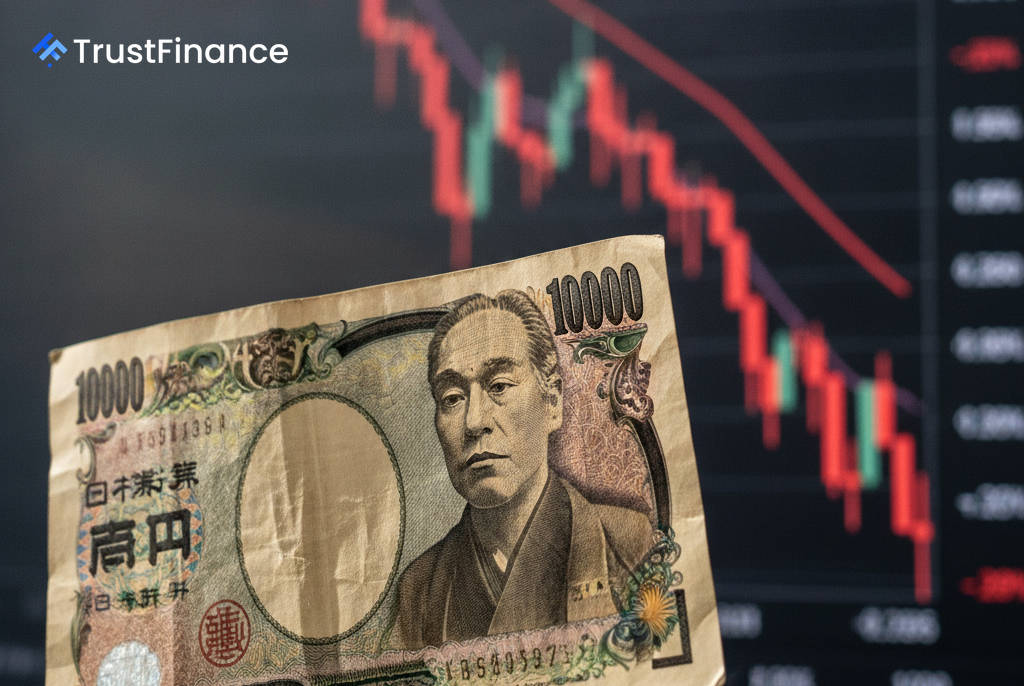
Speculative short positioning against the Japanese yen has reached extreme levels, heightening the risk of a sharp market reversal, according to a Bank of America (BofA) report released Monday. The analysis highlights that foreign investors also became net sellers of Japanese bonds and equities in June, adding to pressure on the nation's assets.
Stretched Positions Signal Reversal Risk
BofA's research, which followed the release of Japan’s Ministry of Finance data, indicates that short yen positions on the CME are approaching the highs seen in July 2024. This suggests a crowded trade that could be prone to a rapid unwinding if market sentiment shifts.
Further evidence of this stretched positioning comes from the derivatives market. The one-year USD/JPY risk reversal, an indicator of market sentiment derived from options, has moved into positive territory for the first time since 2022. This move signals that traders are positioning for further yen weakness, but also increases the potential for a volatile snapback.
These developments coincide with official data showing a reversal in portfolio investment flows. After a period of substantial inflows, foreign capital saw a net outflow from Japanese securities in June, according to the report.
Drivers of Yen Weakness
The report attributes the persistent yen selling to the gradual build-up of yen carry trades, where investors borrow in the low-yielding Japanese currency to invest in higher-yielding assets abroad. This activity appears to be largely driven by offshore markets rather than trading during Tokyo hours.
 Ad
According to BofA, market sentiment has been weighed down by growing fiscal concerns and a perception that the Bank of Japan has fallen behind the curve in normalizing its monetary policy compared to other major central banks.
Despite the selling pressure, the analysis noted that Japan’s underlying balance of payments continues to improve. Strong export growth, supported by AI-related demand, is increasingly helping to offset the country's digital service deficit.
Potential Catalysts for an Unwind
Bank of America identified three primary catalysts that could trigger a sharp reversal and force traders to rapidly close out their short yen positions. These include:
- Foreign exchange intervention by Japanese authorities on a larger scale than the market currently anticipates.
- A significant downturn in the global AI-driven technology rally, which could impact Japanese export strength and investor risk appetite.
- A major policy shift by the Takaichi administration in response to market pressure, as noted in the bank's report.