
Story
Tesla's China Operations Pose National Security Hurdle for Potential SpaceX Merger
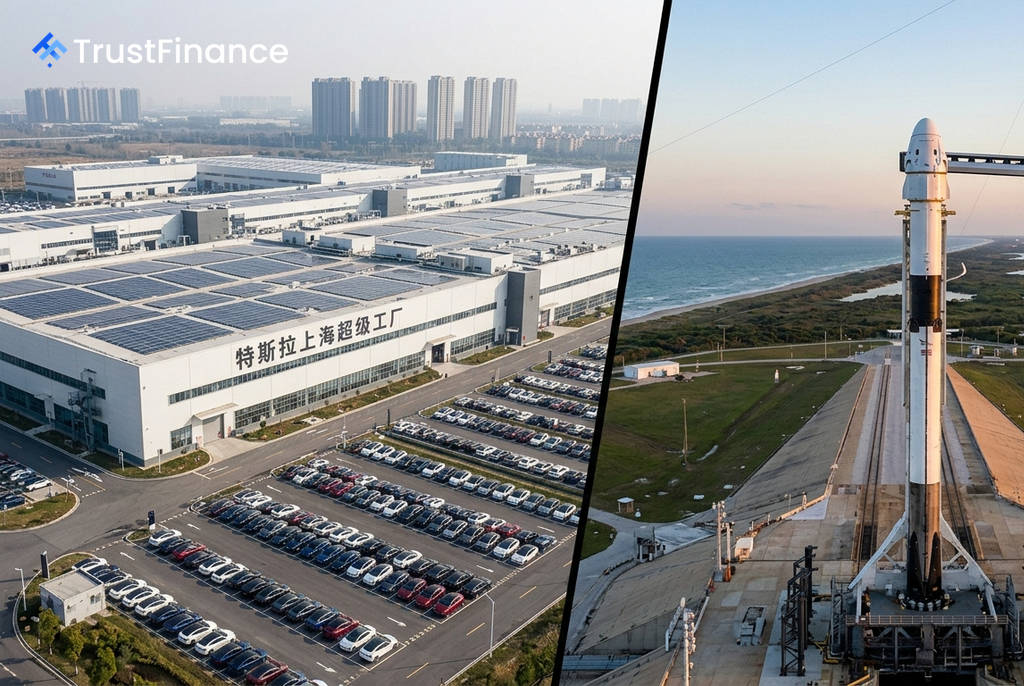
A potential merger between Elon Musk's Tesla and SpaceX faces a significant hurdle due to the electric automaker's extensive operations in China, which analysts say could clash with the space exploration firm's sensitive contracts with the U.S. government.
The prospect of combining the two trillion-dollar companies has been a subject of investor speculation, fueled by Musk's comments on their growing overlap and a since-denied Wall Street Journal report that Tesla was preparing to separate its China business.
The National Security Conflict
The central challenge lies in uniting a company deeply embedded in China with one increasingly reliant on the U.S. defense and government sector. According to its IPO filing, SpaceX derived about one-fifth of its 2025 revenue from U.S. federal agencies. This reliance on sensitive government work means any merger involving Tesla's China operations would almost certainly face intense national security scrutiny from Washington.
While Musk has denied any discussions about separating the China business, analysts and investors see it as a potential path to mitigate regulatory concerns. Cleaving off the Chinese operations could "clear the way for a cleaner merger domestically" in the U.S., said Brian Mulberry, chief market strategist at Zacks Investment Management, a Tesla investor.
The Complexity of a Spinoff
Separating Tesla's China business would be a complex undertaking with significant operational, technical, and political challenges. The Shanghai Gigafactory is the automaker's largest and most productive plant, historically accounting for more than half of its global deliveries and serving as a primary export hub.
 Ad
Key hurdles to a separation would include:
- Chinese Governance: A standalone Chinese entity would need approval from Beijing. Analysts believe Chinese Communist Party leaders would be "more than likely to require" board seats and executive influence, given the government's previous preferential treatment of Tesla, such as a reduced corporate tax rate between 2019 and 2023.
- Technical Entanglement: The business is not just physical infrastructure. According to Bill Russo, founder of consultancy Automobility, the real challenge would be untangling shared software, intellectual property, AI systems, and integrated supply chains.
- U.S. Regulatory Risk: A licensing agreement allowing a new Chinese entity to use Tesla technology could still face U.S. opposition. Christopher Tang, a professor at UCLA, warned that ongoing technology transfers, like self-driving software updates, could violate U.S. rules.
Investor and Market Implications
Investors are divided on the strategic wisdom of such a move. Some, like Steve Greenfield of Automotive Ventures, argue that Tesla's valuation is based on its future in robotics and AI, not its auto business, making a China exit palatable for a long-term merger with SpaceX. "Tesla isn’t really valued on the auto business anyway," Greenfield said.
However, others point to the immediate financial and operational impact. The core auto business funds Tesla's other ventures, and China is central to its sales and production. One investor in both companies, who declined to be identified, highlighted the manufacturing gap a separation would create, asking, "Where are they going to make the cars?" Further complicating matters are questions about where a new Chinese entity's stock would be listed, with a mainland China listing raising governance concerns for foreign shareholders.
Read next
More on Stocks
FTC Orders Walmart, Uber, Delta to Disclose Data on Personalized Pricing
The U.S. Federal Trade Commission is demanding nine major companies, including leading retail, travel, and gig economy firms, to provide information on how they use consumer data for setting individual prices and wages.

Google Launches Gemini 4 Carbon AI Model to Bolster Cybersecurity Capabilities
Alphabet's Google has unveiled Gemini 4 Carbon, its latest AI model specifically designed for advanced cybersecurity tasks like vulnerability detection and secure code generation. The launch escalates competition with rivals OpenAI and Anthropic in the enterprise AI market.

Oracle Shares Surge After Unveiling $225 Billion Revenue Target for 2030
Oracle stock rose sharply after the company presented a long-term financial outlook targeting at least $225 billion in annual revenue by fiscal 2030, driven by its expanding AI infrastructure business.

DOJ Scrutinizes Nvidia's $12.9B Hugging Face Deal Amid Broader Antitrust Probe, Sources Say
The U.S. Department of Justice is reportedly examining Nvidia's planned $12.93 billion acquisition of AI platform Hugging Face as part of a wider, ongoing antitrust investigation into the chipmaker's market conduct.