
Story
S&P Warns of Hidden Risks in China's Inflated Credit Ratings
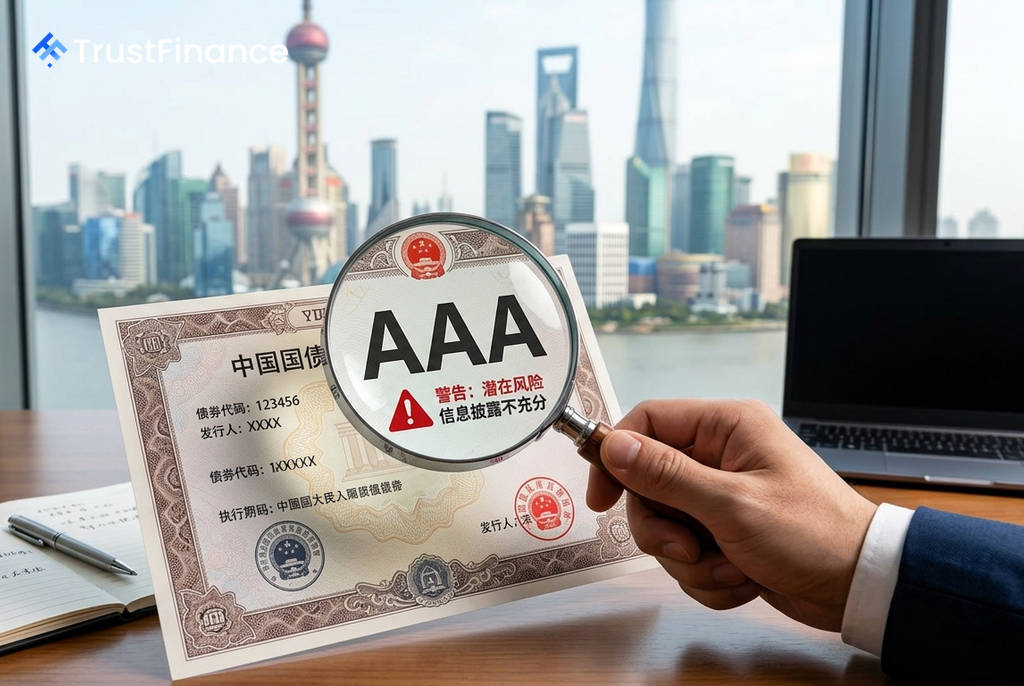
S&P Global Ratings has issued a stark warning about the risks building within China's booming bond market, citing overly generous domestic credit ratings that obscure the true financial health of issuers. The concern was raised on Thursday by Christopher Lee, S&P's regional practice lead for Asia-Pacific, at a capital market forum in Shanghai.
A Skewed Rating Scale
The core issue is a significant discrepancy between how companies are rated within China versus on the global scale. Lee highlighted that "too many issuers are concentrated in the upper layer of the rating scale," creating a distorted picture of credit risk for investors.
He noted that a foreign issuer with a 'B' global rating—a speculative grade—could receive a top-tier 'AAA' rating when issuing so-called panda bonds in China's onshore market. This means "risk is being introduced into the domestic market," Lee stated.
- A 'B' rating from S&P corresponds to a five-year cumulative potential default rate of 15.34%.
- An 'AAA' rating signifies an extremely low risk of default.
- Nearly 90% of China's over 6,500 credit bond issuers are rated AA or higher, according to official data.
- This contrasts sharply with the United States, where just 4.4% of issuers hold such high ratings, according to data from Caitong Securities.
 Ad
Market Impact and Regulatory Response
The stakes are high in China's 37 trillion yuan ($5.5 trillion) credit bond market, which is a crucial source of corporate financing. As China continues to open this market to foreign participants, the lack of accurate risk assessment becomes a more pressing problem. "This issue will come to a head one way or another," Lee warned.
Chinese regulators appear to be aware of the problem. According to sources cited by Reuters, China's central bank has been urging credit rating agencies in closed-door meetings since April to reduce the concentration of AAA ratings. This push has already resulted in a series of rating downgrades and withdrawals.
Lee acknowledged these efforts, stating that Chinese regulators "are moving in the right direction." He emphasized that as the market internationalizes, creating a broader spectrum for "credit differentiation" is essential for its long-term health and credibility.
Read next
More on Stocks
FTC Orders Walmart, Uber, Delta to Disclose Data on Personalized Pricing
The U.S. Federal Trade Commission is demanding nine major companies, including leading retail, travel, and gig economy firms, to provide information on how they use consumer data for setting individual prices and wages.

Google Launches Gemini 4 Carbon AI Model to Bolster Cybersecurity Capabilities
Alphabet's Google has unveiled Gemini 4 Carbon, its latest AI model specifically designed for advanced cybersecurity tasks like vulnerability detection and secure code generation. The launch escalates competition with rivals OpenAI and Anthropic in the enterprise AI market.

Oracle Shares Surge After Unveiling $225 Billion Revenue Target for 2030
Oracle stock rose sharply after the company presented a long-term financial outlook targeting at least $225 billion in annual revenue by fiscal 2030, driven by its expanding AI infrastructure business.

DOJ Scrutinizes Nvidia's $12.9B Hugging Face Deal Amid Broader Antitrust Probe, Sources Say
The U.S. Department of Justice is reportedly examining Nvidia's planned $12.93 billion acquisition of AI platform Hugging Face as part of a wider, ongoing antitrust investigation into the chipmaker's market conduct.