
Story
Moderna and Merck Report Breakthrough Success in Personalized mRNA Cancer Vaccine Trial
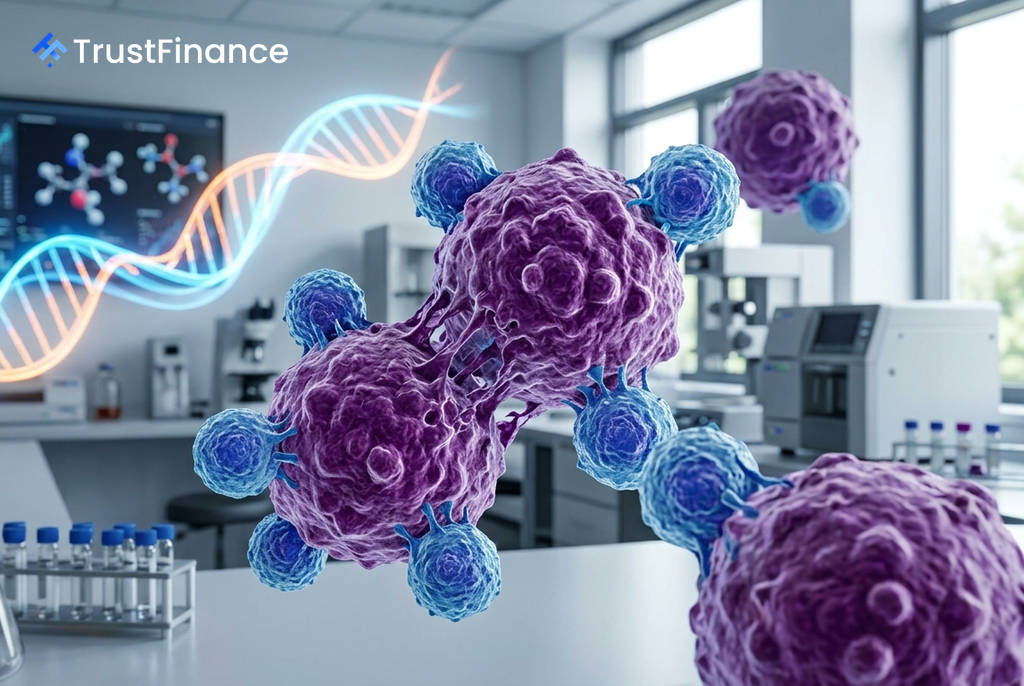
Moderna and Merck have achieved a significant breakthrough with their personalized mRNA cancer vaccine, intismeran autogene, which proved successful in a late-stage trial involving melanoma patients. The positive results, a first for a therapeutic cancer vaccine in late-stage testing after a century of failed attempts, represent a major milestone in the field of oncology, according to a report from Reuters.
In a trial of more than 1,000 patients with localized melanoma, the vaccine, when used in combination with Merck's blockbuster immunotherapy drug Keytruda, was effective in preventing tumors from returning or spreading. This success has led Wall Street analysts to project significant future revenue, with sales potentially topping $1 billion by 2030 and $3 billion by 2035, according to LSEG data.
A New Approach to Cancer Treatment
The vaccine's success stems from its novel, individualized approach. Unlike prior cancer vaccines that targeted only one or two tumor mutations, this new therapy uses mRNA technology to train a patient's immune system to recognize and attack cancer cells by targeting up to 34 mutations unique to their specific tumors.
This strategy is amplified by Merck’s Keytruda, a checkpoint inhibitor that works by removing the natural brakes on the immune system. Eliav Barr, Merck’s head of global clinical development, explained that Keytruda “removes those barriers” that cancer cells use to hide. The vaccine then provides the newly activated T-cells—which Merck Research Laboratories President Dean Li called the “dogs of war”—with the specific “scent” of the cancer, enabling a targeted attack.
Market and Corporate Implications
 Ad
This clinical success carries significant financial implications for both companies. For Moderna, it provides a critical new product pipeline as demand for its COVID-19 vaccine wanes. The news has already boosted investor confidence, with Moderna's shares (MRNA) surging more than 130% since the results were announced.
For Merck (MRK), the vaccine offers a strategic advantage as it prepares for the eventual patent expiration of Keytruda, one of the world's top-selling drugs. The collaboration, which began in 2016, involves shared costs and profits, with Merck having paid Moderna $200 million upfront in 2016 and another $250 million in 2022.
Background and Next Steps
The partnership combined Moderna's expertise in mRNA technology with Merck's extensive experience in oncology and large-scale clinical trials with Keytruda. The companies chose to test the vaccine in melanoma, a cancer known for having a high number of mutations and responding well to checkpoint inhibitors.
With potential U.S. approval as early as next year, the companies plan to analyze the melanoma data to further refine the vaccine. The next major test will be determining if this personalized approach can be effective against cancers with fewer mutations, such as lung, kidney, and pancreatic cancers.
Read next
More on Stocks
FTC Orders Walmart, Uber, Delta to Disclose Data on Personalized Pricing
The U.S. Federal Trade Commission is demanding nine major companies, including leading retail, travel, and gig economy firms, to provide information on how they use consumer data for setting individual prices and wages.

Google Launches Gemini 4 Carbon AI Model to Bolster Cybersecurity Capabilities
Alphabet's Google has unveiled Gemini 4 Carbon, its latest AI model specifically designed for advanced cybersecurity tasks like vulnerability detection and secure code generation. The launch escalates competition with rivals OpenAI and Anthropic in the enterprise AI market.

Oracle Shares Surge After Unveiling $225 Billion Revenue Target for 2030
Oracle stock rose sharply after the company presented a long-term financial outlook targeting at least $225 billion in annual revenue by fiscal 2030, driven by its expanding AI infrastructure business.

DOJ Scrutinizes Nvidia's $12.9B Hugging Face Deal Amid Broader Antitrust Probe, Sources Say
The U.S. Department of Justice is reportedly examining Nvidia's planned $12.93 billion acquisition of AI platform Hugging Face as part of a wider, ongoing antitrust investigation into the chipmaker's market conduct.