
Story
Major Food Brands Losing Market Share to Premium and Private-Label Rivals, TD Cowen Finds
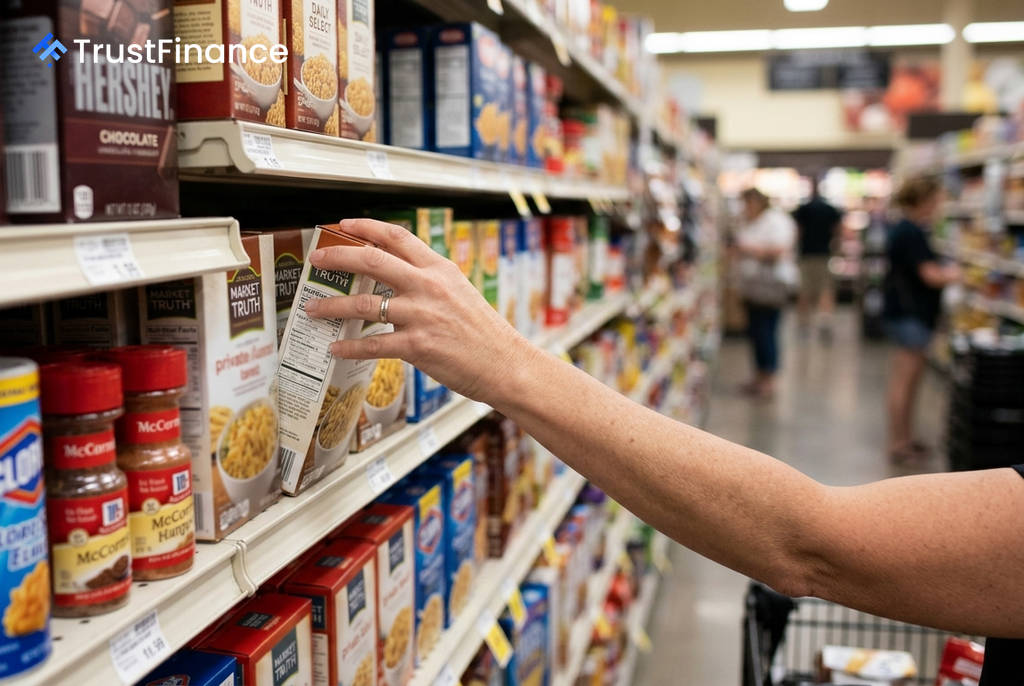
Large food and household product companies are steadily losing market share to both premium, higher-quality brands and private-label alternatives, according to a new analysis from TD Cowen. The report, released Tuesday, suggests that this erosion of market position stems from brand-specific challenges rather than broader category headwinds from factors like GLP-1 drugs or cuts to government assistance programs.
A Squeeze from Both Ends
TD Cowen's tracking data indicates that the underlying consumer categories for Big Food have remained relatively resilient. However, established brands are facing a competitive squeeze, ceding ground to rivals at opposite ends of the price spectrum.
This dynamic is forcing investors to look past category-level trends and scrutinize the individual performance and strategy of each company. The report highlights a growing divergence between companies successfully navigating this shift and those struggling with what it terms "antiquated brands" or weak product portfolios.
Diverging Company Fortunes
TD Cowen's analysis detailed the performance of several key players, revealing significant differences in their ability to compete:
 Ad
- Kraft Heinz (KHC) and Conagra Brands (CAG): Both companies derive an estimated 53% of their sales from weak categories where they are losing market share. The report noted concern over Conagra's decision to raise prices, which could accelerate volume declines.
- McCormick (MKC): The company's year-to-date growth of 0.2% significantly trails its category's growth of 3.2%. Market share losses have now persisted for three years.
- Hershey (HSY): With year-to-date growth of 3.7% below its category's pace of 4.8%, the firm sees an opportunity for improvement as the company uses commodity deflation to fund innovation and merchandising.
- The J.M. Smucker Co. (SJM): A relative bright spot, Smucker derives 54% of its sales from strong-growth categories where it is keeping pace or outperforming. Its coffee business has proven resilient to price increases, and its Uncrustables brand continues to gain household penetration.
The Bottom Line for Investors
The report underscores the importance of brand strength and portfolio management in the current consumer environment. While some companies like Smucker demonstrate resilience, others face significant challenges from commoditized product lines and legacy brands.
TD Cowen suggests that strategic moves, such as Smucker potentially divesting its declining Hostess business, could unlock greater shareholder value. Conversely, for companies like Conagra and Kraft Heinz, the path to regaining market share appears more challenging given their significant exposure to underperforming categories.
Read next
More on Stocks
FTC Orders Walmart, Uber, Delta to Disclose Data on Personalized Pricing
The U.S. Federal Trade Commission is demanding nine major companies, including leading retail, travel, and gig economy firms, to provide information on how they use consumer data for setting individual prices and wages.

Google Launches Gemini 4 Carbon AI Model to Bolster Cybersecurity Capabilities
Alphabet's Google has unveiled Gemini 4 Carbon, its latest AI model specifically designed for advanced cybersecurity tasks like vulnerability detection and secure code generation. The launch escalates competition with rivals OpenAI and Anthropic in the enterprise AI market.

Oracle Shares Surge After Unveiling $225 Billion Revenue Target for 2030
Oracle stock rose sharply after the company presented a long-term financial outlook targeting at least $225 billion in annual revenue by fiscal 2030, driven by its expanding AI infrastructure business.

DOJ Scrutinizes Nvidia's $12.9B Hugging Face Deal Amid Broader Antitrust Probe, Sources Say
The U.S. Department of Justice is reportedly examining Nvidia's planned $12.93 billion acquisition of AI platform Hugging Face as part of a wider, ongoing antitrust investigation into the chipmaker's market conduct.