
Story
Data Center Boom Creates Windfall for Power and Cooling Suppliers Amid AI Surge
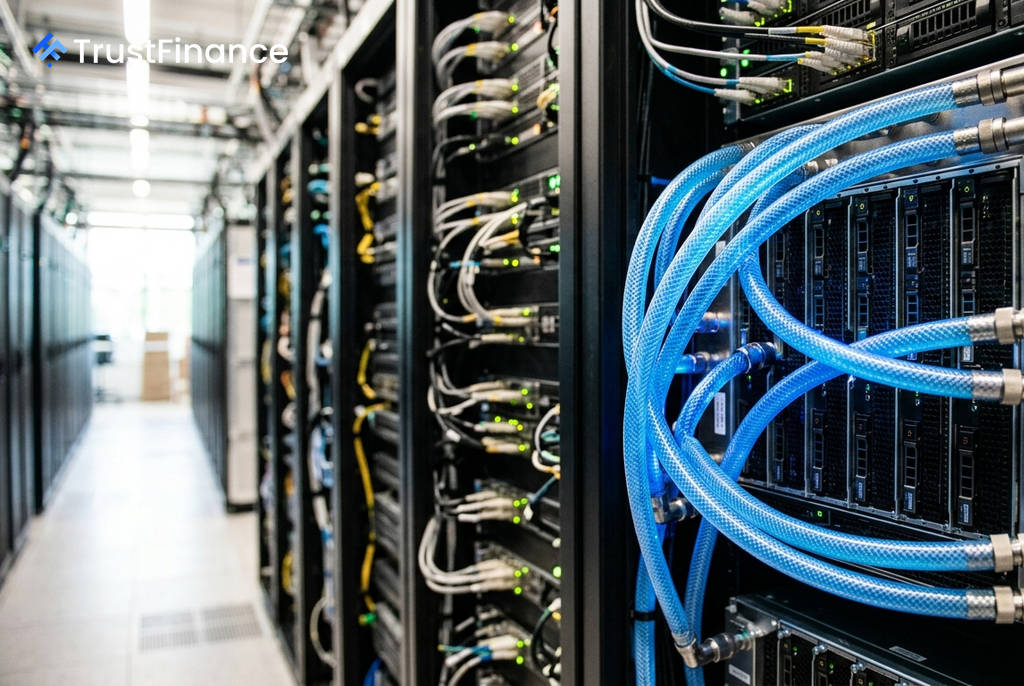
The global boom in artificial intelligence is creating a massive secondary market for the power and cooling infrastructure needed to run energy-intensive data centers. While chipmakers like Nvidia capture headlines, a host of specialized equipment suppliers are seeing a surge in demand as developers race to overcome significant infrastructure bottlenecks.
McKinsey forecasts that data center investment could reach nearly $7 trillion globally by 2030. However, building facilities fast enough is a major challenge, with hyperscalers facing significant delays in connecting to power grids—up to 24 months in some emerging markets and over eight years in developed ones, according to consultancy Pivotale AI.
Surging Demand for Power Infrastructure
The urgent need for reliable power is fueling a windfall for transformer manufacturers and other power distribution specialists, particularly for projects in North America and Europe. This has translated directly into bulging order books for key Asian suppliers.
- South Korea’s HD Hyundai Electric saw its order backlog rise 23% to $8.5 billion in the first half of 2026. The company expects data centers to account for 16% of its new power business orders next year, up from 6.3% this year.
- China’s Hainan Jinpan Smart Technology reported that its new data center orders more than quadrupled year-over-year in the first half, while its related backlog nearly tripled.
The Race to Cool AI's Heat
 Ad
As AI chips become more powerful, managing the heat they generate is a critical challenge driving technological shifts. Bank of America estimates power consumption per AI rack could climb to over 1.5 megawatts by 2030, almost 100 times that of a conventional server rack, based on Nvidia's product roadmap.
This is accelerating a market-wide transition from traditional air cooling to more efficient liquid cooling systems. Bank of America forecasts liquid cooling will account for 70% of new AI data center installations by 2030, up from about 30% today. According to McKinsey, this technology can reduce a facility's energy consumption by over 27%, creating opportunities for suppliers like Delta Electronics and Shenzhen Envicool Technology.
Valuations and Risks Come Into Focus
Despite the booming demand, stock prices for many of these suppliers have moderated after significant gains in the prior year. Shares of China's Jinpan and Envicool have fallen nearly 30% and 20% respectively in 2026, after surging in 2025, as investors weigh elevated valuations against intensifying competition and supply chain risks.
"There are many variables in the market, including new product platforms, deployment delays and component shortages," Delta Chairman Ping Cheng said in July. Analysts caution that while the opportunity is large, investor selectivity is key. "Not everyone can win," noted Matty Zhao, Bank of America’s Asia-Pacific head of research for basic materials. "You have to be cherry-picked for the leaders who actually get the customers."
Read next
More on Stocks
FTC Orders Walmart, Uber, Delta to Disclose Data on Personalized Pricing
The U.S. Federal Trade Commission is demanding nine major companies, including leading retail, travel, and gig economy firms, to provide information on how they use consumer data for setting individual prices and wages.

Google Launches Gemini 4 Carbon AI Model to Bolster Cybersecurity Capabilities
Alphabet's Google has unveiled Gemini 4 Carbon, its latest AI model specifically designed for advanced cybersecurity tasks like vulnerability detection and secure code generation. The launch escalates competition with rivals OpenAI and Anthropic in the enterprise AI market.

Oracle Shares Surge After Unveiling $225 Billion Revenue Target for 2030
Oracle stock rose sharply after the company presented a long-term financial outlook targeting at least $225 billion in annual revenue by fiscal 2030, driven by its expanding AI infrastructure business.

DOJ Scrutinizes Nvidia's $12.9B Hugging Face Deal Amid Broader Antitrust Probe, Sources Say
The U.S. Department of Justice is reportedly examining Nvidia's planned $12.93 billion acquisition of AI platform Hugging Face as part of a wider, ongoing antitrust investigation into the chipmaker's market conduct.