
Story
Citi Analysts Eye 'Bessent Doctrine' After Coordinated US-Japan FX Intervention
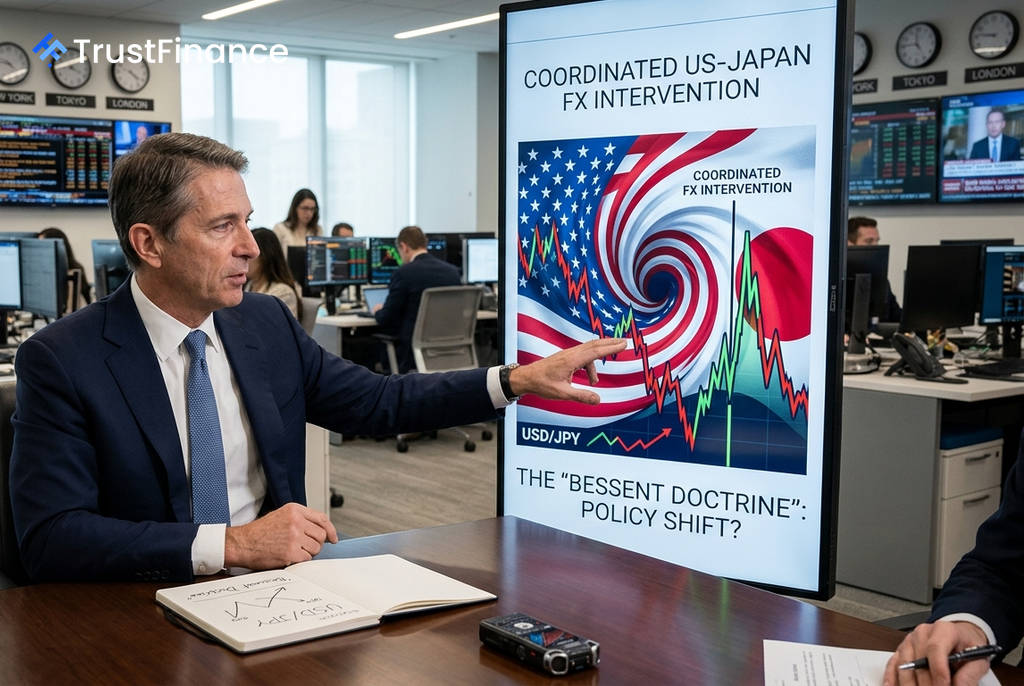
A recent coordinated intervention by the United States and Japan to support the Japanese yen is fueling speculation about a significant shift in global currency policy, according to analysts at Citi Research. The move, directed by Treasury Secretary Scott Bessent, is being viewed as a potential sign of a new, more interventionist U.S. stance dubbed the "Bessent doctrine."
Coordinated Intervention to Support the Yen
In late July, the U.S. Treasury joined Japanese authorities in a direct market operation to strengthen the yen after the USD/JPY exchange rate neared a 40-year high of ¥164 per dollar. According to the report, Secretary Bessent authorized the use of foreign-currency assets from the Treasury’s Exchange Stabilization Fund (ESF) to purchase yen.
Citi noted that the operation reportedly used existing ESF assets, such as euros, rather than extending new credit to Japan. While Citi analysts state there is “no confirmation for the start of a structural turning point” akin to the 1985 Plaza Accord, they see the U.S.-Japan “currency alliance” as a “sign of change in global policy.”
A New Doctrine for Global Imbalances
This intervention aligns with what Citi describes as the proposed "Bessent doctrine," a new national economic policy framework. The doctrine reportedly emphasizes five key pillars:
 Ad
- Economic security
- Mutual free trade
- New rules for the next-generation economy
- Advantage in financial power
- Greater benefits to U.S. workers
According to Citi, this policy shares the goal of “rectifying the global imbalances symbolized by the US current account deficit” with other proposals, such as the “Mar-a-Lago accord” suggested by Stephen Miran. The primary objective appears to be correcting economic asymmetries on a global scale.
Market Outlook and Potential Expansion
Despite the intervention, Citi does not believe the move signals an intent to weaken the U.S. dollar broadly. Instead, the firm suggests the initial goal of this “mini-accord” between the U.S. and Japan is to prevent a potential financial crisis originating in Japan.
However, the analysts noted a significant obstacle: the yen's weakness is largely driven by yen-selling hedges tied to Japan's stock market rally, which may be difficult to reverse through intervention alone. Looking ahead, Citi suggests the ultimate focus could shift to China’s current account and the yuan. If the yen intervention contributes to a stronger yuan, “it would not be surprising if European nations also adopted a cooperative stance” and joined the U.S.-Japan alliance to pressure China on its currency.
Read next
More on Forex
Polish Zloty Hits 11-Month Low Against Euro on Energy Price Pressure
The Polish zloty weakened to 4.410 against the euro, its lowest point since November 2023, as rising energy prices and caution ahead of a U.S. Federal Reserve decision weighed on the currency.

Sterling Slips as Dollar Strengthens Ahead of Fed Decision and UK Budget
The British pound lost ground against a resurgent U.S. dollar on Wednesday as market attention shifted from tech sector volatility to upcoming central bank decisions and the UK budget announcement.

Eurozone Bond Yields Climb as French Fiscal Concerns Return Ahead of Fed, ECB Decisions
Yields on French and German government bonds rose as relief from a ratings affirmation for France proved temporary, with investors refocusing on fiscal challenges and awaiting key policy verdicts from the U.S. Federal Reserve and the European Central Bank.

Canadian Dollar Slips as Markets Await Bank of Canada, Fed Decisions
The Canadian dollar edged lower against its U.S. counterpart, snapping a seven-day winning streak as investors adopted a cautious stance ahead of Wednesday's key interest rate announcements from both the Bank of Canada and the U.S. Federal Reserve.