
Story
China's Innovative Drug Sector Booms on Commercialization and Global Deals, Says Brokerage
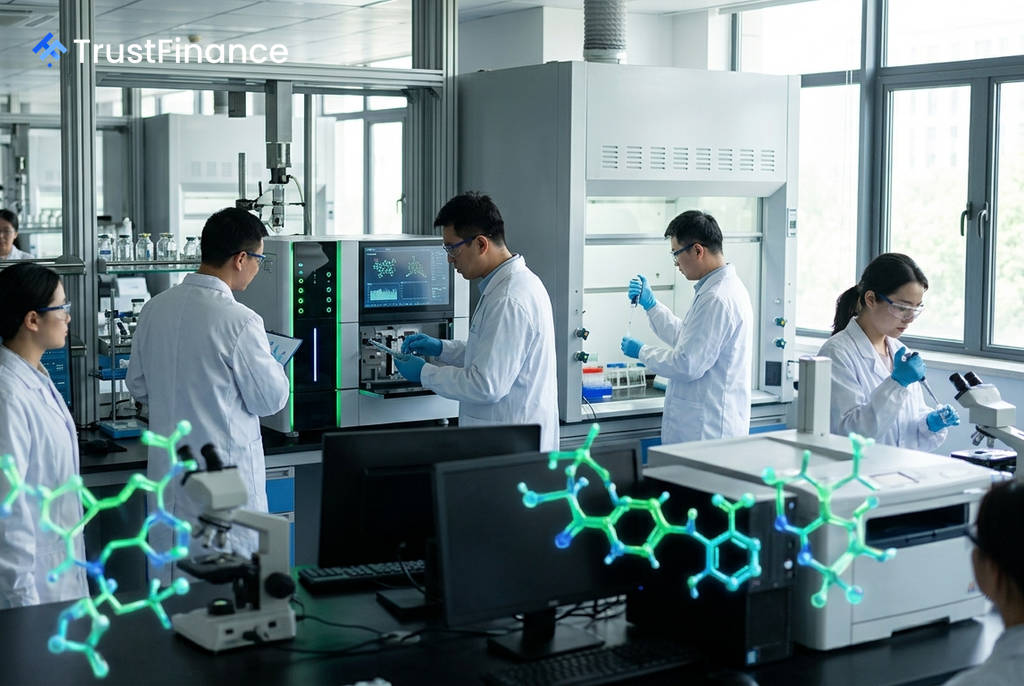
China's innovative drug sector is in a high-growth phase, propelled by the successful commercialization of new therapies and a wave of international out-licensing agreements, according to a recent research note from China Galaxy Securities. The brokerage stated that these factors are creating significant long-term growth opportunities and driving a revaluation of companies in the space.
A Tale of Two Sectors
Financial results from the first half of the year reveal a stark divergence within China's broader pharmaceutical industry. While listed companies posted modest overall revenue growth of 3.3%, net profit excluding non-recurring items surged by 29.2%, according to the report.
China Galaxy Securities attributes this margin expansion primarily to the high-growth innovative drug segment. Key drivers included better-than-expected orders for Contract Research, Development, and Manufacturing Organizations (CXOs), revenue recognition from overseas licensing deals, and the sales ramp-up of new drugs. In contrast, traditional pharmaceuticals, vaccines, and blood products continued to face pressure.
Innovation Drives Financial Performance
The report highlights that the commercial success of new drugs and a boom in global partnerships are significantly boosting the top and bottom lines for innovators. In the first half of the year, total out-licensing transactions by Chinese drugmakers reached nearly $100 billion, with upfront and milestone payments providing a substantial lift to revenue and profits.
 Ad
This trend is reflected in the performance of representative innovative drug companies listed on the A-share and H-share markets, which saw their revenues grow by 50.11% and 40.71%, respectively. The brokerage noted that several of these firms have achieved profitability while continuing to invest heavily in research and development.
Outlook and Key Risks
Despite some operational weaknesses in the broader industry, such as slower hospital payments and rising inventory levels, China Galaxy Securities maintains a positive long-term outlook on innovation-focused sub-sectors. The firm recommends focusing on companies with Best-in-Class (BIC) and First-in-Class (FIC) pipelines, the CXO and life sciences supply chain, and medical device exporters.
The report also identified several risks for investors to monitor, including:
- Macroeconomic pressure impacting healthcare spending.
- Unfavorable changes to national health insurance reimbursement policies.
- Geopolitical tensions that could disrupt global orders.
- Deeper-than-expected price cuts from centralized government procurement programs.
Read next
More on Stocks
FTC Orders Walmart, Uber, Delta to Disclose Data on Personalized Pricing
The U.S. Federal Trade Commission is demanding nine major companies, including leading retail, travel, and gig economy firms, to provide information on how they use consumer data for setting individual prices and wages.

Google Launches Gemini 4 Carbon AI Model to Bolster Cybersecurity Capabilities
Alphabet's Google has unveiled Gemini 4 Carbon, its latest AI model specifically designed for advanced cybersecurity tasks like vulnerability detection and secure code generation. The launch escalates competition with rivals OpenAI and Anthropic in the enterprise AI market.

Oracle Shares Surge After Unveiling $225 Billion Revenue Target for 2030
Oracle stock rose sharply after the company presented a long-term financial outlook targeting at least $225 billion in annual revenue by fiscal 2030, driven by its expanding AI infrastructure business.

DOJ Scrutinizes Nvidia's $12.9B Hugging Face Deal Amid Broader Antitrust Probe, Sources Say
The U.S. Department of Justice is reportedly examining Nvidia's planned $12.93 billion acquisition of AI platform Hugging Face as part of a wider, ongoing antitrust investigation into the chipmaker's market conduct.