
Story
Boeing Q2 Loss Widens Past Estimates on Air Force One Costs
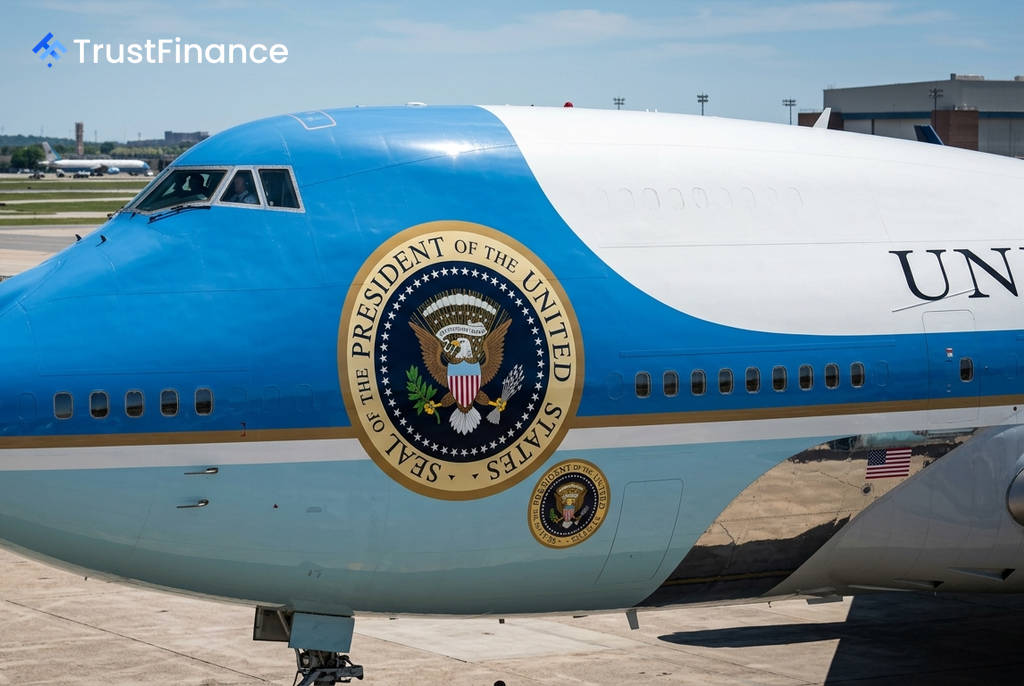
Boeing on Tuesday announced a wider-than-expected loss for the second quarter, primarily due to a significant charge related to ongoing challenges with its Air Force One replacement program. However, the company reported a positive turn in free cash flow, signaling that its operational turnaround efforts are gaining traction.
Quarterly Performance Breakdown
The U.S. planemaker posted a net loss of $428 million for the quarter. This translated to a core loss per share of 76 cents, which missed the average analyst expectation of a 30-cent loss per share, according to LSEG data. The result was heavily impacted by a $280 million charge attributed to higher engineering costs for the two new presidential aircraft.
Despite missing analyst forecasts for the quarter, the loss represented an improvement from the same period last year, when Boeing recorded a core loss of $1.24 per share.
Cash Flow and Outlook
A key positive for investors was the company's generation of $631 million in free cash flow, a substantial reversal from a negative cash flow of $200 million in the second quarter of 2025. Boeing attributed the improvement partly to higher-than-anticipated customer payments.
 Ad
Buoyed by this performance, the company reaffirmed its full-year guidance for free cash flow of $1 billion to $3 billion. Achieving this target would mark Boeing's first year of positive free cash flow since 2023 and is supported by plans to increase production of its best-selling 737 MAX jets.
Program Headwinds and Investments
The charge on the Air Force One program highlights the persistent difficulties with the $3.9 billion fixed-price contract signed in 2018. The project to deliver two new 747-8 jets is now running four years behind schedule and more than $1 billion over budget, with the delivery of the planes now anticipated in 2028.
Separately, Boeing noted an increase in capital investments during the quarter compared to the previous year. These funds are directed toward expanding production capabilities for the 787 Dreamliner in South Carolina and its military aircraft facilities in St. Louis, Missouri.
Read next
More on Stocks
FTC Orders Walmart, Uber, Delta to Disclose Data on Personalized Pricing
The U.S. Federal Trade Commission is demanding nine major companies, including leading retail, travel, and gig economy firms, to provide information on how they use consumer data for setting individual prices and wages.

Google Launches Gemini 4 Carbon AI Model to Bolster Cybersecurity Capabilities
Alphabet's Google has unveiled Gemini 4 Carbon, its latest AI model specifically designed for advanced cybersecurity tasks like vulnerability detection and secure code generation. The launch escalates competition with rivals OpenAI and Anthropic in the enterprise AI market.

Oracle Shares Surge After Unveiling $225 Billion Revenue Target for 2030
Oracle stock rose sharply after the company presented a long-term financial outlook targeting at least $225 billion in annual revenue by fiscal 2030, driven by its expanding AI infrastructure business.

DOJ Scrutinizes Nvidia's $12.9B Hugging Face Deal Amid Broader Antitrust Probe, Sources Say
The U.S. Department of Justice is reportedly examining Nvidia's planned $12.93 billion acquisition of AI platform Hugging Face as part of a wider, ongoing antitrust investigation into the chipmaker's market conduct.