
Story
U.S. Treasury Yields Climb as Brent Crude Tops $100 on Mideast Tensions
Summary
Benchmark 10-year U.S. Treasury yields pushed toward multi-year highs and Brent crude surpassed $100 a barrel, fueling inflation concerns and hawkish Fed expectations ahead of key U.S. price data.
U.S. Treasury yields rose across the board on Wednesday, with benchmark borrowing costs nearing multi-year highs, as Brent crude oil broke above the psychological $100 per barrel mark, amplifying concerns about persistent, energy-driven inflation.
Yields and Oil Surge
The sell-off in the fixed-income market pushed key government bond yields higher for a fifth consecutive session. The moves reflect growing investor anxiety over long-term inflation risk and sovereign debt supply pressures.
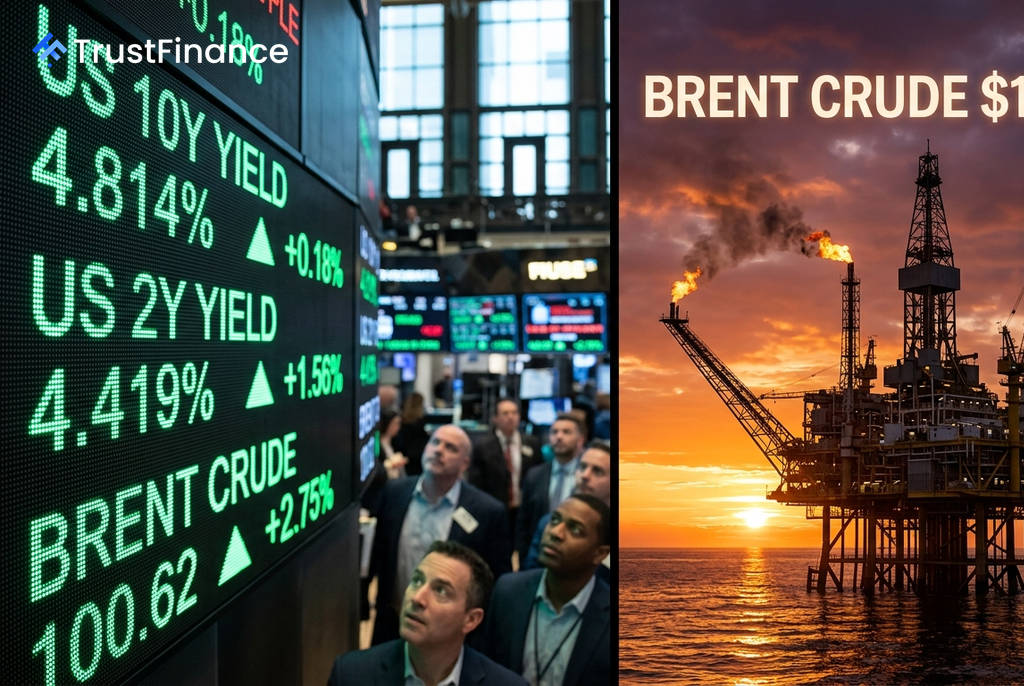
- The benchmark 10-year Treasury yield climbed to 4.814%, approaching its highest level since 2023.
- The policy-sensitive 2-year Treasury yield rose to 4.419%, hovering near multi-year highs.
- The 30-year Treasury yield reached 5.254%.
In commodities, Brent crude futures surged 2.75% to $100.62 a barrel, crossing the three-digit threshold for the first time since May. The rally was reportedly driven by a dangerous escalation of military conflict in the Middle East, including attacks on Saudi Arabian cities and direct strikes involving U.S. and Iranian forces, according to Investing.com.
Hawkish Fed Expectations Intensify
 Ad
AdThe surge in oil prices is seen as a pivotal development for the bond market, threatening a cost-push inflation shock that could compel the Federal Reserve and other central banks to maintain a hawkish monetary policy stance. This comes even as higher borrowing costs are already beginning to weigh on broader economic activity.
These energy-driven pressures compound a backdrop of a resilient labor market, following last week's U.S. non-farm payrolls report which showed employers added a stronger-than-expected 162,000 jobs in August. In response, money markets have increased bets on further monetary tightening, with financial futures now indicating an approximate 60% probability of a 25-basis-point interest rate hike at the Fed's upcoming September 15-16 policy meeting.
Inflation Data in Focus
Investors are now squarely focused on upcoming U.S. inflation reports, which are seen as the final critical inputs for the Fed's next interest rate decision. The Producer Price Index (PPI) is scheduled for release on Thursday, followed by the more closely watched Consumer Price Index (CPI) on Friday.
A CPI reading that comes in hotter than anticipated would likely solidify market bets on a September rate hike. Such a result could also provide the catalyst to push the benchmark 10-year Treasury yield toward the 5.0% level.
Read next
More on Forex
Canadian Dollar Slips to One-Month Low as Hawkish Fed Fuels U.S. Dollar
The Canadian dollar weakened to its lowest level in a month against the U.S. dollar after the Federal Reserve raised interest rates and indicated another hike is likely this year, widening the policy divergence with the Bank of Canada.

UBS Forecasts EUR/CHF to Retest 0.96 as Swiss Franc Lags on Low Yield
Analysts at UBS project the euro could strengthen to 0.96 against the Swiss franc, citing the franc's low yield and the Swiss National Bank's expected dovish stance compared to other G10 central banks.

Pound Sterling Rally May Fade on UK Fiscal Concerns, Citi Says
Analysts at Citi suggest any near-term strength in the British pound following the Bank of England's meeting is unlikely to last, citing significant fiscal risks associated with the upcoming October budget.

Pound Sterling Declines as Fed Rate Hike Looms and UK Inflation Data Tempers BoE Bets
The British pound fell against the U.S. dollar on Wednesday as markets braced for an almost certain Federal Reserve interest rate increase. Domestically, a rise in UK headline inflation failed to sway expectations for a more aggressive Bank of England, adding to the currency's weakness.