
Story
Treasury Yields Post Largest Weekly Drop Since February on AI Debt Concerns
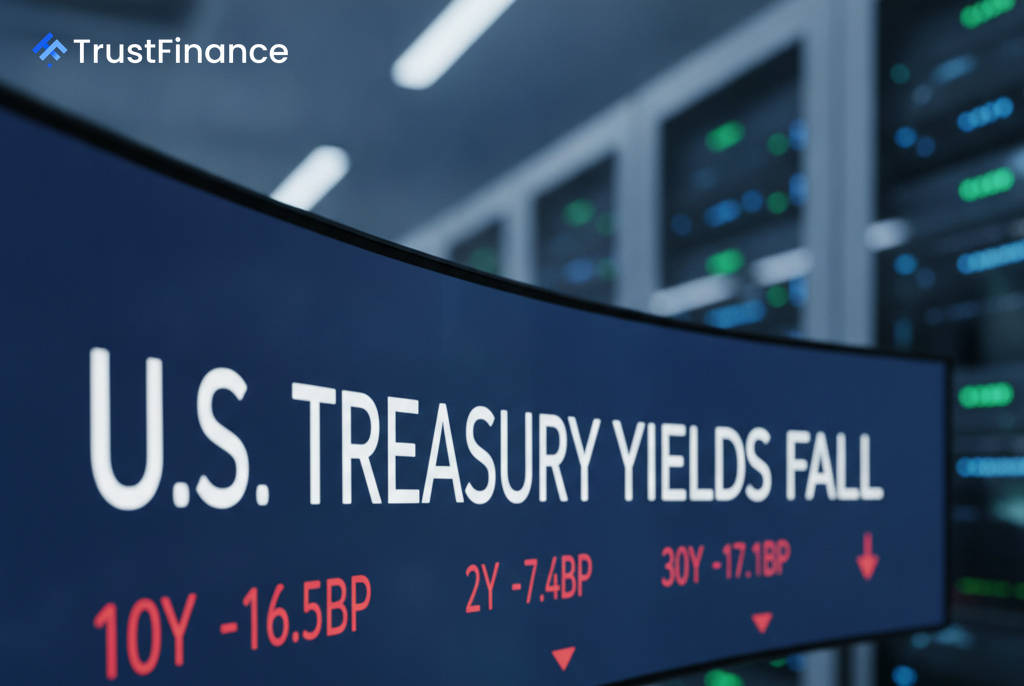
U.S. Treasury yields fell sharply for the week, with the benchmark 10-year note posting its largest weekly percentage drop since mid-February. The move was driven by a significant rotation into safe-haven government bonds as investors grew wary of the substantial debt being issued by technology companies to fund artificial intelligence buildouts.
Flight to Quality Amid Tech Debt Fears
A growing skepticism around the financing costs and return timelines for massive AI capital expenditures triggered a broad de-risking across markets. According to the report, concerns were exacerbated by news of cloud provider CoreWeave’s $50 billion debt pile, which highlighted the scale of borrowing in the sector.
This flood of corporate debt issuance reportedly crowded credit markets, leading to wider corporate credit default swaps (CDS). In response, institutional investors began rotating out of high-grade corporate bonds and into more liquid, risk-free U.S. Treasuries, a classic flight-to-quality move that also pressured equity indices.
Fed Chair Signals Data-Dependent Approach
Bond markets also found support from comments by Federal Reserve Chairman Kevin Warsh. Speaking at the IMF and World Bank annual meetings, Warsh declined to signal future interest rate moves, reinforcing the central bank's data-dependent stance ahead of its late-October policy meeting.
 Ad
"Policymakers will carefully assess developments across economic output, employment, and inflation ahead of our remaining meetings this year," Warsh stated, according to the report. This neutral tone solidified market expectations that the Fed will likely keep rates on hold at its October 27–28 meeting, further easing upward pressure on yields.
Weekly Yield Summary
The rally in government paper pushed yields lower across the curve. Key weekly movements included:
- The 10-year Treasury yield fell by 16.5 basis points to close at 5.079%.
- The 30-year Treasury yield dropped 17.1 basis points to settle at 5.428%.
- The rate-sensitive 2-year Treasury yield slipped 7.4 basis points to 4.717%.
Read next
More on Forex
Korean Won Poised to Strengthen Below 1300, Goldman Sachs Says
Goldman Sachs has revised its outlook on the South Korean won, forecasting it will strengthen below the 1300 level against the U.S. dollar, citing the country's large trade surplus and recent comments from the Bank of Korea.

Indian Rupee Rallies 2% in Best Week in Seven Months on Policy Support
The Indian rupee posted its largest weekly gain in seven months, spurred by a series of government and central bank measures to defend the currency after it neared a record low against the U.S. dollar.

Pound Heads for First Weekly Gain in Seven Weeks as Dollar Falters on AI Stock Jitters
The British pound is on track to snap a seven-week losing streak against the U.S. dollar, supported by a pullback in the greenback as investors hedge against a potential correction in technology stocks.

CIBC Warns Weaker Canadian Dollar Poses Inflation Risk, Complicates BoC Outlook
A declining Canadian dollar could add to inflationary pressures and complicate the Bank of Canada's interest rate decisions, especially amid growing trade risks, according to a CIBC Capital Markets report.