
Story
Tesla's Cybercab Has Cost Edge, But Software Is Key to Robotaxi Success, Goldman Sachs Says
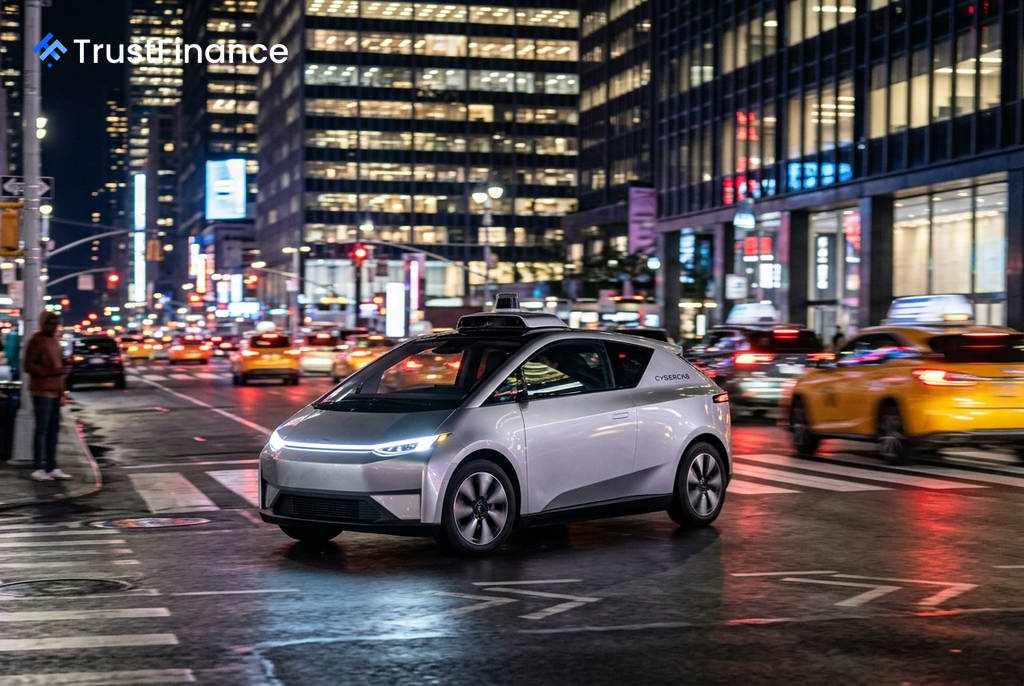
Tesla's new Cybercab could provide a significant cost advantage in the robotaxi market, but the company's ability to scale the service will ultimately depend more on its software performance than its manufacturing prowess, according to analysts at Goldman Sachs.
Following a Cybercab launch event on September 3, the investment bank noted that Tesla's focus on a low-cost vehicle could bolster the economics of its autonomous ride-hailing network.
A Potential Cost Advantage
Goldman Sachs analysts highlighted Tesla's manufacturing strategy as a key factor in reducing vehicle costs. The company's "unboxed" manufacturing process and camera-only sensor system are designed to support a low-cost vehicle platform.
If Tesla can achieve its target Cybercab cost of $20,000 to $30,000 at scale, Goldman estimates it could gain a $0.05 to $0.30 per-mile cost advantage over competitors. This calculation is based on rival autonomous vehicles having upfront costs between $50,000 and $100,000. The research note also mentioned that Tesla has begun offering robotaxi rides and has completed 1 million miles of unsupervised operations.
Software Scalability the Decisive Factor
Despite the potential hardware advantage, the analysts argued that the more critical question for investors is the scalability of Tesla's artificial intelligence and autonomous driving software. The ability to operate across a wide geographic area is crucial for generating significant revenue and spreading vehicle costs over more miles.
According to Goldman Sachs, this makes software a "potentially larger driver of robotaxi economics than the price of the vehicle itself." Tesla is currently seeking operators to own Cybercab fleets and manage the necessary hubs and infrastructure.
 Ad
Performance and Safety Metrics
Goldman's report also analyzed recent safety data. Based on NHTSA crash data and Tesla's disclosures through mid-July for its fully driverless operations in Austin, Dallas, and Houston, the bank estimated an accident rate, regardless of fault, of once every 50,000 to 70,000 miles.
The note also pointed to safety improvements in Tesla's supervised Full Self-Driving (FSD) system in North America, which recorded significantly fewer collisions and emergency braking events than vehicles not using the system. The report acknowledged that Tesla has received provisional FSD approval in the Netherlands and four other EU countries.
Analyst Outlook
Goldman Sachs maintained its Neutral rating on Tesla (TSLA) stock with a 12-month price target of $360. The bank sees a potential upside scenario of approximately $500 and a downside risk to roughly $150.
Key risks to the stock include slower electric vehicle demand, increased competition, and delays in FSD and other products. Conversely, faster EV adoption and a larger-than-expected contribution from AI initiatives like robotaxis could provide upside, the analysts said.
Read next
More on Stocks
FTC Orders Walmart, Uber, Delta to Disclose Data on Personalized Pricing
The U.S. Federal Trade Commission is demanding nine major companies, including leading retail, travel, and gig economy firms, to provide information on how they use consumer data for setting individual prices and wages.

Google Launches Gemini 4 Carbon AI Model to Bolster Cybersecurity Capabilities
Alphabet's Google has unveiled Gemini 4 Carbon, its latest AI model specifically designed for advanced cybersecurity tasks like vulnerability detection and secure code generation. The launch escalates competition with rivals OpenAI and Anthropic in the enterprise AI market.

Oracle Shares Surge After Unveiling $225 Billion Revenue Target for 2030
Oracle stock rose sharply after the company presented a long-term financial outlook targeting at least $225 billion in annual revenue by fiscal 2030, driven by its expanding AI infrastructure business.

DOJ Scrutinizes Nvidia's $12.9B Hugging Face Deal Amid Broader Antitrust Probe, Sources Say
The U.S. Department of Justice is reportedly examining Nvidia's planned $12.93 billion acquisition of AI platform Hugging Face as part of a wider, ongoing antitrust investigation into the chipmaker's market conduct.