
Story
SpaceX's First Post-IPO Earnings to Test Investor Faith in AI Spending
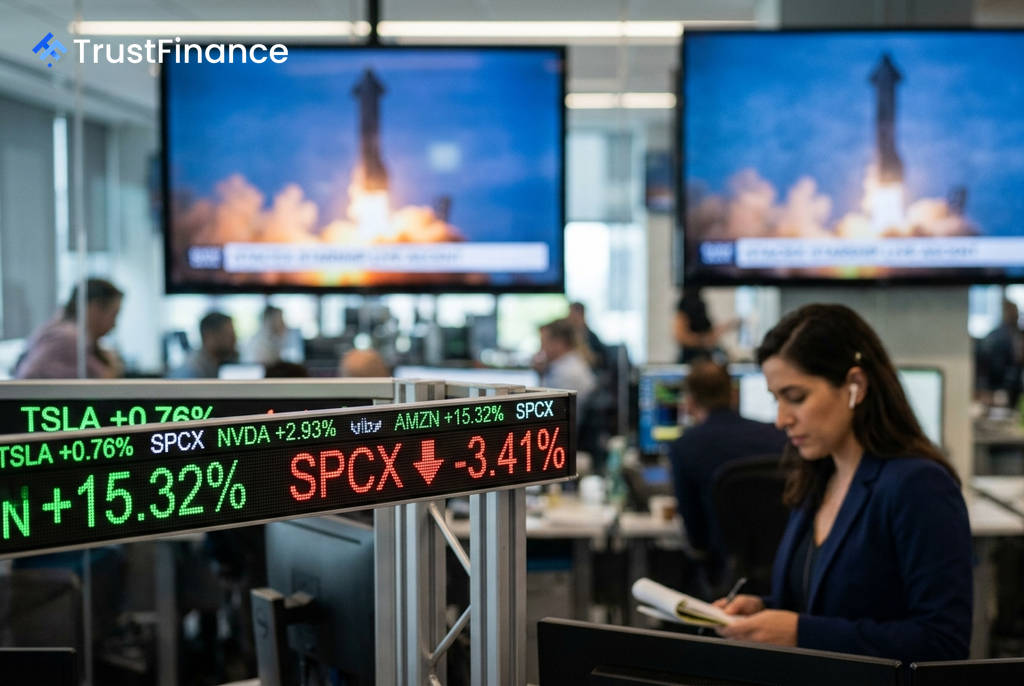
SpaceX will release its first earnings report as a public company on Tuesday, placing its aggressive spending on artificial intelligence under the microscope of Wall Street. Investors are keen to see if the robust profits from the Starlink satellite internet division can sustainably fund CEO Elon Musk's costly ventures in AI and next-generation rocketry.
The AI Spending Dilemma
The company's capital expenditures on AI are a central point of concern, consuming $7.72 billion in the first quarter, or roughly 75% of total capital spending. For the second quarter, analysts expect that figure to surge more than sixfold year-over-year to $10.2 billion, according to data from Visible Alpha. This brings total expected capital expenses for the quarter to nearly $14.05 billion.
This strategy of using one profitable division to bankroll another has drawn skepticism. "Starlink is executing beautifully, but it cannot single-handedly fund a $30 billion annualized AI capex program," said Will Rhind, founder and CEO of GraniteShares, in a comment to Reuters. The key question for investors is whether SpaceX can monetize its AI infrastructure quickly enough to offset what one portfolio manager called its "extraordinary capital intensity."
Starlink's Performance in Focus
While the AI segment's revenue is projected to nearly triple to $2.33 billion, according to LSEG data, the financial burden falls heavily on Starlink. The satellite internet business is expected to report strong results, with key analyst projections for the second quarter including:
 Ad
- Connectivity (Starlink) Revenue: $3.82 billion
- Operating Profit: $1.42 billion, up from $1.19 billion in the first quarter.
- Revenue Growth: An acceleration to 52.6%.
Despite doubling its subscriber base to 10.3 million by the end of March, Starlink saw its average revenue per user fall by nearly 25%. For the entire company, analysts forecast second-quarter revenue of about $6.93 billion and a loss before interest and taxes of $1.55 billion.
Market Pressures and Long-Term Vision
SpaceX shares have retreated since the company's $86 billion IPO in June, with its valuation of 77 times expected revenue facing scrutiny. The stock could face further pressure as the post-IPO lock-up period begins to expire on August 6, potentially allowing insiders and early investors to sell their shares.
Beyond the immediate financials, investors view the progress of the Starship rocket as a critical indicator of the company's long-term trajectory. Starship is foundational to expanding the Starlink constellation, fulfilling NASA contracts, and eventually deploying data centers in space. "The progress on Starship is essential for demonstrating to investors that the company is on the desired trajectory," noted Micah Walter-Range, a space industry specialist.
Read next
More on Stocks
FTC Orders Walmart, Uber, Delta to Disclose Data on Personalized Pricing
The U.S. Federal Trade Commission is demanding nine major companies, including leading retail, travel, and gig economy firms, to provide information on how they use consumer data for setting individual prices and wages.

Google Launches Gemini 4 Carbon AI Model to Bolster Cybersecurity Capabilities
Alphabet's Google has unveiled Gemini 4 Carbon, its latest AI model specifically designed for advanced cybersecurity tasks like vulnerability detection and secure code generation. The launch escalates competition with rivals OpenAI and Anthropic in the enterprise AI market.

Oracle Shares Surge After Unveiling $225 Billion Revenue Target for 2030
Oracle stock rose sharply after the company presented a long-term financial outlook targeting at least $225 billion in annual revenue by fiscal 2030, driven by its expanding AI infrastructure business.

DOJ Scrutinizes Nvidia's $12.9B Hugging Face Deal Amid Broader Antitrust Probe, Sources Say
The U.S. Department of Justice is reportedly examining Nvidia's planned $12.93 billion acquisition of AI platform Hugging Face as part of a wider, ongoing antitrust investigation into the chipmaker's market conduct.