
Story
SpaceX Shares Fall Below IPO Price as Major Lockup Expiration Nears
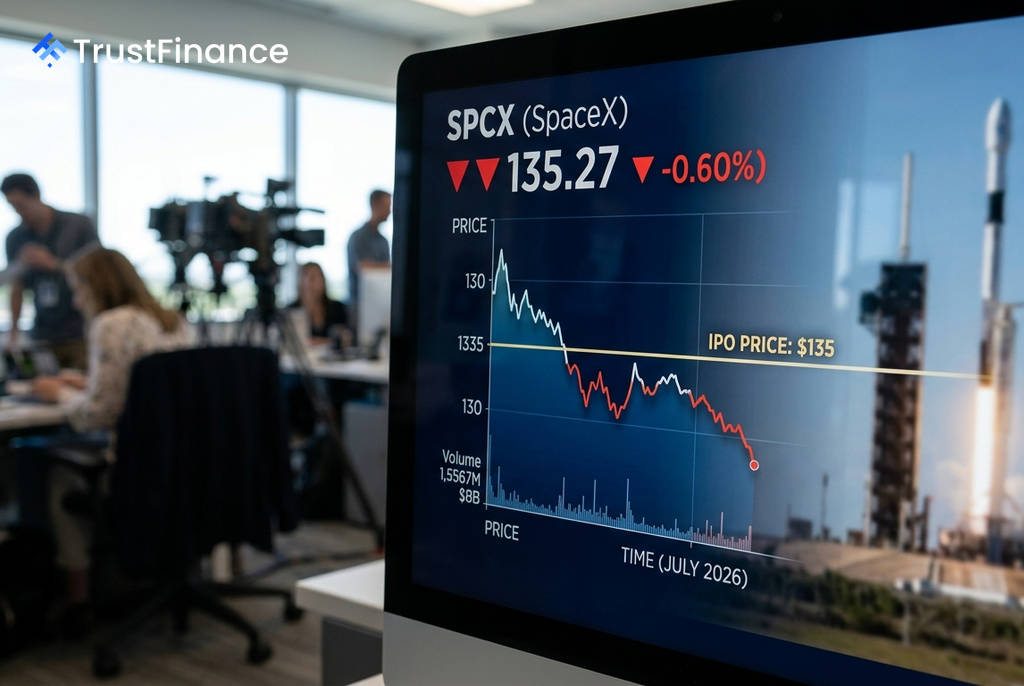
Shares of SpaceX fell below their blockbuster IPO price this week, signaling potential volatility for the aerospace giant as a key deadline approaches that could significantly increase the number of shares available for trading.
The company's stock dipped to a low of $132.15 on Wednesday before closing at $135.27, just above its IPO price of $135 per share, according to a Reuters report. The stock has now declined 33% from its record high set in the days following its historic public offering on June 11, which raised a record $75 billion.
Lockup Expiration Looms
The primary concern for investors is the upcoming expiration of "lockup" restrictions, which prevent company insiders and early investors from selling their shares for a set period after an IPO. The first of these expirations could flood the market with new supply, potentially putting downward pressure on the stock price.
Key details of the upcoming share release include:
- 911.5 million shares held by employees and some early investors will become eligible for sale.
- This release is scheduled for the second trading day after SpaceX's first quarterly earnings report, which analysts expect in early August.
- The newly unlocked shares are currently valued at approximately $123 billion, far exceeding the $86 billion worth of shares in the current public float.
 Ad
By December 8, additional expirations will increase SpaceX's float of potentially tradable shares to 40% of the company. The remaining 60%, including CEO Elon Musk's stake, will remain locked up until mid-2027, the report states.
Valuation and Market Outlook
Despite the recent selloff, SpaceX remains one of Wall Street's most valuable companies, with a market capitalization of roughly $1.8 trillion. The company trades at a steep valuation of 49 times expected revenue, even after the recent decline. For comparison, Tesla, another Musk-led company, trades at a revenue multiple of 15.
Analysts remain largely bullish, with 27 of 32 analysts tracked by LSEG recommending buying the stock. They cite the company's profitable Starlink internet division and its dominant government rocket launch business as reasons for the premium valuation. However, the company also reported a net loss of nearly $5 billion last year.
Some market participants are proceeding with caution. "We won’t overweight it because they do have the lockup coming," said Jay Hatfield, CEO of Infrastructure Capital Advisors, in a comment to Reuters. A historical analysis by Reuters of 50 major U.S. IPOs since 2010 found that companies whose shares fell below their debut price within the first two months tended to underperform their peers over the long term.
Read next
More on Stocks
FTC Orders Walmart, Uber, Delta to Disclose Data on Personalized Pricing
The U.S. Federal Trade Commission is demanding nine major companies, including leading retail, travel, and gig economy firms, to provide information on how they use consumer data for setting individual prices and wages.

Google Launches Gemini 4 Carbon AI Model to Bolster Cybersecurity Capabilities
Alphabet's Google has unveiled Gemini 4 Carbon, its latest AI model specifically designed for advanced cybersecurity tasks like vulnerability detection and secure code generation. The launch escalates competition with rivals OpenAI and Anthropic in the enterprise AI market.

Oracle Shares Surge After Unveiling $225 Billion Revenue Target for 2030
Oracle stock rose sharply after the company presented a long-term financial outlook targeting at least $225 billion in annual revenue by fiscal 2030, driven by its expanding AI infrastructure business.

DOJ Scrutinizes Nvidia's $12.9B Hugging Face Deal Amid Broader Antitrust Probe, Sources Say
The U.S. Department of Justice is reportedly examining Nvidia's planned $12.93 billion acquisition of AI platform Hugging Face as part of a wider, ongoing antitrust investigation into the chipmaker's market conduct.