
Story
Pentagon Considers Major Expansion of Drone Boat Fleet for Border Surveillance
Summary
The Pentagon is weighing a significant increase in its use of autonomous surveillance boats for border security following a successful pilot program on the Rio Grande. The move reflects a broader military shift toward low-cost, unmanned systems and highlights the growing role of defense technology startups.
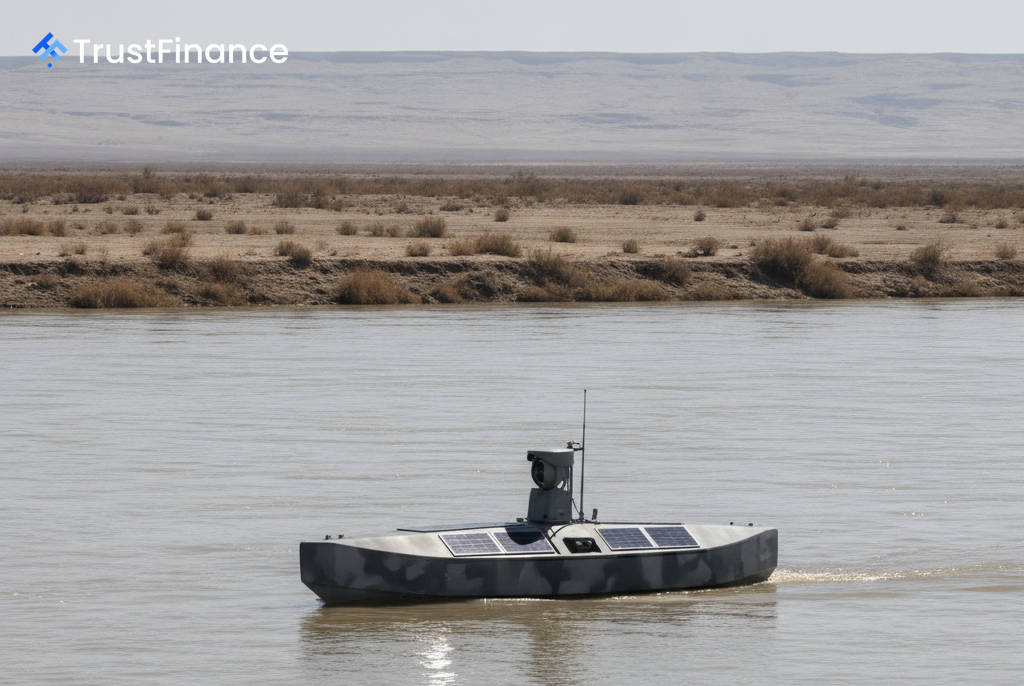
The Pentagon may expand its use of autonomous surveillance boats on the Rio Grande and in the Gulf of Mexico after a pilot program proved effective at detecting and deterring illegal border crossings and drug trafficking. A U.S. official confirmed that defense officials are studying a wider deployment of the canoe-sized vessels following the test program that began in January.
Pilot Program Success
The unmanned surface vessels, built by San Diego-based startup Seasats, have been instrumental in aiding law enforcement. According to the Pentagon, the current test fleet of 10 drones has assisted in an average month with:
- 452 detections
- 350 apprehensions
- 100 turnbacks
A "turnback" occurs when a group abandons a crossing attempt after realizing they have been discovered by the drone. M. Roosevelt Ditlevson, assistant secretary of defense for Homeland Defense and Americas Security Affairs, told Reuters that maritime drones are "cost-effective solutions" for monitoring areas that traffickers are increasingly using.
Technology and Strategy
 Ad
AdThe primary vessel used is Seasats' 11-foot, 340-pound Lightfish, a solar-powered autonomous boat that costs approximately $240,000. It can be launched from a pickup truck and operate for months, feeding real-time tracking data from its electro-optical, infrared, and sonar sensors into military software networks like those from Palantir Technologies and Anduril Industries.
This deployment is part of a larger push by the military to use relatively inexpensive, autonomous systems for persistent surveillance, a strategy heavily influenced by the successful use of drones in the war in Ukraine. Seasats CEO Mike Flanigan noted that while a traditional ship or plane covers territory faster, an autonomous boat "can stay there for months at a time, which is the key differentiator."
Future Expansion and Market Impact
Defense officials are considering increasing the robotic fleet by as many as 50 vessels to relieve pressure on crewed Coast Guard cutters and aircraft. The expansion could see the drones create a "radar fence" in the Gulf of Mexico between Texas and Key West, with future tests planned for the Pacific Ocean near San Diego.
The program's success highlights how venture-backed defense startups like Seasats, Saronic, and Saildrone are winning business once dominated by traditional contractors. Ditlevson stressed that the Pentagon remains open to the best technology, stating, "We’re agnostic to the vendor." This signals a competitive market for companies developing next-generation autonomous security systems.
Read next
More on Stocks
Anthropic IPO Filing Cites Government Scrutiny as Key Business Risk
In its initial public offering prospectus, artificial intelligence firm Anthropic warned that government actions and perceptions could negatively impact its commercial relationships, even though government contracts make up a small fraction of its revenue.

KION Group Shares Decline After Lowering Q3 Profit Outlook
The German industrial equipment manufacturer warned its third-quarter adjusted EBIT would miss analyst forecasts by approximately 7%, citing weakness in its truck division and higher costs.

Biopharma Funding Jumps 56% in September on Public Financing Surge, Mizuho Reports
Biopharmaceutical companies raised $13.0 billion in September, a 56% year-over-year increase, driven by a 272% jump in public-other financing, according to a Mizuho analysis of BioWorld data.

Nvidia Reinstated as Morgan Stanley's Top Semiconductor Pick on Valuation
The investment bank reinstated Nvidia as its top choice in the semiconductor sector, citing an attractive valuation and the company's strong position to capitalize on the growing demand for AI data centers.