
Story
JPMorgan Halts Lending to Aschenbrenner's AI Fund After Historic July Losses, FT Reports
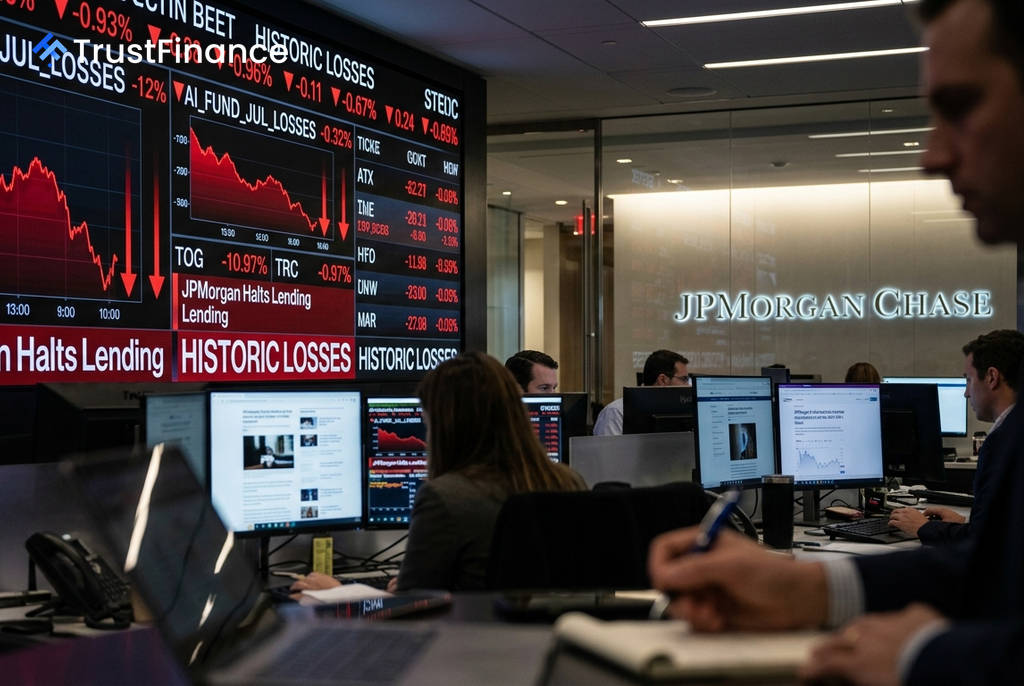
JPMorgan Chase & Co. has terminated its prime brokerage lending relationship with Leopold Aschenbrenner’s hedge fund, Situational Awareness, following a period of record-setting losses driven by a downturn in artificial intelligence stocks. The move, reported by the Financial Times, cuts off a critical source of leverage for the high-profile fund.
A Record-Setting Sell-Off
The decision by Wall Street's largest bank came after Situational Awareness endured a sharp sell-off in July, resulting in what the FT described as the largest dollar loss in the history of the hedge fund industry. The fund's assets fell by 67% during that month alone.
Despite the staggering losses, the fund managed to avoid a total collapse by selling the majority of its public market positions to Ken Griffin's Citadel. According to the report, this maneuver left the fund up 80% on the year at the end of July.
Institutional Scrutiny and New Partnerships
The retreat by JPMorgan highlights a broader recalibration of institutional risk surrounding aggressive, AI-focused investment strategies. Morgan Stanley had previously held discussions with the fund after its launch but ultimately declined to establish a banking relationship, underscoring the heightened scrutiny facing such high-leverage vehicles.
To re-establish market access, Aschenbrenner has reportedly turned to boutique prime broker Clear Street. This pivot comes as top-tier investment banks have stepped back from providing leverage to the embattled fund.
 Ad
A Pivot to Derivatives
In a letter to investors, Aschenbrenner outlined a new path forward, vowing to reboot his hybrid public-private strategy with a more conservative risk model and limited leverage. The fund is now reportedly deploying customized "flex options" to gain exposure to the AI sector.
This new derivatives-based approach allows the fund to maintain significant directional bets on key technology companies while capping potential downside to the pre-paid premiums. The strategy targets firms across the semiconductor and AI infrastructure supply chain, including:
- Advanced Micro Devices (AMD)
- Intel
- SK Hynix
- SanDisk
- CoreWeave
Market participants are now closely watching whether this scaled-back capital structure can successfully navigate the ongoing volatility in the artificial intelligence landscape without relying on traditional bank leverage.
Read next
More on Stocks
FTC Orders Walmart, Uber, Delta to Disclose Data on Personalized Pricing
The U.S. Federal Trade Commission is demanding nine major companies, including leading retail, travel, and gig economy firms, to provide information on how they use consumer data for setting individual prices and wages.

Google Launches Gemini 4 Carbon AI Model to Bolster Cybersecurity Capabilities
Alphabet's Google has unveiled Gemini 4 Carbon, its latest AI model specifically designed for advanced cybersecurity tasks like vulnerability detection and secure code generation. The launch escalates competition with rivals OpenAI and Anthropic in the enterprise AI market.

Oracle Shares Surge After Unveiling $225 Billion Revenue Target for 2030
Oracle stock rose sharply after the company presented a long-term financial outlook targeting at least $225 billion in annual revenue by fiscal 2030, driven by its expanding AI infrastructure business.

DOJ Scrutinizes Nvidia's $12.9B Hugging Face Deal Amid Broader Antitrust Probe, Sources Say
The U.S. Department of Justice is reportedly examining Nvidia's planned $12.93 billion acquisition of AI platform Hugging Face as part of a wider, ongoing antitrust investigation into the chipmaker's market conduct.