
Story
Jackson Hole Symposium to Eclipse Nvidia Earnings as Treasury Yields Surge
Summary
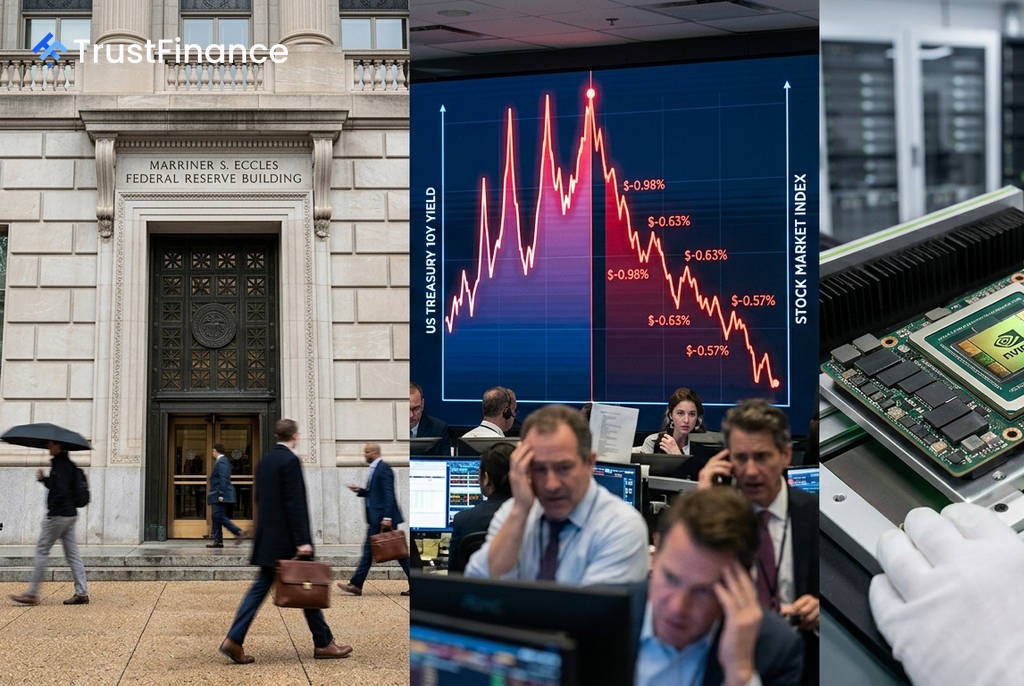
With long-term U.S. Treasury yields hitting multi-year highs, market focus is shifting from Nvidia's highly anticipated earnings to the Federal Reserve's Jackson Hole symposium, where Chair Jerome Powell's speech could set the tone for risk assets.
As surging long-term bond yields pressure global markets, investors are increasingly viewing the Federal Reserve's upcoming Jackson Hole economic symposium as a more critical event than the highly anticipated earnings report from AI chipmaker Nvidia (NVDA).
Ann Miletti, a senior executive at Allspring Global Investments, stated that while Nvidia's results are significant, the potential for Federal Reserve Chair Jerome Powell's speech to reshape monetary policy expectations makes it the primary concern for Wall Street.
A Shift in Market Focus
Wall Street strategists argue that the two events represent different levels of market risk. Nvidia's earnings are seen as a “single profitability anchor,” primarily influencing the AI supply chain and sector-specific valuations. In contrast, Powell's address is a “systemic pricing anchor” that could impact the Fed's interest rate path, long-term bond premiums, and the discount rate applied to all risk assets.
"In all of this complexity, we try to always focus on what we can control," said Miletti, who serves as Head of Active Equity at Allspring, in a media interview. She emphasized focusing on companies with strong balance sheets and the flexibility to navigate any market environment.
The Pressure of Rising Yields
 Ad
AdThe recent spike in government borrowing costs is at the heart of investor anxiety. As of Aug. 20, the 10-year Treasury yield reached 4.69% and the 30-year yield hit 5.23%, levels not seen in two decades. This has pushed benchmark corporate borrowing costs above 5.5%, up from below 5% at the start of the year, according to the source material.
These higher rates pose a direct threat to capital-intensive sectors like artificial intelligence, which relies on debt-financed data center construction. Rising yields reduce the present value of future cash flows and compress the valuation multiples of technology stocks. A recent move by the U.S. Treasury to double a long-term debt buyback to $4 billion provided only temporary relief, underscoring the market's demand for policy clarity over short-term liquidity injections.
What's at Stake at Jackson Hole
Investors will scrutinize Powell's keynote speech on Aug. 28 for a clear framework on the central bank's fight against inflation. The market is seeking a credible “reaction function”—clarity on what data could trigger further rate hikes, the Fed's view on the current policy rate, and its commitment to the 2% inflation target.
According to analysis from Goldman Sachs cited in the report, a lack of clear forward guidance from the Fed could increase uncertainty. This might lead investors to demand a higher term premium on long-term bonds, pushing yields up even without further rate hikes. The most dangerous scenario for markets would be a combination of dovish rhetoric with a lack of a credible long-term strategy, which could cause a “bear steepening” of the yield curve, where long-term rates rise faster than short-term rates.
Read next
More on Stocks
U.S. Stock Futures Rebound as Markets Digest Hawkish Fed Rate Hike
U.S. stock futures rose in overnight trading, recovering from a sell-off triggered by the Federal Reserve's first interest rate hike in three years. Falling oil prices and positive corporate news helped lift market sentiment.

Holtec Suspends $900 Million IPO Amid Challenging Market Conditions
Nuclear services company Holtec Nuclear Corp. has postponed its U.S. initial public offering, which aimed to raise as much as $900 million, citing unfavorable market conditions and weak performance from recently listed peers in the sector.

Snap Stock Climbs on Enterprise Push for New Specs AR Glasses
Shares of Snap Inc. gained in after-hours trading after the company unveiled its new $2,195 Specs AR glasses and announced key enterprise partnerships with Salesforce, Nvidia, and AWS.

Gold Prices Fall as Hawkish Fed Outlook Boosts US Dollar
Gold prices declined after the Federal Reserve raised interest rates by 25 basis points and signaled further tightening, strengthening the U.S. dollar and increasing the opportunity cost of holding the non-yielding metal.