
Story
Global Bond Yields Hold Near Multi-Week Highs as US-Iran Tensions Fuel Inflation Fears
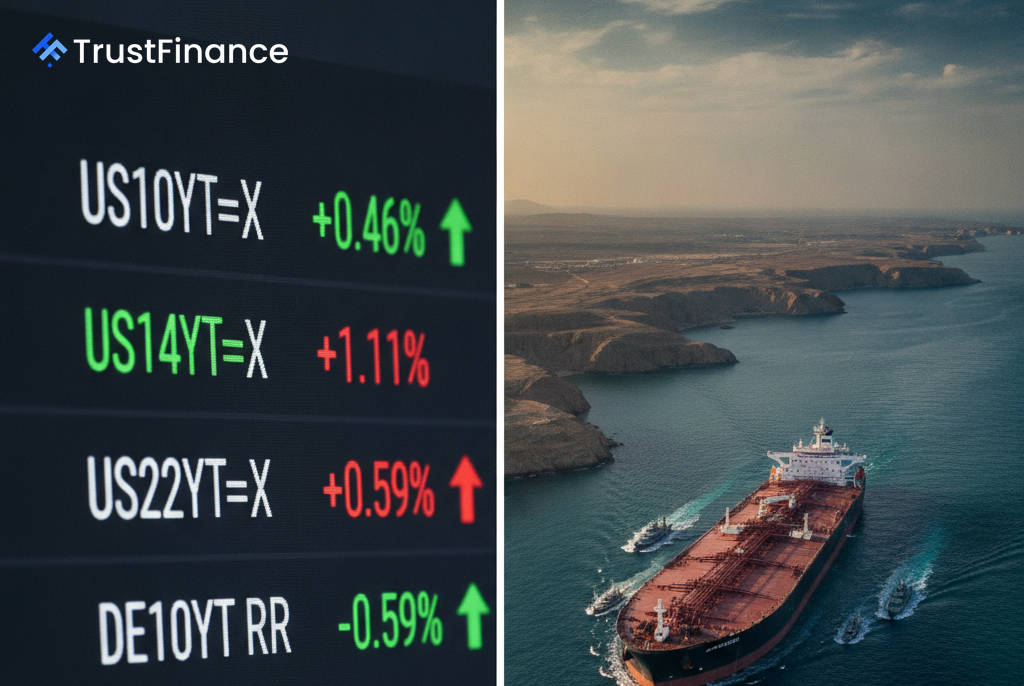
U.S. Treasury and Eurozone government bond yields held near multi-week highs on Thursday, as escalating military tensions between the United States and Iran triggered a sharp rise in crude oil prices and stoked investor fears of resurgent inflation.
The selloff in sovereign debt, which began Wednesday, marks a sharp reversal from a period of relative calm in fixed-income markets, pushing borrowing costs higher across developed economies.
Yields Surge on Geopolitical Shock
Key government bond yields, which move inversely to prices, remained anchored near their highest levels in weeks following the geopolitical developments. The move has wiped out weeks of gains for bondholders.
- The benchmark 10-year U.S. Treasury note yield hovered around 4.58%, just below the 4.60% threshold it breached on Wednesday, its highest level since May 21.
- The 2-year U.S. Treasury yield, which is highly sensitive to monetary policy expectations, held near 4.2%, close to its one-month high of 4.235%.
- The 10-year German Bund yield, the benchmark for the eurozone, was firm near 3.06%, its highest point since late May.
- The policy-sensitive 2-year German yield stood at 2.66%, also maintaining its position near a one-month peak.
Oil Prices Fuel Inflation Concerns
 Ad
The abrupt repricing in bond markets was triggered by reports that U.S. President Donald Trump had declared an interim peace agreement with Iran "over," followed by U.S. air strikes near the critical Strait of Hormuz shipping lane. This escalation immediately raised the prospect of supply disruptions through the strait, a transit route for approximately one-fifth of global oil consumption.
The threat caused crude oil prices to spike, creating a direct channel to inflation expectations. Fixed-income investors are now pricing in the risk of sustained cost-push inflation driven by higher energy costs, which would erode the real return of fixed bond payments and justify lower prices and higher yields.
Market Backdrop
This geopolitical shock has overshadowed other market drivers, shattering a narrative that had supported a recent bond rally. Just days earlier, markets had been focused on commentary from European Central Bank policymakers suggesting that inflation was cooling in a predictable manner.
Even the minutes from the Federal Reserve's June meeting, which showed policymakers were more divided than expected on the need for future rate hikes, provided only temporary relief for bond prices before being overwhelmed by the events in the Middle East.