
Story
Colorado River Drought Escalates Economic Conflict Over Water in US West
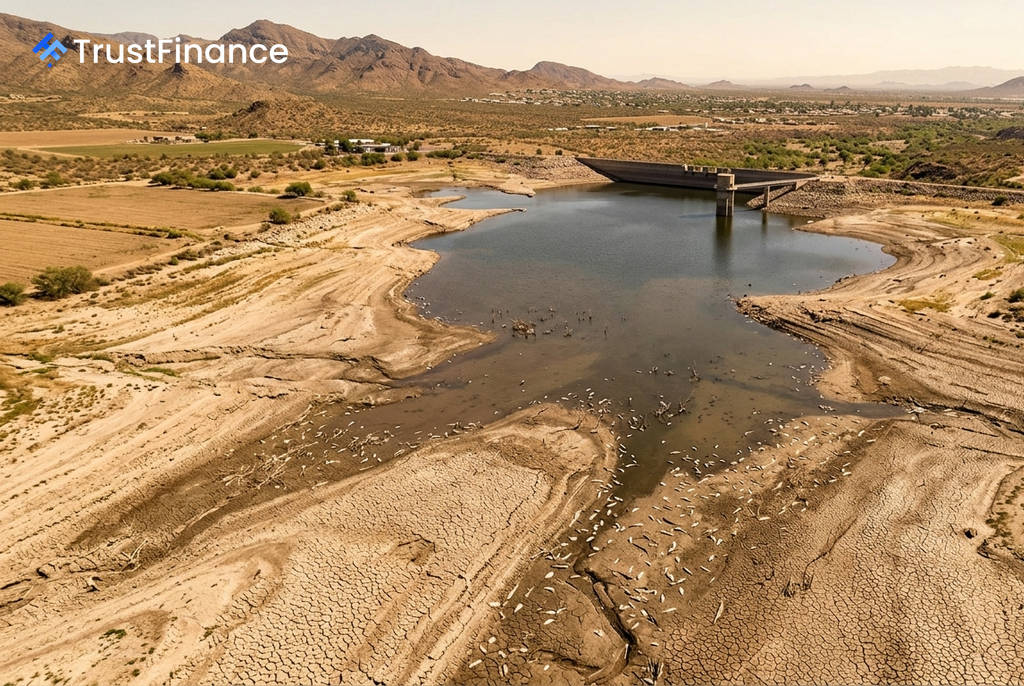
A multi-decade drought across the U.S. West, worsened by record-low snowpack and high temperatures, is escalating the economic conflict over water from the Colorado River system. The basin, which supplies about 40 million people and irrigates millions of acres of farmland across seven states and Mexico, is facing unprecedented shortages that pit the needs of agriculture against those of growing municipalities and industrial users, according to a Reuters report.
Worsening Scarcity Hits Basin States
The effects of the water crisis are becoming increasingly visible on the ground. In central Arizona, the San Carlos Reservoir on the Gila River, a Colorado River tributary, has been drained to just 1% of its capacity. In Utah, the town of Emery could deplete its water supply in months as its primary water source, the Muddy Creek, is running at only 6% of its normal volume.
Agricultural producers are bearing a significant economic burden. An Arizona farmer in Pinal County, Jace Miller, has been forced to leave more than half his fields fallow after losing most of his access to Colorado River water in 2022. In Colorado, rancher Robbie LeValley reported selling a fifth of her herd and cultivating only a quarter of her usual hay crop as irrigation water ran out two months early, causing hay prices to triple in her region.
Agriculture vs. Urban and Industrial Growth
The dwindling water supply is forcing a difficult conversation about resource allocation. Farmers, who are critical to the nation's food security, are seeing agricultural land bought up by housing developers and solar companies. Some, like Pinal County farmer Nancy Caywood, are being approached to sell their land for solar panel installations after their water access was cut off.
 Ad
Meanwhile, rapidly growing urban areas are searching for new water sources. A city council candidate in the Phoenix suburb of Scottsdale, Michelle Ugenti-Rita, suggested that water historically used for farming could be repurposed for the city's needs, proposing the purchase of groundwater rights from farmers. This highlights the direct competition between the agricultural sector and the water demands of new housing, data centers, and semiconductor plants.
Federal Cuts Loom Amid Interstate Disputes
In response to the crisis, federal officials are weighing significant action. The U.S. Bureau of Reclamation is considering a proposal from the Lower Basin states—Arizona, California, and Nevada—to reduce their collective Colorado River water use by around 21% annually through 2028 to preserve critical reservoir levels.
This proposal has intensified a long-running dispute with the Upper Basin states of Colorado, New Mexico, Utah, and Wyoming. According to Brad Udall, a scientist at Colorado State University, Arizona’s growth has been sustained by drawing on globally unique, but non-renewable, groundwater reserves. As these states face the prospect of deep, federally mandated cuts, the conflict over the river's shrinking flows could ultimately be decided in court.
Read next
More on Commodities
U.S. Crude Inventories Post Surprise Draw While Gasoline Stocks Swell, EIA Reports
U.S. crude oil stockpiles fell unexpectedly last week, driven by a surge in exports, while gasoline inventories saw a significant build amid weakening demand, according to the latest EIA data.

UBS Raises Year-End Brent Forecast to $110 on Middle East Supply Risks
UBS has increased its year-end forecast for Brent crude to $110 per barrel, citing escalating supply risks in the Middle East, declining global inventories, and record-high freight costs.

Iran Dismisses Latest Qatari Peace Proposal as 'Unacceptable'
A senior Iranian official has rejected the latest Qatari-mediated draft deal to end the eight-month war, calling the ideas 'unacceptable' and signaling a continued diplomatic impasse. The news comes amid rising oil prices following attacks on Saudi energy infrastructure.

Argentina Poised to Gain EU Soymeal Market Share as Deforestation Rules Hit Brazil
Argentina's soybean industry is preparing to capture a larger share of the European Union's soymeal market as new EU anti-deforestation rules are expected to disrupt exports from rival Brazil.