
Story
Chile Considers Ethanol-Gasoline Blend to Ease Fiscal Strain from High Oil Prices
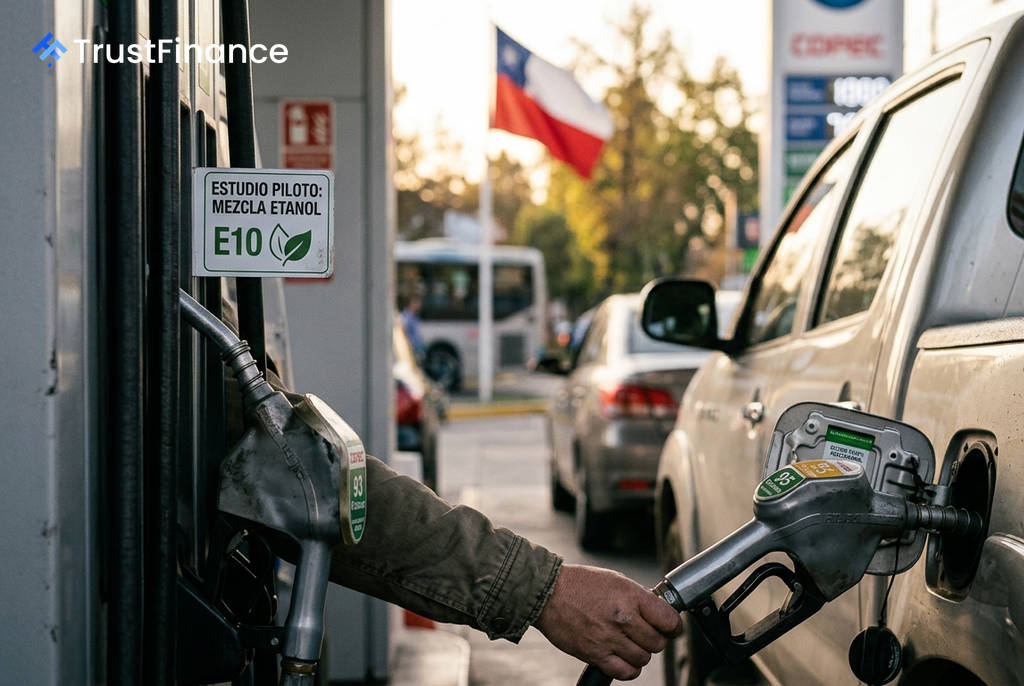
Chile's government is considering a proposal to blend ethanol with its gasoline supply as it seeks to reduce fuel costs and alleviate fiscal pressure from persistently high oil prices, according to internal documents reviewed by Reuters.
The energy ministry has drafted a plan to shift to an E10 blend, which involves mixing 10% ethanol with gasoline. This policy change could lower government fuel supply expenditures by approximately $107 million per year, an internal ministry memo stated.
Economic Pressures Drive Policy Shift
As one of Latin America's largest oil importers, Chile is highly exposed to global energy market volatility. The country imported 181,000 barrels of crude oil per day in 2025, according to OPEC data. With the global benchmark, Brent crude, trading at over $105 a barrel, up from around $73 before recent geopolitical conflicts, the nation's finances have been strained.
The surge in prices has put significant pressure on Chile's MEPCO fuel stabilization mechanism, a fund designed to cushion consumers from price shocks. In March, Finance Minister Jorge Quiroz noted that "the government is out of money," highlighting the severity of the fiscal situation and prompting the exploration of cost-saving alternatives like ethanol blending.
 Ad
Implementation and Sourcing Challenges
A transition to an E10 blend would require an estimated $10.8 million investment from state-owned oil company ENAP to adapt refining and storage infrastructure, the ministry memo indicated. The switch would also allow Chile to phase out the use of MTBE, an octane-boosting additive, aligning it with regional peers like Brazil, which has a large domestic ethanol industry.
However, Chile lacks sufficient agricultural land to support a domestic ethanol industry, meaning it would have to rely on imports. A ministry memo acknowledged this would effectively be "replacing one import dependency with another." Key facts on the proposed transition include:
- Current Suppliers: Chile's small ethanol imports currently come from Argentina and Bolivia.
- Potential Beneficiaries: A switch could benefit U.S. corn growers, as the U.S. already supplies 85% of Chile's gasoline, according to a U.S. Grains Council briefing.
- Timeline: The U.S. Grains Council believes a 10% or even 15% blend could be achievable in Chile by 2030.
Read next
More on Stocks
FTC Orders Walmart, Uber, Delta to Disclose Data on Personalized Pricing
The U.S. Federal Trade Commission is demanding nine major companies, including leading retail, travel, and gig economy firms, to provide information on how they use consumer data for setting individual prices and wages.

Google Launches Gemini 4 Carbon AI Model to Bolster Cybersecurity Capabilities
Alphabet's Google has unveiled Gemini 4 Carbon, its latest AI model specifically designed for advanced cybersecurity tasks like vulnerability detection and secure code generation. The launch escalates competition with rivals OpenAI and Anthropic in the enterprise AI market.

Oracle Shares Surge After Unveiling $225 Billion Revenue Target for 2030
Oracle stock rose sharply after the company presented a long-term financial outlook targeting at least $225 billion in annual revenue by fiscal 2030, driven by its expanding AI infrastructure business.

DOJ Scrutinizes Nvidia's $12.9B Hugging Face Deal Amid Broader Antitrust Probe, Sources Say
The U.S. Department of Justice is reportedly examining Nvidia's planned $12.93 billion acquisition of AI platform Hugging Face as part of a wider, ongoing antitrust investigation into the chipmaker's market conduct.