
Story
Appeals Court Revives 'Maximum Strength' Claims in Decongestant Lawsuit
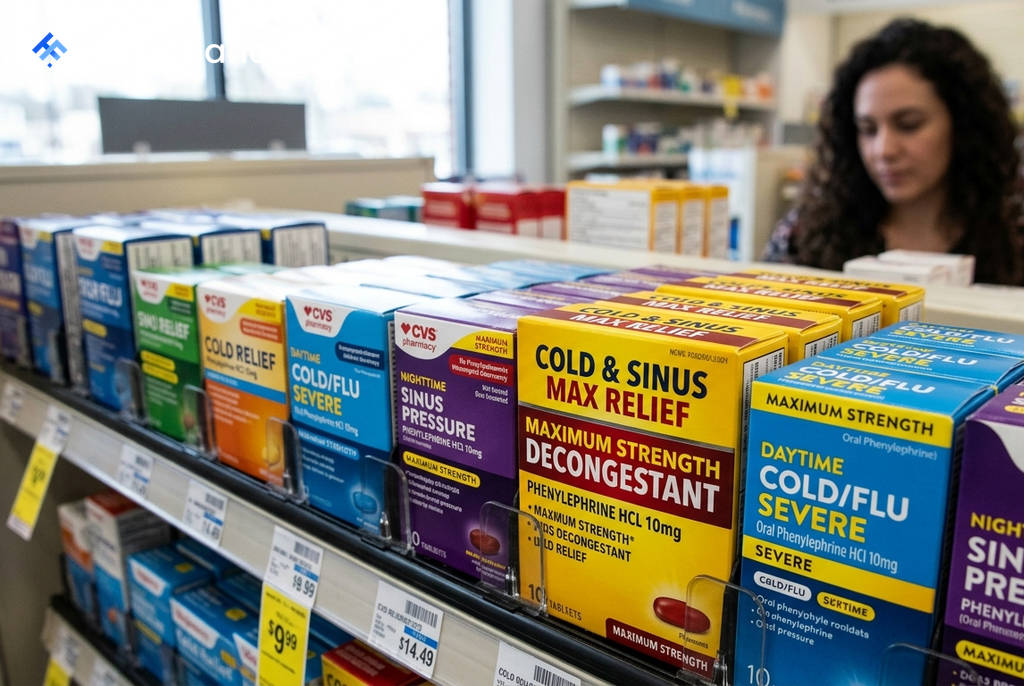
A federal appeals court on Thursday partially revived a major lawsuit against leading drugmakers and retailers, allowing consumers to proceed with some false advertising claims over popular over-the-counter decongestants. The ruling focuses on products containing oral phenylephrine, an ingredient an FDA advisory panel found to be ineffective.
The Court's Ruling
The 2nd U.S. Circuit Court of Appeals in Manhattan determined that while most state-law claims were preempted by federal regulations, consumers could pursue litigation related to specific marketing language. The three-judge panel revived claims concerning products labeled "maximum strength," arguing that companies added this unregulated phrase on their own initiative.
The court also allowed claims to proceed for brand-name drugs approved through the federal New Drug Application process. According to the ruling, manufacturers of these drugs had the ability to update their labels to reflect emerging scientific evidence on phenylephrine's ineffectiveness. However, the court affirmed the dismissal of a civil racketeering claim, stating consumers lacked legal standing.
Market Impact and Next Steps
The decision reopens legal risk for a wide range of publicly traded companies that were defendants in the consolidated litigation, which comprises about 100 lawsuits. The case now returns to U.S. District Judge Brian Cogan in Brooklyn, who had previously dismissed it in October 2024.
Key companies named in the litigation include:
 Ad
- Drugmakers: Procter & Gamble (PG), Haleon (HLN), Bayer (BAYGn), GSK, and Kenvue (KVUE).
- Retailers: CVS (CVS), Walmart (WMT), Target (TGT), Costco (COST), and Walgreens.
Jonathan Selbin, a lawyer representing the consumers, stated the case is "far from over," asserting that manufacturers sold products they knew were ineffective. The defendants' lawyers did not immediately comment on the ruling.
Background on Phenylephrine
The lawsuits followed a landmark finding in September 2023 by a U.S. Food and Drug Administration (FDA) advisory panel, which concluded that oral phenylephrine was no more effective than a placebo as a nasal decongestant. Following that finding, the FDA proposed in November 2024 to remove the ingredient's classification as safe and effective for over-the-counter oral use.
In the court's opinion, Circuit Judge Denny Chin acknowledged that the legal limitations on consumer remedies might seem unfair. However, he wrote, "The fix, however, must flow not from litigation but from the FDA."
Read next
More on Stocks
FTC Orders Walmart, Uber, Delta to Disclose Data on Personalized Pricing
The U.S. Federal Trade Commission is demanding nine major companies, including leading retail, travel, and gig economy firms, to provide information on how they use consumer data for setting individual prices and wages.

Google Launches Gemini 4 Carbon AI Model to Bolster Cybersecurity Capabilities
Alphabet's Google has unveiled Gemini 4 Carbon, its latest AI model specifically designed for advanced cybersecurity tasks like vulnerability detection and secure code generation. The launch escalates competition with rivals OpenAI and Anthropic in the enterprise AI market.

Oracle Shares Surge After Unveiling $225 Billion Revenue Target for 2030
Oracle stock rose sharply after the company presented a long-term financial outlook targeting at least $225 billion in annual revenue by fiscal 2030, driven by its expanding AI infrastructure business.

DOJ Scrutinizes Nvidia's $12.9B Hugging Face Deal Amid Broader Antitrust Probe, Sources Say
The U.S. Department of Justice is reportedly examining Nvidia's planned $12.93 billion acquisition of AI platform Hugging Face as part of a wider, ongoing antitrust investigation into the chipmaker's market conduct.