
Story
AMD Stock Slides as Margin Miss and Soaring Spending Overshadow Record Revenue
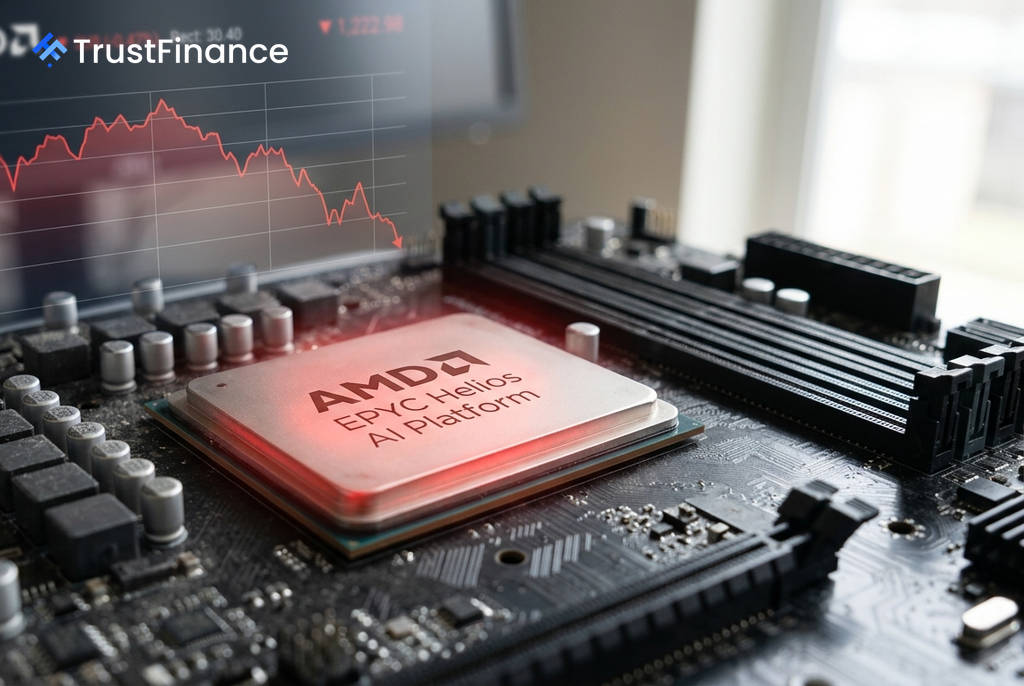
Advanced Micro Devices (NASDAQ: AMD) shares fell more than 7% in pre-market trading, as a record-setting quarterly earnings report was undermined by investor concerns over profitability, rising costs, and a significant competitive setback.
Strong Growth Met by Deeper Concerns
AMD announced record Q2 revenue of $11.54 billion, a 50% increase year-over-year, and adjusted earnings per share of $1.66, with both figures topping Wall Street estimates. The company also issued strong third-quarter revenue guidance of approximately $13 billion, ahead of the consensus forecast of around $12.5 billion.
Despite the positive headline numbers, two key figures disappointed investors:
- Gross Margin: The company's gross margin for the quarter was 54%, falling short of the 56% analysts had anticipated. The miss was attributed to near-term cost pressures associated with the ramp-up of its Helios AI infrastructure platform.
- Capital Expenditures: Spending surged to $808 million, more than double the Wall Street forecast of roughly $314 million. This raised concerns about the significant investment required for AMD to compete effectively against rival Nvidia in the AI accelerator market.
 Ad
SpaceX Defection Amplifies Sell-Off
Compounding the pressure on the stock, SpaceX announced in its own earnings release that it would stop purchasing AMD chips and would instead use Nvidia (NASDAQ: NVDA) as its exclusive supplier for AI chips. The loss of a high-profile customer to its primary competitor amplified the negative sentiment following AMD's report.
Market Context
The sell-off appeared to be a classic "buy the rumor, sell the news" event. AMD's stock had rallied approximately 9% during the previous regular session in anticipation of a strong report. The subsequent pre-market drop of 7.3% was largely company-specific, as the broader S&P 500 and Nasdaq were nearly flat. For investors, the strong top-line performance was not enough to offset worries about profitability, the escalating costs of the AI race, and a tangible loss in market share.
Read next
More on Stocks
FTC Orders Walmart, Uber, Delta to Disclose Data on Personalized Pricing
The U.S. Federal Trade Commission is demanding nine major companies, including leading retail, travel, and gig economy firms, to provide information on how they use consumer data for setting individual prices and wages.

Google Launches Gemini 4 Carbon AI Model to Bolster Cybersecurity Capabilities
Alphabet's Google has unveiled Gemini 4 Carbon, its latest AI model specifically designed for advanced cybersecurity tasks like vulnerability detection and secure code generation. The launch escalates competition with rivals OpenAI and Anthropic in the enterprise AI market.

Oracle Shares Surge After Unveiling $225 Billion Revenue Target for 2030
Oracle stock rose sharply after the company presented a long-term financial outlook targeting at least $225 billion in annual revenue by fiscal 2030, driven by its expanding AI infrastructure business.

DOJ Scrutinizes Nvidia's $12.9B Hugging Face Deal Amid Broader Antitrust Probe, Sources Say
The U.S. Department of Justice is reportedly examining Nvidia's planned $12.93 billion acquisition of AI platform Hugging Face as part of a wider, ongoing antitrust investigation into the chipmaker's market conduct.