
Story
Waters Corp. Best Positioned Under New China Lab Pricing Rules, Morgan Stanley Says
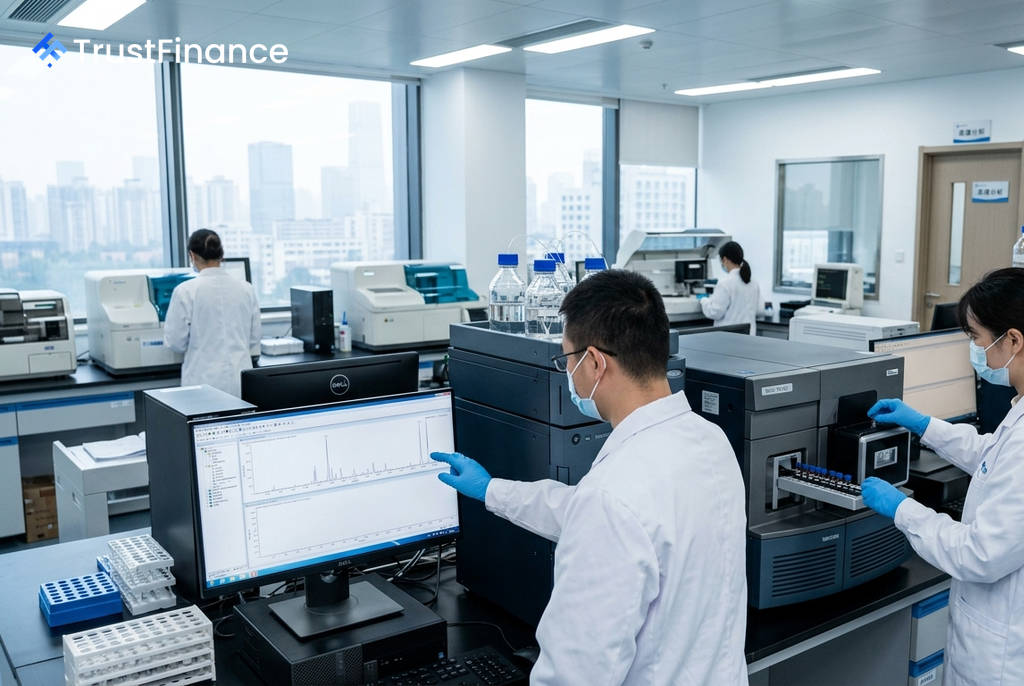
Waters Corporation (NYSE: WAT) appears to be the best-positioned life sciences company following the finalization of China's new pricing framework for clinical laboratory services, according to analysts at Morgan Stanley. The new rules, published by China's National Healthcare Security Administration, favor companies with exposure to advanced diagnostic technologies.
China's New Pricing Framework
The recently finalized guidelines establish a new pricing structure for clinical lab services, covering 662 main items, 114 add-ons, and seven extensions. While the framework maintains a "methodology-neutral" structure for many routine tests, it provides differentiated and preferential treatment for more advanced workflows, most notably mass spectrometry.
According to the report, the framework also introduces tiered discounts for multiplex panels and offers more detailed guidelines for microbiology services. The final implementation timing and specific pricing in Chinese yuan will be determined by provincial authorities.
Impact on Life Science Companies
 Ad
Morgan Stanley's analysis highlights a varied impact across the sector, depending on each company's product portfolio.
- Waters Corp. (WAT): The company is seen as a primary beneficiary due to its significant exposure to mass spectrometry and complex microbiology. The framework preserves specific surcharges for these higher-complexity workflows, which Waters views as a "constructive" outcome that supports the clinical value and adoption of quantitative testing.
- Danaher Corp. (DHR): The impact on Danaher is mixed. While its SCIEX mass spectrometry and MicroScan susceptibility testing businesses are expected to be protected by premium add-ons, its Beckman Coulter unit, which focuses on routine chemistry and immunoassays, faces pressure from standardized fees. Danaher previously identified approximately $320 million of exposed revenue in 2023, forecasting related headwinds of $50 million in 2024, $150 million in 2025, and $75 million to $100 million in 2026.
- Thermo Fisher Scientific (TMO): Thermo Fisher is expected to have limited exposure to the new pricing rules, Morgan Stanley noted. The company's risk was further reduced by its recent divestiture of its microbiology business.
Market Implications
The new Chinese framework signals a strategic effort to manage healthcare costs for routine laboratory services while continuing to encourage the adoption of high-value, advanced diagnostic technologies. For investors, this regulatory shift underscores the importance of portfolio composition for life science tool companies operating in the Chinese market, creating distinct advantages for firms focused on specialized and complex testing.
Read next
More on Stocks
FTC Orders Walmart, Uber, Delta to Disclose Data on Personalized Pricing
The U.S. Federal Trade Commission is demanding nine major companies, including leading retail, travel, and gig economy firms, to provide information on how they use consumer data for setting individual prices and wages.

Google Launches Gemini 4 Carbon AI Model to Bolster Cybersecurity Capabilities
Alphabet's Google has unveiled Gemini 4 Carbon, its latest AI model specifically designed for advanced cybersecurity tasks like vulnerability detection and secure code generation. The launch escalates competition with rivals OpenAI and Anthropic in the enterprise AI market.

Oracle Shares Surge After Unveiling $225 Billion Revenue Target for 2030
Oracle stock rose sharply after the company presented a long-term financial outlook targeting at least $225 billion in annual revenue by fiscal 2030, driven by its expanding AI infrastructure business.

DOJ Scrutinizes Nvidia's $12.9B Hugging Face Deal Amid Broader Antitrust Probe, Sources Say
The U.S. Department of Justice is reportedly examining Nvidia's planned $12.93 billion acquisition of AI platform Hugging Face as part of a wider, ongoing antitrust investigation into the chipmaker's market conduct.