
Story
US Regulators Warn Banks on Credit Risks of Lending to Unauthorized Workers
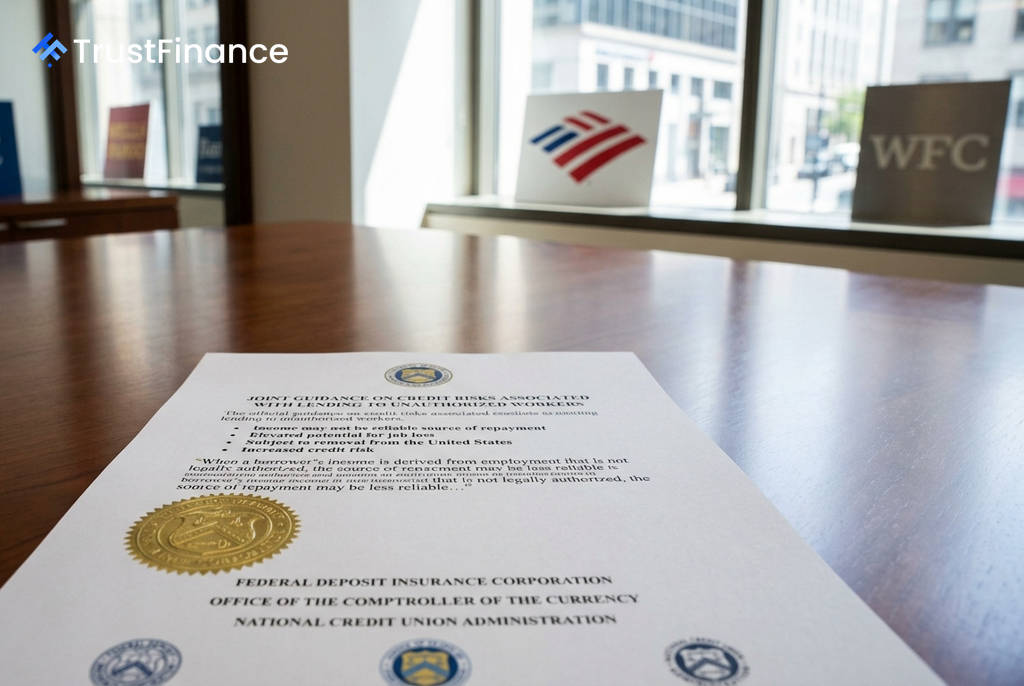
Three major U.S. banking regulators on Monday issued joint guidance cautioning financial institutions about the potential credit risks involved in lending to individuals who are not legally authorized to work in the country.
The advisory from the Office of the Comptroller of the Currency (OCC), the Federal Deposit Insurance Corporation (FDIC), and the National Credit Union Association (NCUA) highlights that such borrowers may pose a less reliable source of repayment.
Heightened Credit Risk
The regulators stated that income from unauthorized employment could present higher credit risks for lenders. The guidance serves as a reminder for institutions to maintain sound underwriting and risk management practices.
"When a borrower’s income is derived from employment that is not legally authorized, the source of repayment may be less reliable and may present increased credit risk," the agencies said in the release. Factors contributing to this risk include:
 Ad
- Potential job loss due to nonlegal status
- Inability to secure new legal employment
- Possible removal from the United States
Policy Context
This guidance is nonbinding and does not establish new legal requirements for banks or credit unions. Instead, it reinforces existing obligations and is intended to implement an executive order signed by President Donald Trump in May.
The May executive order directed the Treasury Department and other agencies to identify potential warning signs of the misuse of financial services by individuals residing in the U.S. illegally. The source noted this was a more limited approach than a previously considered measure that would have required banks to collect citizenship data from all accountholders.