
Story
US Equity Funding Markets Show Strain After Late-June Rate Spike
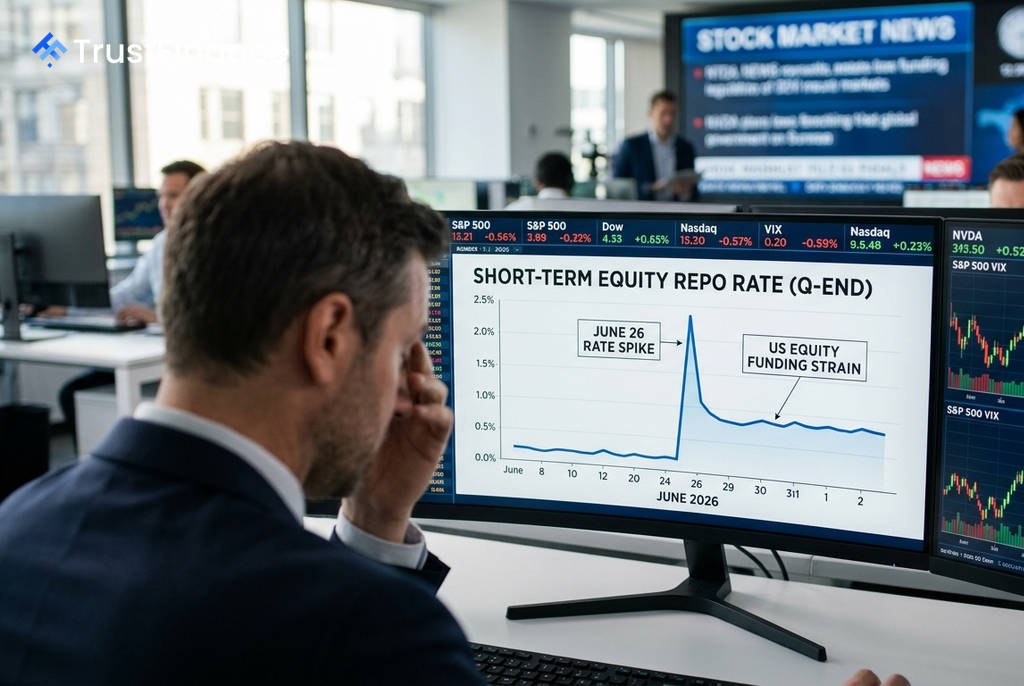
U.S. equity funding markets are exhibiting signs of strain following a sharp increase in short-term borrowing costs last month, a development driven by record stock prices and heightened demand for leverage in popular technology trades.
Quarter-End Funding Squeeze
The equity repurchase (repo) market, where investors use stock holdings as collateral for short-term cash loans, saw financing costs spike ahead of the June quarter-end. According to data from Morgan Stanley, the cost to finance equity positions soared to approximately 200 basis points above the federal funds rate on June 26, the highest premium recorded since December 2024.
While those costs have since moderated, declining by more than half to 89 basis points for a quarterly maturity metric, market participants note that the underlying drivers of the spike remain in place.
Demand for Leverage Persists
The primary cause of the increased funding costs was a surge in demand for leveraged equity exposure. This has been particularly evident in the technology sector, with traders increasingly using leveraged exchange-traded funds (ETFs) to amplify bets on industries such as semiconductors.
 Ad
This sustained appetite for leverage suggests that similar funding pressures could re-emerge at subsequent quarter-end periods. Repo rates typically rise during these times as banks curtail lending to manage their balance sheets for regulatory reporting, a phenomenon that can be exacerbated by high investor demand for financing.
Market Implications
A sustained increase in short-term cash costs poses a risk to market stability. If financing popular trades becomes prohibitively expensive, it could trigger a broader deleveraging event, forcing investors to unwind crowded positions.
This could potentially lead to increased volatility, particularly in the high-flying technology stocks that have been a primary focus of leveraged strategies. Investors will be closely watching funding market indicators for signs of renewed stress in the months ahead.