
Story
Treasury Secretary Bessent to Confront G20 on Trade, Iran, and US Debt
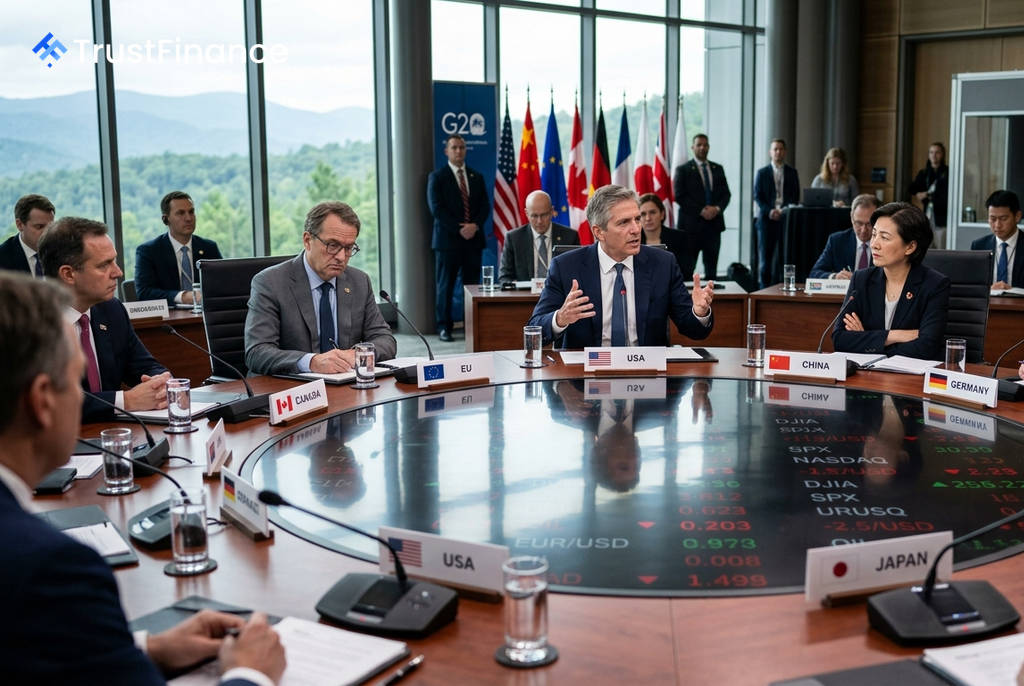
U.S. Treasury Secretary Scott Bessent is preparing for a significant diplomatic test at this week's G20 meeting in Asheville, North Carolina, where he will push the Trump administration's economic agenda on trade, sanctions, and global growth. The gathering of finance ministers and central bankers occurs amid heightened market uncertainty over U.S. tariff policy, geopolitical tensions from the war with Iran, and growing anxiety about the trajectory of U.S. government debt.
A Contentious U.S. Agenda
The Trump administration, under Bessent's leadership, aims to reassert American influence over the G20 process, focusing on what a senior Treasury official called "distortive government economic policies" that create global trade imbalances. This push is underpinned by a renewed tariff strategy, which saw the U.S. impose duties on 60 economies in July over alleged forced labor violations, with further tariffs under consideration to combat excess industrial capacity.
Alongside trade, Bessent is expected to prioritize isolating Iran. According to a Reuters report, he has warned that countries continuing to do business with Tehran face secondary U.S. sanctions. This hardline stance follows the recent imposition of curbs on an Egyptian bank over its alleged links to Iran.
Global Pushback and Shifting Priorities
The U.S. agenda is expected to meet significant resistance. Many G20 members are more concerned with the economic impact of U.S. tariffs and the Iran conflict, which has disrupted global energy markets by closing the Strait of Hormuz. "Secretary Bessent will want to put Iran front and center... and many countries around the G20 table will want to talk about anything else," said Josh Lipsky, international economics chair at the Atlantic Council. "They’ll want to talk about tariffs."
 Ad
European officials, in particular, are reportedly eager to discuss the influx of Chinese exports, such as electric vehicles, which they see as a threat to their own industries. This aligns with U.S. concerns over China's export-driven economy, which the International Monetary Fund estimates is supported by a yuan that is 21% undervalued.
U.S. Debt and Market Jitters
While the U.S. criticizes other nations' economic policies, it faces scrutiny over its own fiscal health. Total U.S. public debt surpassed $40 trillion on August 19, and rising bond yields have unsettled markets, with the 30-year Treasury yield recently hitting a 19-year high.
Bessent has taken interventionist steps to manage market volatility, including doubling scheduled buybacks of long-dated Treasuries and participating in a joint currency intervention with Japan to support the yen. A senior Treasury official stated the long-bond yields had "risen above what we consider fair value." However, these moves have raised concerns among some investors and central bankers about the predictability of U.S. debt management. Mark Sobel, a former Treasury official now with OMFIF, told Reuters that G20 ministers "won’t buy into soothing words," as their economies are being "adversely hit by Trump’s war on Iran."
Read next
More on Forex
Polish Zloty Hits 11-Month Low Against Euro on Energy Price Pressure
The Polish zloty weakened to 4.410 against the euro, its lowest point since November 2023, as rising energy prices and caution ahead of a U.S. Federal Reserve decision weighed on the currency.

Sterling Slips as Dollar Strengthens Ahead of Fed Decision and UK Budget
The British pound lost ground against a resurgent U.S. dollar on Wednesday as market attention shifted from tech sector volatility to upcoming central bank decisions and the UK budget announcement.

Eurozone Bond Yields Climb as French Fiscal Concerns Return Ahead of Fed, ECB Decisions
Yields on French and German government bonds rose as relief from a ratings affirmation for France proved temporary, with investors refocusing on fiscal challenges and awaiting key policy verdicts from the U.S. Federal Reserve and the European Central Bank.

Canadian Dollar Slips as Markets Await Bank of Canada, Fed Decisions
The Canadian dollar edged lower against its U.S. counterpart, snapping a seven-day winning streak as investors adopted a cautious stance ahead of Wednesday's key interest rate announcements from both the Bank of Canada and the U.S. Federal Reserve.