
Story
Tesla's China Operations: A Look at the Carmaker's Global Production Engine
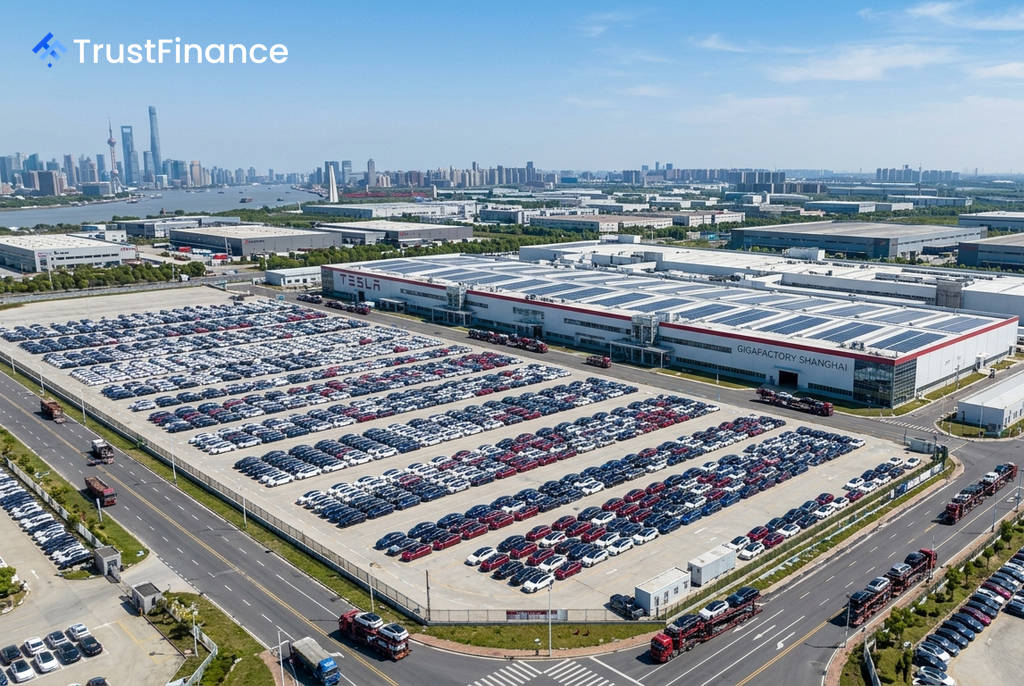
Tesla's operations in China, which accounted for more than half of its global deliveries in 2025, have become the electric vehicle maker's most critical manufacturing hub. The scale and efficiency of the Shanghai plant underscore its strategic importance amid intensifying local competition and unverified reports of a potential separation of the business unit.
A Global Production Engine
Opened in October 2019, Tesla's Gigafactory Shanghai was a landmark project, becoming China's first wholly foreign-owned car plant. It has since evolved into the company's largest and most productive facility worldwide, serving as the primary export center for markets in Europe, Canada, and the Asia-Pacific region.
According to company data, the plant has an annual production capacity of more than 950,000 vehicles, manufacturing the Model 3 sedan and Model Y SUV. Grace Tao, a Tesla vice president, has stated that the Shanghai factory was responsible for more than half of the company's global vehicle deliveries in 2025.
Localized Supply Chain Boosts Efficiency
A key factor in the plant's success is its deep integration with local suppliers. Tesla sources more than 95% of the components for its China-made vehicles from a network of over 400 domestic companies, according to Tao. This high degree of localization has significantly lowered manufacturing costs and insulated the facility from global logistical disruptions.
 Ad
The strategy's effectiveness is reflected in its output. Sales from the Shanghai factory, including exports, grew by one-third in the second quarter compared to the previous year, marking the eighth consecutive month of rising deliveries for China-made vehicles.
Market Dynamics and Rising Competition
China was Tesla's second-largest market by revenue in 2025, with the Shanghai-built Model Y ranking as one of the country's best-selling passenger vehicles. However, the competitive landscape has shifted dramatically since Tesla's entry.
Domestic automakers are posing a significant challenge, having narrowed the technology gap while leveraging integrated supply chains and more aggressive pricing. Key rivals include EV giant BYD as well as a growing field of competitors such as Xiaomi, Xpeng, and Li Auto, all vying for market share in the world's largest auto market.
Read next
More on Stocks
FTC Orders Walmart, Uber, Delta to Disclose Data on Personalized Pricing
The U.S. Federal Trade Commission is demanding nine major companies, including leading retail, travel, and gig economy firms, to provide information on how they use consumer data for setting individual prices and wages.

Google Launches Gemini 4 Carbon AI Model to Bolster Cybersecurity Capabilities
Alphabet's Google has unveiled Gemini 4 Carbon, its latest AI model specifically designed for advanced cybersecurity tasks like vulnerability detection and secure code generation. The launch escalates competition with rivals OpenAI and Anthropic in the enterprise AI market.

Oracle Shares Surge After Unveiling $225 Billion Revenue Target for 2030
Oracle stock rose sharply after the company presented a long-term financial outlook targeting at least $225 billion in annual revenue by fiscal 2030, driven by its expanding AI infrastructure business.

DOJ Scrutinizes Nvidia's $12.9B Hugging Face Deal Amid Broader Antitrust Probe, Sources Say
The U.S. Department of Justice is reportedly examining Nvidia's planned $12.93 billion acquisition of AI platform Hugging Face as part of a wider, ongoing antitrust investigation into the chipmaker's market conduct.