
Story
Retail Investor Bearishness Hits 16-Month High as Cash Holdings Swell, AAII Survey Finds
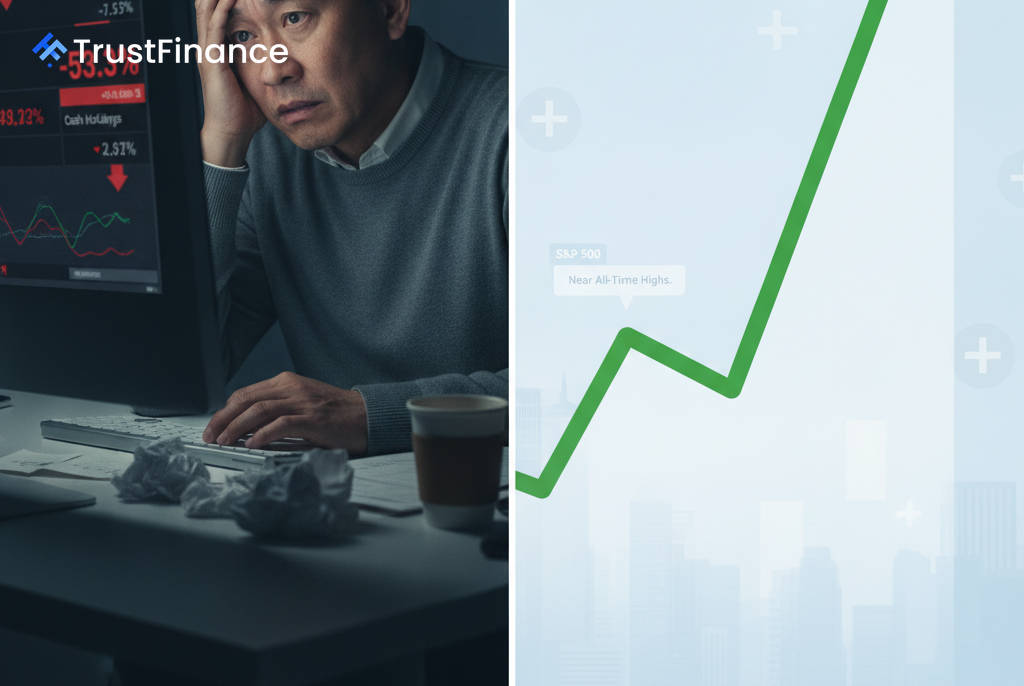
Individual investor pessimism has surged to its highest level in over 16 months, with a majority now anticipating a stock market downturn, according to the latest weekly survey from the American Association of Individual Investors (AAII). This sharp turn toward caution contrasts starkly with market performance, as the S&P 500 remains within 2% of its all-time high.
Sentiment Sours Amid Market Strength
The AAII survey, a closely watched gauge of retail investor mood, revealed a significant shift in expectations for the stock market's direction over the next six months. The key findings include:
- Bearish sentiment, the expectation that stock prices will fall, jumped to 53.3%.
- Bullish sentiment, the expectation that prices will rise, fell to 28.8%, a one-year low.
This created a bull-bear spread of -24.5 percentage points, the most pessimistic reading recorded since May of the previous year. According to AAII Vice President Charles Rotblut, this level of sentiment is "abnormally low" and marks the ninth consecutive week that bullishness has remained below its historical average.
Investors Increase Cash Holdings
 Ad
The growing caution is reflected not only in sentiment but also in portfolio positioning. The AAII survey found that more than half of the investors polled are now holding higher-than-normal levels of cash, indicating a defensive, risk-off strategy.
Specifically, 19.1% of respondents reported that their cash allocation is "far higher than normal." Increased cash holdings suggest investors are reducing their exposure to equities and other risk assets, potentially waiting for more attractive entry points or greater market clarity amid concerns over inflation and rising interest rates.
A Potential Contrarian Indicator
The sharp divergence between deeply negative retail sentiment and a resilient stock market is a notable development. While driven by legitimate concerns, some market analysts view the AAII survey as a contrarian indicator.
This theory suggests that when retail sentiment reaches extreme levels of pessimism, much of the negative news may already be priced into the market, potentially exhausting selling pressure. Therefore, an unusually high level of bearishness can sometimes precede a market rally, making the current disconnect a key data point for market observers.
Read next
More on Stocks
FTC Orders Walmart, Uber, Delta to Disclose Data on Personalized Pricing
The U.S. Federal Trade Commission is demanding nine major companies, including leading retail, travel, and gig economy firms, to provide information on how they use consumer data for setting individual prices and wages.

Google Launches Gemini 4 Carbon AI Model to Bolster Cybersecurity Capabilities
Alphabet's Google has unveiled Gemini 4 Carbon, its latest AI model specifically designed for advanced cybersecurity tasks like vulnerability detection and secure code generation. The launch escalates competition with rivals OpenAI and Anthropic in the enterprise AI market.

Oracle Shares Surge After Unveiling $225 Billion Revenue Target for 2030
Oracle stock rose sharply after the company presented a long-term financial outlook targeting at least $225 billion in annual revenue by fiscal 2030, driven by its expanding AI infrastructure business.

DOJ Scrutinizes Nvidia's $12.9B Hugging Face Deal Amid Broader Antitrust Probe, Sources Say
The U.S. Department of Justice is reportedly examining Nvidia's planned $12.93 billion acquisition of AI platform Hugging Face as part of a wider, ongoing antitrust investigation into the chipmaker's market conduct.