
Story
Nike's Spot in Dow Jones Average in Jeopardy After Share Price Collapse
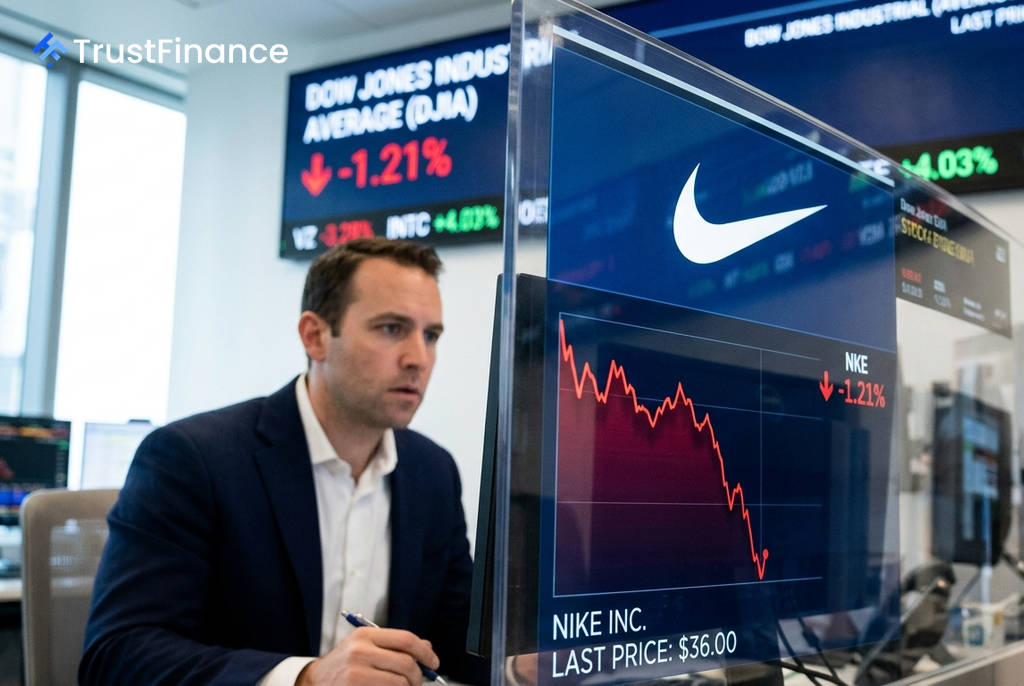
Nike's long-standing position in the Dow Jones Industrial Average is under scrutiny after a prolonged stock slide has made it the index's smallest component, a development that follows its recent removal from another major Wall Street benchmark.
Pressure Mounts After S&P 100 Exit
S&P Dow Jones Indices announced it will drop Nike from the S&P 100 index of blue-chip companies before trading begins on September 21, concluding an 18-year tenure. Analysts cited by Reuters attributed the removal to an 80% slump in the company's market value over the past five years amid slowing sales, stiff competition, and a lack of product innovation.
This move has intensified focus on Nike's status in the price-weighted Dow. With a recent share price around $36, Nike now holds the smallest weight among the Dow's 30 components at just 0.4%. Since joining the index in 2013, Nike shares have risen only 5%, while the S&P 500 has more than quadrupled in the same period, according to the report.
The Dow's Unwritten Rules
Unlike other major indices, the Dow has no mechanical rules for removing a component. However, a low share price and the resulting low index weight have historically been precursors to an exit. A Reuters analysis of the last 10 changes to the Dow since 2013 found that at least half involved the stock with the smallest weight at the time of its removal.
 Ad
The most recent example was Verizon Communications, which was removed in June due to its low share price. Furthermore, the Averages Committee that oversees the index monitors whether the highest-priced stock exceeds 10 times the lowest. Goldman Sachs, the top-weighted stock, currently trades at a price about 27 times that of Nike, far exceeding that informal guideline.
"Just looking at it historically, it probably is a candidate for removal," said Josh Bischoff, partner and head trader at TimesSquare Capital Management, in a comment to Reuters.
Business Struggles Underpin Decline
The pressure on Nike's index membership reflects deep-seated business challenges. During a June earnings call, CEO Elliott Hill noted the company is navigating a "more complex macro environment" with increased pressure on consumer traffic and discretionary spending.
Analysts have pointed to a decline in the brand's appeal relative to competitors. "Nike, in the market outside of a couple key franchises, just does not seem to be as appealing to consumers as it once was," said Drake MacFarlane, a research analyst at M Science, according to the report. Nike declined to comment on the matter.
Read next
More on Stocks
FTC Orders Walmart, Uber, Delta to Disclose Data on Personalized Pricing
The U.S. Federal Trade Commission is demanding nine major companies, including leading retail, travel, and gig economy firms, to provide information on how they use consumer data for setting individual prices and wages.

Google Launches Gemini 4 Carbon AI Model to Bolster Cybersecurity Capabilities
Alphabet's Google has unveiled Gemini 4 Carbon, its latest AI model specifically designed for advanced cybersecurity tasks like vulnerability detection and secure code generation. The launch escalates competition with rivals OpenAI and Anthropic in the enterprise AI market.

Oracle Shares Surge After Unveiling $225 Billion Revenue Target for 2030
Oracle stock rose sharply after the company presented a long-term financial outlook targeting at least $225 billion in annual revenue by fiscal 2030, driven by its expanding AI infrastructure business.

DOJ Scrutinizes Nvidia's $12.9B Hugging Face Deal Amid Broader Antitrust Probe, Sources Say
The U.S. Department of Justice is reportedly examining Nvidia's planned $12.93 billion acquisition of AI platform Hugging Face as part of a wider, ongoing antitrust investigation into the chipmaker's market conduct.