
Story
House Democrats Introduce Resolution to Block US-Saudi Nuclear Deal

Summary
A group of senior House Democrats has introduced a resolution to block a civil nuclear agreement with Saudi Arabia, citing concerns that the deal lacks safeguards to prevent the kingdom from developing nuclear weapons.
A group of senior House Democrats introduced a resolution of disapproval on Thursday aimed at blocking a civil nuclear cooperation agreement between the Trump administration and Saudi Arabia. The lawmakers cited significant concerns that the pact lacks sufficient nonproliferation safeguards.
Proliferation Concerns Raised
The primary objection from the Democrats, including House Foreign Affairs Committee ranking member Gregory Meeks, is the agreement's failure to prohibit Saudi Arabia from enriching uranium or reprocessing nuclear waste. These processes are potential pathways to developing a nuclear weapon. In a statement, the lawmakers noted that the United Arab Emirates agreed to these stricter prohibitions, known as the "gold standard", in its 2009 nuclear deal with Washington.
"A region already gripped by conflict and escalation does not need another nuclear power," Representatives Meeks, Brad Sherman, John Garamendi, and Don Beyer said in a joint statement. The Trump administration maintains that the proposed deal contains all nonproliferation measures required by U.S. law.
Billions at Stake for Nuclear Firms
The proposed 30-year nuclear deal represents a major commercial opportunity, valued at tens of billions of dollars. The agreement centers on the construction of AP1000 reactors, a project that would directly benefit the U.S. nuclear firm Westinghouse.
 Ad
AdWestinghouse is jointly owned by Canada-based uranium producer Cameco (CCJ) and asset manager Brookfield Asset Management (BAM). The legislative challenge from Democrats introduces a significant hurdle and uncertainty for the large-scale project.
Legislative and Political Hurdles
President Trump sent the proposed agreement to Congress in August, triggering a 90-day review period under the Atomic Energy Act of 1954. If Congress does not pass a resolution of disapproval within that timeframe, the deal automatically goes into effect. However, the House is now in recess until after the November 3 midterm elections, making the timeline for a potential vote unclear.
Historically, while many such resolutions have been introduced over the years, no resolution of disapproval concerning a civil nuclear cooperation agreement has ever successfully passed Congress. Lawmakers have also called for the full text of the agreement, including any classified "side letters," to be made public. The administration has suggested the deal is contingent on Saudi Arabia normalizing relations with Israel, but congressional aides report this is not a formal condition within the agreement's text.
Read next
More on Stocks
Orion180 Prices IPO at $12 Per Share, Targeting $240 Million Raise
Florida-based insurer Orion180 Insurance Group Inc. has priced its initial public offering of 20 million shares at $12.00 each, aiming to raise $240 million ahead of its debut on the Nasdaq.

Nucor Stock Slides After Q3 Earnings Guidance Misses Analyst Forecasts
Nucor Corporation (NUE) shares fell after the company projected third-quarter earnings of $5.55 to $5.65 per share, below the Wall Street consensus of $5.99, citing the absence of significant one-time gains from the prior quarter.
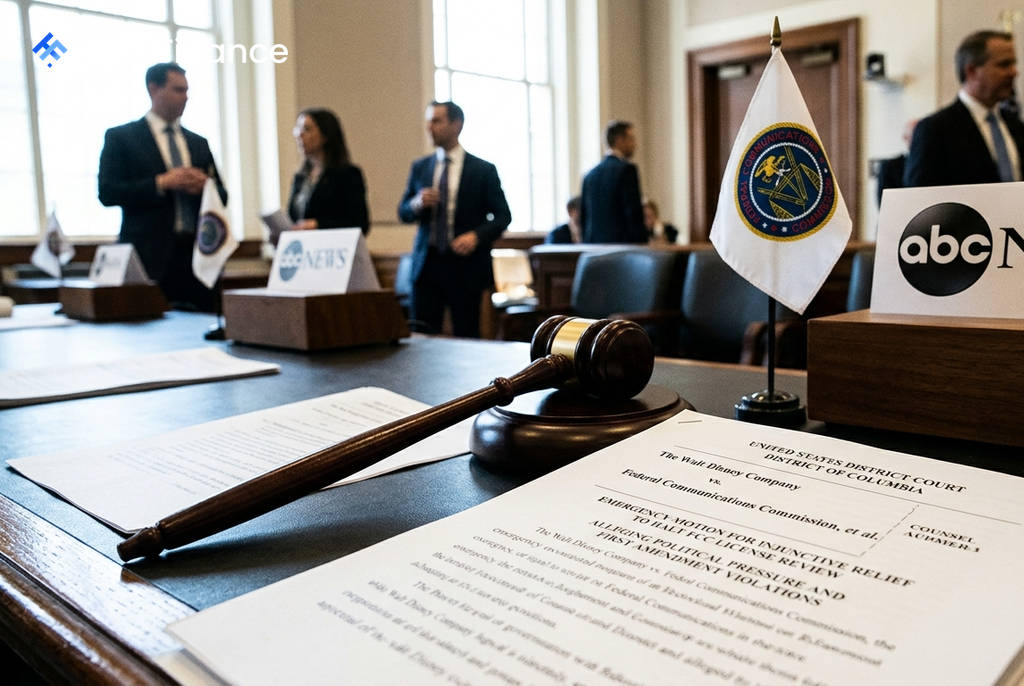
Disney Asks Court to Halt FCC License Review, Alleges Political Pressure From Trump
The Walt Disney Company has filed a legal challenge to stop the Federal Communications Commission from conducting an early review of its ABC station licenses, claiming the regulator is acting on President Trump's directives.

Starbucks Settles Florida Lawsuit Over Diversity Policies for $1 Million
The coffee giant has agreed to settle a lawsuit with Florida's attorney general, pledging to avoid race- or sex-based quotas in its employment practices and pay $1 million to cover the state's litigation costs.